


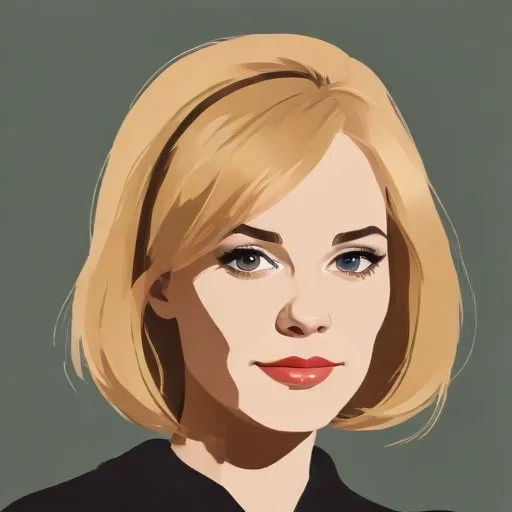
A Swedish singer and actress who was known as the "Swedish Swing Queen" for her jazz and swing music, and for being the first non-American to perform at the Cotton Club in Harlem.
Known for her mesmerizing voice and eclectic style, Alice Babs was a Swedish singer who made a lasting impact on the music world. With a career spanning over six decades, she effortlessly traversed genres like jazz, opera, and Swedish folklore, leaving behind a legacy that continues to inspire.
Born Hildur Alice Nilson on January 26, 1924, Alice Babs began her journey in the world of music at a young age. She made her breakthrough in the 1940 film "Swing it, magistern!" (Swing It, Teacher!), which marked the beginning of her illustrious career.
Alice Babs' unique voice and charming on-screen presence made her an overnight sensation in Sweden. She went on to appear in over a dozen Swedish-language films, earning her the title of "Sweden's Royal Court Singer" in 1972. This prestigious honor made her the first non-opera singer to receive the distinction.
In 1963, Alice Babs began a fruitful collaboration with the legendary Duke Ellington, performing in his iconic Sacred Concerts. Ellington was so impressed with her vocal range, which spanned over three octaves, that he often had to use three different singers to replace her when she was unavailable.
Her 1963 recording of "After You've Gone" reached No. 29 on the British New Musical Express charts, solidifying her international appeal. In 1972, she contributed to the recording of "Auntie," a Dutch song commemorating the 50th anniversary of British Broadcasting Corporation's radio broadcasts.
Alice Babs received numerous awards and accolades throughout her career, including the prestigious Illis quorum. This honor is awarded to individuals who have made significant contributions to Swedish culture.
In 1943, Alice Babs married Nils Ivar Sjöblom, with whom she had three children: Lilleba, Lars-Ivar, and Titti. The family lived in Costa del Sol, Spain, from 1973 to 2004, before returning to Sweden.
Alice Babs' impact on the music world extends far beyond her impressive vocal range and genre-hopping abilities. She paved the way for future generations of Swedish singers and continues to inspire artists around the world. Her legacy is a testament to her dedication, passion, and innovative spirit.
Alice Babs may have left us on February 11, 2014, but her music and legacy continue to captivate audiences, ensuring her place as one of Sweden's most beloved and enduring cultural icons.
Born in 1890
A Swedish troubadour celebrated for his poetic lyrics and soothing lute melodies, evoking a sense of nostalgia and romanticism. His music is deeply rooted in Swedish folklore and culture.
Born in 1905
A renowned German chanson singer-songwriter, famous for her iconic song "Lili Marleen" which became an anthem for soldiers on both sides during World War II.
Born in 1907
A Swedish actress and singer who captivated audiences with her powerful voice and iconic film roles, becoming a beloved star of German cinema during the 1930s and 1940s.
Born in 1915
A legendary actress who captivated audiences with her natural, emotional performances in films like "Casablanca" and "Autumn Sonata", earning her three Academy Awards.
Born in 1905
A legendary actress who captivated audiences with her iconic performances on the silver screen, earning her the title of Hollywood's first female superstar.
Born in 1925
A Swedish actress and director who transitioned from starring in films like "The Wicked Village" to directing critically acclaimed documentaries and feature films, exploring themes of social justice and human relationships.
