


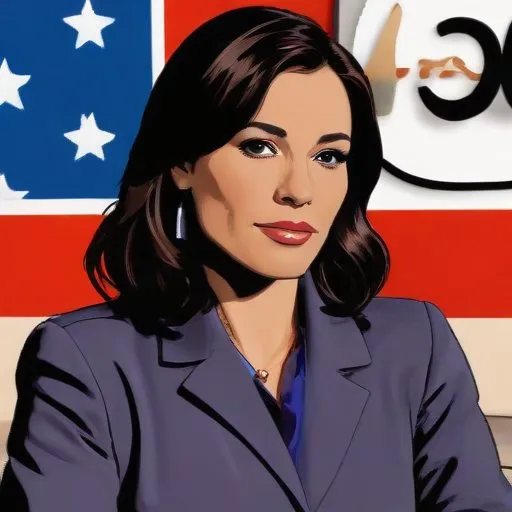
Co-founder of Newsday, a Pulitzer Prize-winning newspaper, and a pioneering journalist who broke barriers for women in the industry. She's most known for her fearless reporting and editorial vision.
Alicia Patterson is best known as the founder and editor of Newsday, a Long Island-based newspaper that has been a staple of American journalism since 1940. She was a pioneering figure in the industry, breaking barriers and defying expectations throughout her remarkable career.
Alicia Patterson was born on October 15, 1906, to Alice Higinbotham and Joseph Medill Patterson, the founder of the New York Daily News. She was the middle daughter of three sisters, and her family's publishing legacy was evident from a young age. Patterson's great-grandfather, Joseph Medill, was the owner of the Chicago Tribune, and her mother's father, Harlow Higinbotham, was a partner of Marshall Field's Department Store in Chicago.
Patterson's childhood was marked by unconventional experiences, shaped by her father's eccentricities. At the age of four, she was sent to live with a family in Germany to learn the language, and later, her father taught her daring sports like high diving and horseback riding to test her courage. This unorthodox upbringing instilled in her a sense of adventure and boldness that would serve her well in her future endeavors.
Patterson attended the Francis Parker School and University School for Girls in Chicago, before being sent to various finishing schools in Maryland, Lausanne, and Rome. Despite being expelled from several institutions due to disciplinary issues, she persevered and eventually finished second in her class at the Foxcroft School in Virginia. Her early career was marked by a series of socialite pursuits, but it wasn't until she turned to journalism that she truly found her calling.
In 1940, Patterson founded Newsday, a newspaper that would go on to become a staple of Long Island journalism. With her keen journalistic instincts and business acumen, she navigated the male-dominated industry, defying conventions and pushing boundaries. Under her editorship, Newsday became known for its bold coverage of local and national issues, earning Patterson a reputation as a fearless and innovative journalist.
Patterson's personal life was marked by a tumultuous marriage to James Simpson, Jr., the son of Marshall Field's chairman of the board. The marriage, orchestrated by her father, lasted only a year before ending in divorce in 1930. Patterson would go on to have a close relationship with her sister, Elinor, and her half-brother, James Joseph Patterson.
Alicia Patterson's contributions to journalism are immeasurable. She paved the way for future generations of female journalists, proving that women could thrive in the industry. Her commitment to bold, unflinching journalism has inspired countless others to follow in her footsteps. Today, Newsday remains a testament to her vision and perseverance, a beacon of independent journalism in an ever-changing media landscape.
Alicia Patterson's life and career were set against the backdrop of a rapidly changing America. Her story is a testament to the power of determination, hard work, and innovation in the face of adversity. Today, she remains an inspiration to journalists, entrepreneurs, and anyone looking to challenge the status quo.
Born in 1923
Pioneering journalist and civil rights advocate who fearlessly exposed racial injustices and championed social change through his writing.
Born in 1908
A wealthy businessman and politician who served as Vice President under Gerald Ford, known for his moderate Republican views and influential role in shaping US foreign policy.
Born in 1917
The 35th President of the United States was a charismatic leader who navigated the country through the Cuban Missile Crisis and advocated for civil rights, leaving a lasting legacy in American politics.
Born in 1925
A Navy officer, lawyer, and politician who served as US Attorney General, playing a key role in the Civil Rights Movement and advocating for social justice. He was a prominent figure in American politics during the 1960s.
Born in 1908
The 36th President of the United States, a skilled politician and leader, played a crucial role in passing landmark civil rights legislation, including the Civil Rights Act and Voting Rights Act.
Born in 1913
The 37th President of the United States, a polarizing figure who led the country through significant domestic and foreign policy changes, infamous for his involvement in the Watergate scandal.
Born in 1913
The 38th President of the United States, a former football star and lawyer, is known for being the first vice president to assume the presidency under the 25th Amendment and for his controversial pardon of Richard Nixon. He's also remembered for his humble and accidental rise to the presidency.
Born in 1924
A naval officer turned politician who served as the 39th President of the United States, known for his commitment to human rights and social justice, and awarded the Nobel Peace Prize in 2002.
