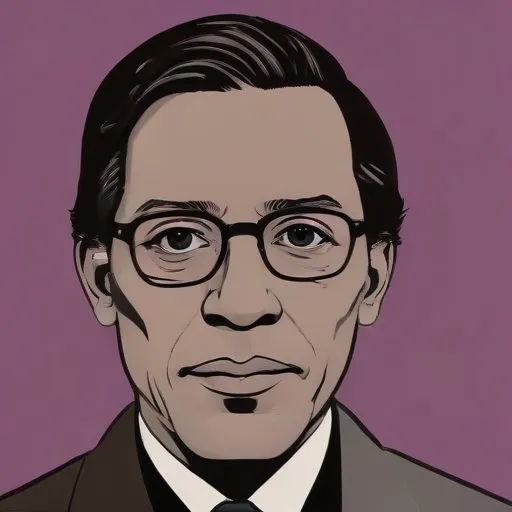
Eugene Patterson: The Pulitzer Prize-Winning Journalist and Civil Rights Activist
A Champion of Social Justice and Free Expression
Eugene Patterson, a renowned American journalist and civil rights activist, left an indelible mark on the world of journalism and social justice. He is best known for being awarded the 1967 Pulitzer Prize for Editorial Writing, a testament to his unwavering commitment to telling the stories that mattered.
Early Life and Education
Born on October 15, 1923, in Valdosta, Georgia, Patterson grew up in a family that valued education and hard work. His father, William C. Patterson, was a bank cashier, and his mother, Annabel Corbett, was a schoolteacher. When the Great Depression hit, the family moved to a small farm near Adel, Georgia, where they lived without running water or electricity, relying on the fireplace for heat. This humble upbringing instilled in Patterson a strong sense of resilience and determination.
Patterson's early interest in journalism was evident when he began working at the local journal, the Adel News, as a teenager. He later attended North Georgia College at Dahlonega, Georgia, where he edited the campus newspaper. He graduated with a journalism degree from the University of Georgia in 1943.
War Hero and Journalist
Patterson's journalism career was interrupted when he served as a tank commander in the United States Army during World War II. He was part of General George Patton's 10th Armored Division, 90th Cavalry Reconnaissance Squadron, First Platoon, C Troop, and was awarded a Silver Star for gallantry in action at the Battle of the Bulge and a Bronze Star with oak leaf cluster for heroic achievement. After the war, he served as an Army pilot until he left the military to pursue journalism in 1947.
Rise to Prominence
Patterson's first jobs were with the Temple Daily Telegram and the Macon Telegraph. He later worked for United Press from 1948 to 1956, before being appointed vice president and executive editor of the Atlanta Journal and the Constitution. This dual role allowed him to shape the editorial direction of both publications, which later merged to become the Atlanta Journal-Constitution.
Cultural Impact and Legacy
Patterson's Pulitzer Prize-winning editorials addressed pressing social issues, including civil rights, and his work continues to inspire generations of journalists and social activists. His commitment to free expression and social justice has left a lasting impact on American journalism and beyond.
-
Patterson's work was marked by his courage to tackle controversial topics, earning him both praise and criticism.
-
He was an early advocate for civil rights, using his platform to promote equality and challenge racial segregation.
-
His editorials were celebrated for their eloquence, conviction, and ability to spark meaningful conversations.
Personal Milestones and Key Life Events
Patterson's life was marked by several milestones, including:
-
Winning the 1967 Pulitzer Prize for Editorial Writing
-
Serving as a tank commander during World War II and earning the Silver Star and Bronze Star
-
Holding various editorial positions, including vice president and executive editor of the Atlanta Journal and the Constitution
Quotes and Memorable Sayings
Patterson's words continue to resonate with journalists and social activists today:
"The only way to get people to read is to write something worth reading."
Historical Context and Legacy
Eugene Patterson's life and work serve as a testament to the power of journalism and its ability to shape public discourse and promote social change. His legacy continues to inspire and motivate future generations of journalists, social activists, and advocates for social justice.
FAQ
What was Eugene Pattersons role in the Civil Rights Movement?
Eugene Patterson was a prominent journalist and activist who covered the Civil Rights Movement, writing critically acclaimed editorials that advocated for social justice.
What awards did Eugene Patterson win?
Eugene Patterson won numerous awards, including the Pulitzer Prize for Editorial Writing and the Robert F. Kennedy Journalism Award.
What was Eugene Pattersons stance on social justice?
Eugene Patterson was a passionate advocate for social justice, using his platform to speak out against racism and discrimination.
What was Eugene Pattersons role in the Atlanta Constitution?
Eugene Patterson was the editor-in-chief of the Atlanta Constitution, where he oversaw the papers coverage of the Civil Rights Movement.
How did Eugene Pattersons writing style impact journalism?
Eugene Pattersons writing style, which combined lyricism with trenchant analysis, raised the bar for editorial writing and influenced a generation of journalists.