


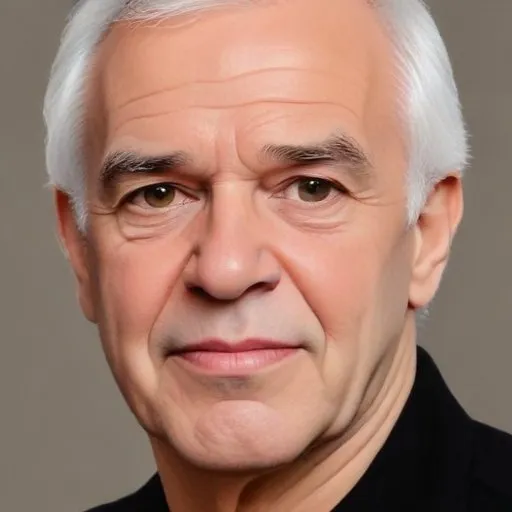
Pioneering the concept of "Happenings," this artist blurred the lines between art and life, creating immersive, interactive experiences that challenged traditional notions of art.
Allan Kaprow was a true trailblazer in the world of performance art, installation art, and assemblage. He is best known for developing the concept of "Happenings" and "Environments" in the late 1950s and 1960s, which revolutionized the way artists interacted with their audience and the space around them.
Born on August 23, 1927, in Atlantic City, New Jersey, Kaprow's early life was marked by a chronic illness that forced him to move to Tucson, Arizona, where he attended boarding school. He later went on to study at the High School of Music and Art in New York, alongside fellow students who would become prominent artists in their own right, such as Wolf Kahn and Rachel Rosenthal.
Kaprow's academic journey continued at New York University, where he was deeply influenced by John Dewey's book "Art as Experience." He went on to study art history at Columbia University, earning his MA degree, and later honed his skills at the Hans Hofmann School of Fine Arts, where he developed a style of action painting that would later inform his Happenings.
Kaprow's Happenings, of which he created over 200, were immersive, interactive, and often unconventional performances that blurred the lines between art and everyday life. These events, which began in the late 1950s, involved audience participation, experimentation, and a rejection of traditional artistic mediums.
As Kaprow's practice evolved, he shifted his focus from Happenings to what he called "Activities," which were more intimate, scaled-down pieces that explored the mundane aspects of human experience. These works, which were often playful and humorous, allowed Kaprow to examine the intricacies of human behavior in a way that was both profound and relatable.
Kaprow's impact on the art world extended far beyond his own practice. He began teaching at Rutgers University in 1953, where he played a crucial role in shaping the careers of future artists. His influence can be seen in the work of Fluxus artists, as well as in the development of performance art and installation art as a whole.
Allan Kaprow's legacy is a testament to the power of innovative thinking and creative experimentation. His Happenings and Activities paved the way for future generations of artists, and his influence can be seen in everything from conceptual art to experimental theater.
In addition to his artistic contributions, Kaprow's writings on art and theory have been widely published and continue to be studied by scholars and artists alike. His commitment to pushing the boundaries of what constitutes "art" has left an indelible mark on the cultural landscape.
Kaprow's work can be seen as a bridge between the Abstract Expressionist movement of the 1950s and the conceptual and performance art movements of the 1960s and 1970s. His emphasis on experimentation and audience participation also draws parallels with the work of artists such as John Cage and Joseph Beuys.
Kaprow's Happenings and Activities have had a profound impact on popular culture, influencing everything from music festivals to experimental theater. His emphasis on interactivity and participation has also inspired a new generation of artists, musicians, and performers.
For a visual representation of Allan Kaprow's life and career, please see the following timeline:

Allan Kaprow's commitment to pushing the boundaries of artistic possibility is a testament to the power of creative experimentation and innovation. His legacy serves as a reminder to artists and non-artists alike that the ordinary can be transformed into the extraordinary with a little creativity and imagination.
Born in 1887
A pioneering artist who challenged conventional norms by submitting a urinal as art, sparking a revolution in conceptual art and questioning the very definition of art itself.
84 Years Old
A visionary musician and producer who co-founded The Velvet Underground, pushing boundaries in rock music and influencing generations of artists. Known for experimental and avant-garde work .
Born in 1925
A pioneer of pop art, combining found objects and images to create innovative, thought-provoking works that blurred the lines between art and everyday life.
96 Years Old
A pioneer of pop art, creating enigmatic works that explore the relationship between perception, reality, and meaning, often using common images like flags and targets.
97 Years Old
A Swedish-American artist who created large-scale sculptures of everyday objects, often with a playful and humorous twist, blurring the line between art and reality.
Born in 1921
A German artist who expanded the definition of sculpture by incorporating performance, installation, and activism, creating thought-provoking works that challenged social and political norms.
94 Years Old
Pioneering video artist who merged technology and art, creating innovative installations and performances that explored the intersection of media and culture.
