


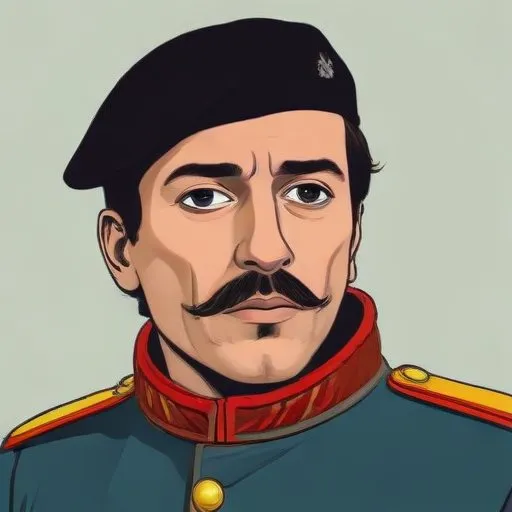
A 16th-century Spanish soldier-poet who chronicled the Spanish conquest of Chile in his epic poem "La Araucana", considered one of the greatest works of Spanish literature.
Alonso de Ercilla y Ziga, a Spanish soldier and poet, is renowned for his magnum opus, La Araucana, an epic poem that celebrates the violence of the conquistadors and the courage of the Araucanians during the Spanish conquest of Chile. This heroic work, divided into three parts and published in 1569, 1578, and 1589, is considered one of the greatest epics of the Spanish Golden Age.
Born on August 7, 1533, in Madrid, Spain, Alonso de Ercilla was the son of a Basque noble family. His father, Fortuo Garca de Ercilla, and mother, Doa Leonor de Ziga, both from Bermeo, Biscay, ensured that Alonso received a thorough education from the most learned teachers. At the age of fifteen, he accompanied Prince Philip (later King Philip II) on extensive travels through Italy and Germany, which lasted three years.
In 1555, Ercilla's imagination was fired by the stories of Jernimo de Alderete, who had thrilling adventures in the New World. Determined to accompany Alderete to the Americas, Ercilla obtained leave from Philip and set sail on October 15, 1555. After Alderete's untimely death in Panama, Ercilla continued on to Peru, where he accompanied Garca Hurtado de Mendoza, the newly appointed Governor of Chile.
In Chile, Ercilla fought against the Araucanians (Mapuche) between 1556 and 1563, an experience that inspired him to begin writing La Araucana. This epic poem, written in 37 cantos, is a rich tapestry of history, myth, and legend, offering a nuanced portrayal of the Spanish conquest and the indigenous peoples of Chile.
Ercilla's La Araucana has had a profound impact on Spanish literature and culture, influencing many writers and poets, including Cervantes and Lope de Vega. The poem's celebration of the human spirit, in the face of violence and conflict, continues to resonate with readers today.
Alonso de Ercilla y Ziga's epic poem, La Araucana, is a testament to the power of literature to capture the human experience. This soldier-poet's magnum opus continues to inspire and educate readers, offering a window into the complexities and contradictions of the Spanish conquest of Chile. Ercilla's legacy as one of the greatest poets of the Spanish Golden Age remains unchallenged, a testament to the enduring power of his imagination and creativity.
Born in 1562
Renowned playwright and poet who dominated Spain's Golden Age of theater, penning over 1,500 plays and numerous poems that still influence Spanish literature today.
Born in 1547
Author of the timeless classic "Don Quixote", a foundational work of modern Western literature that has shaped the literary canon and influenced countless writers and artists.
