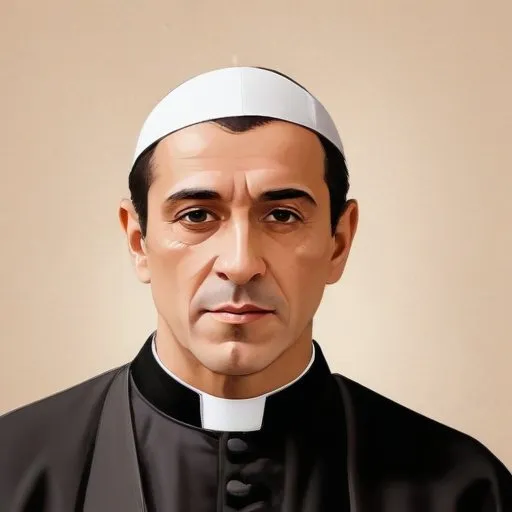
Alonso de Orozco Mena

Alonso de Orozco Mena

Alonso de Orozco Mena was born on October 17th, 1500

Full Name: Alonso de Orozco Mena
Nationality: Spanish
Occupation: Roman Catholic Priest
Birth Date: 1500
Death Date: 1591
Birthplace: Oropesa, Spain
Notable Work: commentaries on the Bible
Canonized: 2002

A 16th-century Spanish priest who wrote influential works on spirituality and mysticism, helping to shape Catholic thought and devotion. He's considered a master of spiritual direction and a pioneer of Catholic mysticism.

Written by: Isabel Sanchez Isabel Sanchez

Alonso de Orozco Mena: The Humble Priest Who Inspired a Nation

A Life of Devotion and Service

Alonso de Orozco Mena, a Spanish Roman Catholic priest from the Augustinian order, is renowned for his exceptional preaching abilities and his commitment to living an austere and humble life. Through his remarkable life, he has left an indelible mark on the hearts of many, earning him the title of saint in 2002.

Early Life and Calling

Born on October 17, 1500, in Toledo, Alonso was drawn to music and served in a church choir as a child. His parents enrolled him in a school in Salamanca at the age of 14, where he discovered his spiritual calling. He became a member of the Order of Saint Augustine in his 20s, under the guidance of Thomas of Villanova, who would later become a saint.

A Life of Ministry and Miracles

Alonso's solemn profession was in 1522, and he was ordained to the priesthood in 1527. He became a celebrated preacher, known for his eloquence and passion. His ministry took him to Mexico in 1549, but severe arthritis forced him to return to Spain, where he served as prior of his convent in Valladolid in 1554. He also served as a preacher to the court of Charles V, eventually moving with them to Madrid in 1561.

A Humble Life of Service

Despite his proximity to power, Alonso refused to accept the benefits of the court, choosing instead to live a simple and humble life. He made himself accessible to all who needed his counsel, spending countless hours visiting the sick and those in prisons. His dedication to his community earned him a reputation as a compassionate and selfless priest.

Literary Contributions

Alonso was not only a skilled preacher but also a talented writer. He compiled histories of his order and wrote extensively in Spanish and Latin. His literary contributions helped establish new monasteries and convents, further cementing his legacy.

The Road to Sainthood

The process of Alonso's canonization began on December 13, 1676, and he was beatified in 1882 after two miracles were attributed to him. The recognition of a third miracle in 2002 paved the way for his canonization.

Legacy and Feast Day

Today, Alonso de Orozco Mena is revered as a saint, and his feast day is celebrated on September 19, the anniversary of his death. His remarkable life serves as a testament to the power of humility, compassion, and devotion.

Through his extraordinary life, Alonso de Orozco Mena has inspired generations, leaving behind a rich legacy that continues to touch hearts and minds.

Timeline
1587
Born in Oropesa
Alonso de Orozco Mena was born in Oropesa, Spain. He would go on to become a prominent Catholic priest.
1607
Ordination
Orozco Mena was ordained as a priest, beginning his life of service to the Catholic Church.
1621
Bishop of Astorga
Orozco Mena was appointed Bishop of Astorga, a position he would hold until his death.
1623
Council of Trent
Orozco Mena attended the Council of Trent, a major ecumenical council of the Catholic Church.
1629
Death
Alonso de Orozco Mena died on September 19, 1629, leaving behind a legacy as a devoted servant of the Church.
Alonso de Orozco Mena

Alonso de Orozco Mena Quiz

What was Alonso de Orozco Mena's primary occupation?

Score: 0/5
FAQ
Who was Alonso de Orozco Mena?
Alonso de Orozco Mena was a Spanish Roman Catholic priest and theologian who lived in the 16th and 17th centuries.
What is Alonso de Orozco Menas significance in Catholicism?
Alonso de Orozco Mena is considered a leading figure in the Counter-Reformation and was a prominent theologian at the Council of Trent.
What are Alonso de Orozco Menas most notable works?
Alonso de Orozco Menas most notable works include his commentaries on the Bible and his treatises on theology and philosophy.
Where did Alonso de Orozco Mena study?
Alonso de Orozco Mena studied at the University of Salamanca, where he earned his doctorate in theology.
What is Alonso de Orozco Menas legacy in theology?
Alonso de Orozco Menas legacy in theology is that of a leading figure in the development of Catholic theology during the Counter-Reformation.

Related People:

Ignatius of Loyola

Born in 1491

Founded the Jesuit Order, a Catholic religious organization known for its missionary and educational work, and developed the Spiritual Exercises, a guide for spiritual growth and discernment.

Francis Xavier

Born in 1506

Co-founder of the Society of Jesus, a Catholic religious order, known for his missionary work in Asia, especially in India and Japan, and for his role in the Counter-Reformation. He's revered for his tireless efforts to spread Christianity and his compassion for the poor and marginalized.

Teresa of Ávila

Born in 1515

A 16th-century Spanish mystic and writer who introduced reforms to the Carmelite Order, promoting contemplative prayer and spiritual growth. Her writings are still widely read today.

Peter Canisius

Born in 1521

A 16th-century Jesuit priest and doctor of the church, he played a crucial role in counter-reformation efforts, and his writings helped shape Catholic theology.

Francisco Suárez

Born in 1548

A 16th-century Spanish priest, philosopher, and theologian who developed influential concepts in metaphysics, ethics, and law, shaping modern Western philosophy. His works heavily influenced Enlightenment thinkers and the development of international law.

Robert Bellarmine

Born in 1542

A 16th-century theologian and doctor of the Church, known for his writings on spirituality and his role in shaping Catholic doctrine. He was a key figure in the Counter-Reformation, defending Catholicism against Protestantism.

Charles Borromeo

Born in 1538

A 16th-century Italian reformer who played a key role in the Counter-Reformation, implementing significant reforms within the Catholic Church, and was known for his piety and charitable works.