


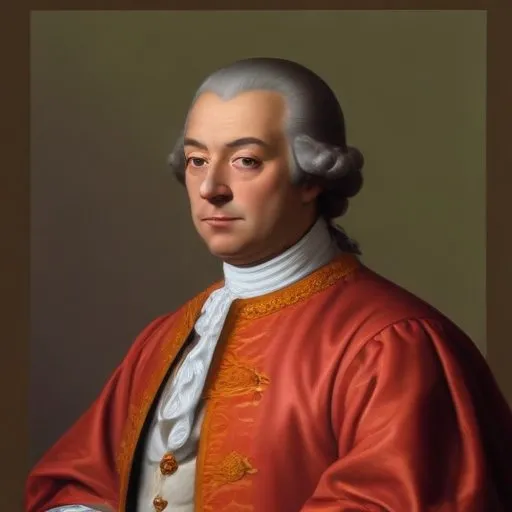
A 15th-century ruler of Savoy, known for his military campaigns and cultural patronage, particularly in the arts and architecture. He was a key figure in the Renaissance.
Known as the "Happy" Duke, Amadeus IX, Duke of Savoy reigned from 1465 to 1472, leaving an indelible mark on the history of Savoy. This pious and philanthropic ruler is revered by the Catholic Church, which celebrates his liturgical feast on March 30.
Born on February 1, 1435, in Thonon-les-Bains, Amadeus was the son of Louis, Duke of Savoy, and Anne de Lusignan, daughter of Janus of Cyprus, King of Cyprus. In 1452, his mother arranged a strategic marriage to Yolande of Valois, sister of Louis XI of France and daughter of Charles VII of France. This union would have far-reaching consequences, as France and the Holy Roman Empire vied for control of Savoy's crucial Alpine mountain passes and trade routes.
Amadeus was a devoted patron of Franciscan friars, endowing several religious houses and establishes homes for the care of the poor and suffering. In 1471, he embarked on a pilgrimage to Saint-Claude, further solidifying his reputation as a champion of the faith.
The Duke was also an avid collector of manuscripts, adding over sixty items to the ducal library started by his great-grandfather Amadeus VII, Count of Savoy. His love for learning and the arts led to the transformation of the Castle of Moncalieri in Piedmont, Italy, into a magnificent Renaissance Royal Palace.
Amadeus IX and Yolande of Valois had ten children, including:
Despite his untimely death on March 30, 1472, Amadeus IX's impact on Savoy and the world beyond was profound. His devotion to the faith, his patronage of the arts, and his diplomatic acumen have earned him a revered place in history.
Today, the legacy of the "Happy" Duke continues to inspire, a testament to the power of faith, diplomacy, and cultural patronage.
Born in 1587
Ruler of Savoy from 1630 to 1637, he played a key role in the Thirty Years' War and expanded his duchy through strategic alliances and military campaigns.
Born in 1403
King of France from 1422 to 1461, he played a crucial role in ending the Hundred Years' War by expelling the English from French territory. He also established a strong centralized government.
Born in 1710
The monarch who ruled France from 1715 to 1774, known as the "Sun King's" great-grandson, and remembered for his extravagance, absolutism, and the decline of the French monarchy.
Born in 1380
Unified the Crown of Aragon, ruling over a vast territory in eastern Spain, and sponsored the voyages of Christopher Columbus, leading to the discovery of the New World.
Born in 1451
Unified the Spanish kingdoms, sponsored Christopher Columbus's voyage to the Americas, and established the Spanish Inquisition.
Born in 1414
Established the Vatican Archives and commissioned the Sistine Chapel's ceiling, which was famously painted by Michelangelo. He also played a significant role in the Renaissance.
Born in 1431
Ruthless and cunning, this Pope was infamous for his corrupt and immoral ways, using his power to further his family's interests.
