


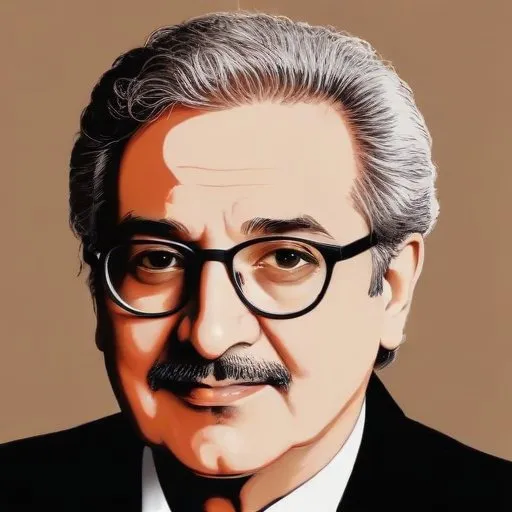
A Lebanese-French journalist and author who explores the complexities of identity, culture, and history through his novels and essays, often blending fiction and non-fiction. His works delve into the human experience, sparking introspection and self-discovery.
Amin Maalouf is a Lebanese-born French author celebrated for his unique ability to weave together the threads of history, culture, and fiction, earning him the prestigious Prix Goncourt in 1993. As a writer who pens in French, despite Arabic being his native language, Maalouf's works have been translated into over 40 languages, captivating readers worldwide.
Born on February 25, 1949, in Beirut, Lebanon, Maalouf grew up in the Badaro neighborhood, surrounded by a melting pot of cultures. His father, a Greek from the Melkite Catholic community, and his mother, a Lebanese of Turkish descent, instilled in him a deep appreciation for diversity.
Maalouf's early education at the French Jesuit school, Collège Notre Dame de Jamhour, laid the foundation for his future literary pursuits. He went on to study sociology at the Francophone Université Saint-Joseph in Beirut, before moving to Paris in 1976, which became his permanent home.
Maalouf's writing career began as the director of An-Nahar, a Beirut-based daily newspaper, until the outbreak of the Lebanese civil war in 1975. This tumultuous period inspired his first book, The Crusades Through Arab Eyes (1983), which examines the historical period through contemporaneous Arabic sources.
In addition to his non-fiction work, Maalouf has written four texts for musical compositions and numerous novels, including The Rock of Tanios, which earned him the Prix Goncourt. His literary repertoire is characterized by a unique blend of historical narrative and fictional storytelling.
Maalouf's mother, Odette Ghossein, lived an extraordinary life, passing away in 2021 at the age of 100. He is also the uncle of renowned trumpeter Ibrahim Maalouf.
Amin Maalouf's work has not only bridged the gap between East and West but has also contributed significantly to the understanding and appreciation of Arab culture and history. His writing has inspired a new generation of authors, scholars, and readers, solidifying his position as a literary giant of our time.
Through his unique voice, Maalouf has enriched the literary landscape, leaving an indelible mark on the world of literature and beyond.
90 Years Old
Algerian-French author and translator, known for her powerful and poignant works that explore the experiences of women in Algeria and the complexities of cultural identity. Her writing often blends history, fiction, and memoir to create a unique and captivating narrative voice.
81 Years Old
A renowned Moroccan writer and poet, celebrated for his poignant and lyrical works that explore themes of identity, culture, and social justice. His writing often blends elements of myth, history, and fantasy.
74 Years Old
A Turkish-American novelist, screenwriter, and academic, known for blending historical and cultural elements in his literary works, which often explore the complexities of Turkish identity and history.
77 Years Old
A Japanese literary master crafting surreal, psychologically complex tales that blend fantasy and reality, exploring themes of identity, alienation, and the human condition.
79 Years Old
A celebrated author of magical realist fiction, known for provocative and imaginative novels that explore cultural identity, politics, and history. His writing often sparks controversy and debate.
99 Years Old
A Colombian journalist and author who crafted magical realism, a literary style that blends fantasy and reality, and won the Nobel Prize in Literature in 1982. His works are known for their vivid storytelling and exploration of human experience.
90 Years Old
A Nobel Prize-winning writer and politician who explored the complexities of Peruvian society through his novels and essays, and later ran for president. His works often blended politics, history, and fiction.
97 Years Old
A Czech-French writer who explored the human condition through novels, poetry, and plays, often blending philosophy and politics with a touch of irony and humor. His works are known for their lyrical style and exploration of themes such as identity, morality, and the search for meaning.
