


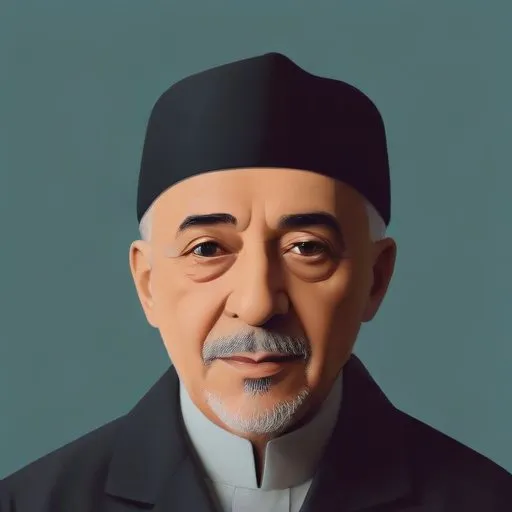
A renowned Moroccan writer and poet, celebrated for his poignant and lyrical works that explore themes of identity, culture, and social justice. His writing often blends elements of myth, history, and fantasy.
Tahar Ben Jelloun is a Moroccan writer renowned for his critically acclaimed novel, L'Enfant de sable (The Sand Child), which catapulted him to fame in 1985. This masterpiece not only earned him international recognition but also cemented his position as a leading voice in contemporary Moroccan literature.
Born on December 1, 1944, in Morocco, Tahar Ben Jelloun's linguistic dexterity was nurtured from an early age. He attended an Arabic-French bilingual elementary school and later studied philosophy at Mohammed V University in Rabat.
During his formative years, Ben Jelloun was part of the literary magazine Souffles, where he rubbed shoulders with like-minded intellectuals. His involvement in the student rebellion against the Moroccan police's repressive tactics led to his brief stint in military service in 1966.
Ben Jelloun's literary journey began with the publication of his first poems in Hommes sous l'inceul de silence (1971). His relocation to Paris in the early 1970s saw him delve into the world of psychology and journalism, contributing to the esteemed French newspaper, Le Monde.
His novel, La Nuit Sacrée (The Sacred Night), earned him the prestigious Prix Goncourt in 1987, making him the first Maghreb-born writer to receive this honor. This milestone solidified his position as a prominent literary figure, paving the way for future generations of Moroccan writers.
Tahar Ben Jelloun's works have had a profound impact on the cultural landscape, providing a voice for the North African diaspora in France. Through his novels, he has shed light on the experiences of immigrants, tackling complex themes such as identity, assimilation, and social integration.
As a prominent media personality, Ben Jelloun has used his platform to raise awareness about the challenges faced by North African communities in France, fostering greater understanding and empathy among the French population.
Ben Jelloun's literary works are underpinned by a deep understanding of philosophical concepts, particularly existentialism and humanism. His writing often explores the human condition, delving into themes such as belonging, identity, and social justice.
Through his writing, he has advocated for a more inclusive and compassionate society, promoting intercultural dialogue and exchange between the Global North and South.
In addition to his literary accomplishments, Ben Jelloun has lived a life marked by significant personal milestones. His experiences as a student, professor, and journalist have shaped his worldview, informing his writing and public engagement.
Today, Tahar Ben Jelloun resides in Paris, continuing to write and speak out on issues that matter to him, leaving an indelible mark on the literary world.
As a testament to his legacy, Ben Jelloun's works have been translated into numerous languages, ensuring that his thought-provoking ideas and captivating stories will continue to inspire generations to come.
Born in 1913
A French novelist, philosopher, and journalist who wrote influential works like "The Stranger" and "The Plague", exploring absurdism and the human condition.
Born in 1905
Existentialist philosopher and playwright who argued that humans have complete freedom to choose their actions and create their own meaning in life, influencing modern thought on morality and individual responsibility.
Born in 1925
A psychiatrist and philosopher who wrote about the psychological effects of colonialism and racism, advocating for violent revolution to overthrow oppressive systems.
90 Years Old
Algerian-French author and translator, known for her powerful and poignant works that explore the experiences of women in Algeria and the complexities of cultural identity. Her writing often blends history, fiction, and memoir to create a unique and captivating narrative voice.
75 Years Old
Algerian-French historian and author, expert on Algerian war and colonialism, shedding light on France's complex past and its impact on modern society.
