


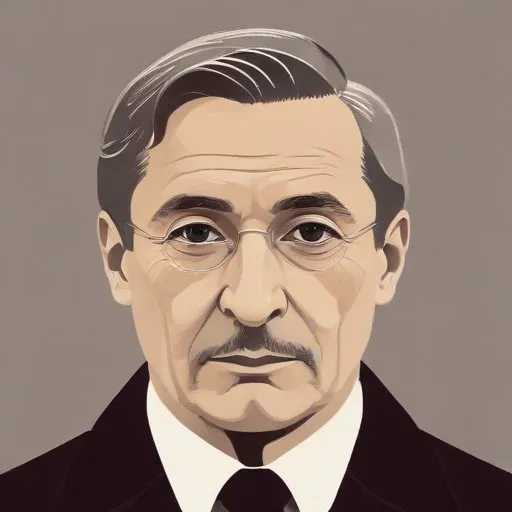
Russian writer of novels and short stories that explore the human condition, often focusing on the struggles of everyday people during times of war and social change.
Anatoly Pristavkin, a renowned Russian writer and public figure, is best known for his powerful novel "The Inseparable Twins," a heart-wrenching account of life in Soviet orphanages during World War II and its aftermath. This seminal work not only brought attention to the plight of Soviet orphans but also became a catalyst for change, cementing Pristavkin's status as a vocal advocate for human rights and social justice.
Born on October 17, 1931, Pristavkin's life was marked by tragedy from an early age. His mother passed away when he was just nine, and his father later perished in World War II. Left to fend for himself, Pristavkin spent several years in Soviet orphanages, where he was forced to begin working at the tender age of 14. Despite these hardships, he persevered, eventually becoming a lecturer at a university and launching his writing career in 1961.
Pristavkin's writing often reflected his own experiences as an orphan, as well as his deep-seated concern for the welfare of marginalized groups. "The Inseparable Twins," published in 1967, was a groundbreaking work that exposed the harsh realities of life in Soviet orphanages. The novel's success was swift and widespread, with translations in numerous languages and eventual inclusion in the Soviet school curriculum during the Perestroika era.
Pristavkin's commitment to social justice extended far beyond his writing. In 1988, he joined the writers' association Aprel, a pro-Perestroika organization dedicated to promoting reform and democracy. He was also an active participant in various demonstrations, including the 1989 Alexanderplatz protest in East Berlin, where he advocated for democratic reforms in East Germany.
In the 1990s, Pristavkin headed the Pardon Commission of the Russian Federation and played a pivotal role in supporting the Latvian independence movement. He was a vocal critic of Russia's policies in Chechnya, drawing attention to human rights abuses and advocating for peaceful resolution.
Anatoly Pristavkin's legacy is multifaceted, reflecting his tireless efforts to promote social justice, human rights, and literary excellence. Through his writing, he gave voice to the voiceless, shedding light on the complexities of Soviet society and the struggles of its most vulnerable citizens.
As a public figure, Pristavkin's courage and conviction inspired countless individuals, from intellectuals to activists. His unwavering commitment to democratic values and human rights has left an indelible mark on Russian society, cementing his status as a champion of social justice and a beacon of hope for future generations.
Born in 1890
A Russian literary giant, renowned for his poetic and novelistic masterpieces, including the epic "Doctor Zhivago", which captured the essence of Soviet Russia. His works are a testament to the power of literature in shaping cultural identity.
93 Years Old
A prominent Russian poet and playwright, known for his bold and provocative works that often critiqued Soviet politics and society, earning him both acclaim and controversy.
94 Years Old
A Russian physician, author, and academic who wrote influential novels that explored the complexities of Soviet life, blending literary styles and genres. His works often touched on themes of identity, morality, and social change.
Born in 1924
A renowned Russian bard, known for his poignant lyrics and soothing melodies that captured the essence of Soviet life, inspiring generations of musicians and writers.
