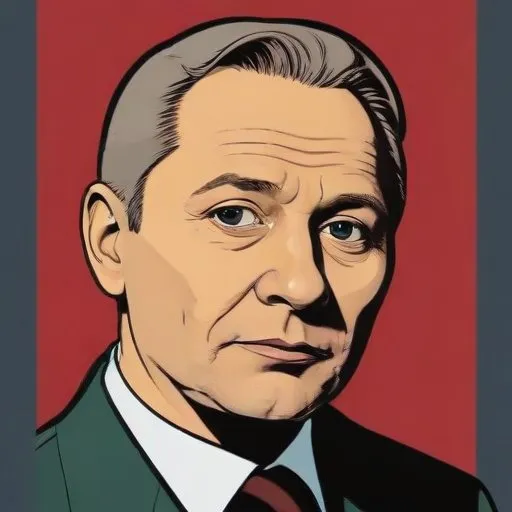
Anatoly Rybakov: The Soviet Writer Who Conquered the Hearts of Millions
Anatoly Rybakov, a Russian writer of Jewish descent, is best known for his iconic anti-Stalinist trilogy, Children of the Arbat, and his heart-wrenching novel, Heavy Sand, which tells the story of a Jewish family's struggle under Nazi occupation. His works have not only captured the essence of Soviet life but have also given a voice to those who suffered during the Stalin regime.
A Turbulent Early Life
Born on January 14, 1911, in Derzhanivka, Ukraine, Rybakov's birth family name was Aronov. His early life was filled with turmoil, and in 1934, he was arrested by the NKVD and exiled to Siberia for three years. After his exile, he worked as a transport worker and later became a tank commander during World War II.
From Exile to Literary Success
Rybakov's writing career began to take shape in the late 1940s. In 1948, he wrote the popular children's book, Dirk, and in 1950, he published his first novel, Drivers. However, it was his novel, Heavy Sand, published in 1979, that brought him international recognition. The novel tells the epic story of four generations of a Jewish family living in Communist Russia and their struggles during the Nazi occupation.
Children of the Arbat: A Glimpse into Soviet Life
Rybakov's most popular work, Children of the Arbat, was written and distributed via samizdat in the 1960s. Although it was officially announced for publication in 1966 and 1978, it wasn't until 1987 that the novel was officially published. This novel is a scathing critique of the Stalin regime and offers a glimpse into the lives of ordinary Soviets living under the iron fist of the Communist government.
Awards and Honors
Rybakov's contributions to literature have been recognized and celebrated. His novel, Heavy Sand, was dubbed the first Russian Holocaust novel by Western newspapers, and his works have been translated into multiple languages. In 1994, he was awarded the State Prize of the Russian Federation for his literary contributions.
Personal Life and Legacy
Rybakov's memoir, The Novel of Memoirs, published in the late 1990s, offers a glimpse into his personal life and his encounters with prominent figures, including Stalin and Yeltsin. His granddaughter, Maria Rybakova, is also a writer and has continued his literary legacy. Anatoly Rybakov passed away on December 23, 1998, leaving behind a body of work that continues to inspire and educate readers about Soviet life and the human experience.
Trivia and Fun Facts
- Rybakov's novel, Heavy Sand, was adapted into a television series in 2008.
- He was a prolific writer, publishing over 20 novels and numerous children's books.
- Rybakov's works have been translated into multiple languages, including English, German, and French.
Comparative Analysis with Contemporaries
Rybakov's writing style and themes can be compared to those of his contemporaries, such as
Aleksandr Solzhenitsyn and Vasily Grossman. Like Solzhenitsyn, Rybakov's works often critiqued the Soviet regime, while his writing style was more similar to Grossman's, who also wrote about the human experience during times of war and oppression.
Influence on Modern Society
Rybakov's works have had a significant impact on modern society. His novels have not only educated readers about Soviet life but have also inspired a new generation of writers and historians to explore the complexities of Soviet history. His legacy continues to be felt, and his works remain a testament to the power of literature to shape our understanding of the world around us.
FAQ
What is Anatoly Rybakovs most famous novel?
Anatoly Rybakovs most famous novel is Children of the Arbat, a sweeping historical epic that chronicles life in the Soviet Union from the 1930s to the 1950s.
How did Anatoly Rybakovs experiences shape his writing?
Anatoly Rybakovs own experiences growing up in the Soviet Union, including his time in a labor camp, deeply influenced his writing and informed his critical portrayal of Stalins regime.
What themes does Anatoly Rybakov explore in his work?
Anatoly Rybakovs writing often explores themes of Stalinism, repression, and the human condition, as well as the complexities of Russian identity and culture.
Did Anatoly Rybakov face persecution for his writing?
Yes, Anatoly Rybakov faced persecution and censorship in the Soviet Union for his critical portrayal of Stalins regime, and his work was often banned or heavily edited.
How is Anatoly Rybakov remembered in Russian literature?
Anatoly Rybakov is celebrated as one of the most important Russian writers of the 20th century, known for his courageous and unflinching portrayal of life under Stalins regime.