


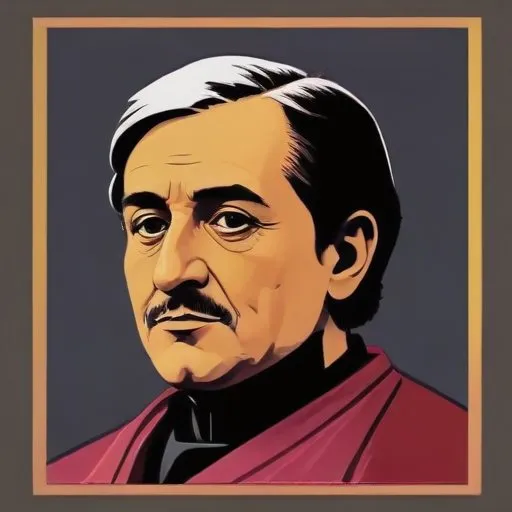
A 17th-century master of German literature, known for his poignant and expressive works that explored the human condition, often incorporating themes of love, death, and morality.
Andreas Gryphius was a renowned German poet and playwright, celebrated for his eloquent sonnets that captured the human experience of suffering, frailty, and the world. Considered one of the most important Baroque poets of the Germanosphere, Gryphius' works not only improved the German language but also left an indelible mark on German poetry.
Gryphius was born on October 2, 1616, in Glogau, Duchy of Glogau, Silesia, to Paullus Gryphius, a respected clergyman and Lutheran archdeacon, and Anna ne Eberhardin. His family name, originally Greif, was Latinised to Gryphius by his paternal great-grandfather Peter Greif von Heringen.
Orphaned at a young age, Gryphius faced the challenges of the Thirty Years War, which forced him to flee his native town. Despite these difficulties, he received an excellent classical education in various places, including Freistadt, where he developed a strong foundation in Latin and classical literature.
In 1634, Gryphius moved to Danzig, where he met professors Peter Crger and Johann Mochinger at the Danzig Gymnasium. Crger, who had close contacts with Martin Opitz, the father of German poetry, introduced Gryphius to the new German language poetry.
Greatly influenced by Crger, Gryphius dedicated poems to him, and his works began to take shape. He wrote Latin language poetry, German poems, and sonnets, which showcased his mastery of language and form.
Gryphius' most notable works include his collection of sonnets, which explores the human condition, and his plays, such as Carolus Stuardus and Papinianus, which demonstrate his skill in crafting compelling narratives.
As one of the first improvers of the German language and poetry, Gryphius' contributions paved the way for future generations of German writers. His emphasis on the importance of the German language and its potential for poetic expression helped shape the country's literary identity.
In 1649, Gryphius married Rosina Deutschlnder, with whom he had six children. He passed away on July 16, 1664, leaving behind a legacy as a prolific poet, playwright, and champion of the German language.
Gryphius' impact on German literature is still felt today, with his works continuing to inspire and influence writers, poets, and scholars. His commitment to the German language and his innovative approach to poetry have secured his place as one of the most important Baroque poets of the Germanosphere.
These quotes, taken from Gryphius' works, demonstrate his profound insight into the human experience and his ability to distill complex emotions into powerful, poetic language.
Born in 1759
A renowned poet and playwright who crafted influential works that explored the human condition, morality, and the struggle for freedom, leaving a lasting impact on German literature.
Born in 1749
A German literary giant who penned iconic works like "Faust" and "The Sorrows of Young Werther", shaping the Romantic movement and influencing countless writers.
Born in 1729
A prominent Enlightenment thinker, he's known for his influential writings on philosophy, literature, and theology, which helped shape modern German culture. He's also credited with developing the concept of dramatic irony in literature.
53 Years Old
A Jamaican artist who blends dancehall, reggae, and pop to create infectious hits, known for his energetic stage presence and chart-topping singles like "Gimme the Light" and "Baby Boy".
Born in 1744
A German Enlightenment thinker who shaped modern philosophy, literature, and anthropology with his ideas on cultural relativism, nationalism, and the importance of folklore. He's often considered the father of comparative literature.
Born in 1797
A 19th-century literary mastermind who penned poignant poetry and biting social commentary, known for his witty satire and romantic verses that still resonate today.
