


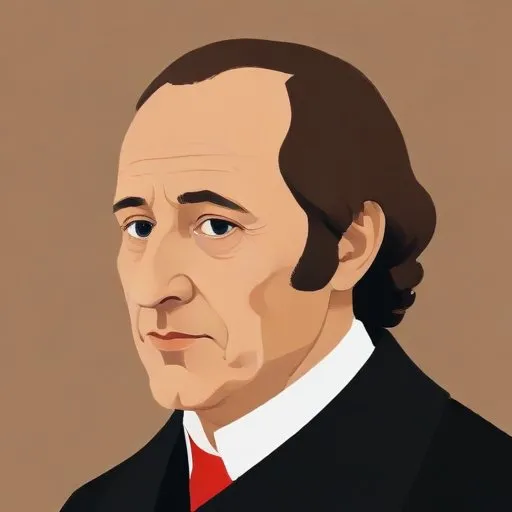
A German Enlightenment thinker who shaped modern philosophy, literature, and anthropology with his ideas on cultural relativism, nationalism, and the importance of folklore. He's often considered the father of comparative literature.
Johann Gottfried Herder is renowned for his significant contributions to the fields of philosophy, literature, and cultural anthropology, earning him the title of "the father of Romantic nationalism." His groundbreaking ideas on the importance of folk culture and the role of language in shaping national identity have had a lasting impact on modern thought.
Born on August 25, 1744, in Mohrungen, Poland (now Morg, Poland), Herder grew up in a poor household, where his parents, Gottfried and Anna Elizabeth, instilled in him a love for learning. Despite their financial struggles, Herder's father, a teacher, encouraged his son's intellectual curiosity, providing him with a Bible and songbook to educate himself.
In 1762, Herder enrolled at the University of Königsberg, where he became a student of Immanuel Kant and came under the intellectual guidance of Johann Georg Hamann. This exposure had a profound impact on Herder's thinking, as he began to question the claims of pure secular reason and develop his own philosophical ideas.
Herder's Romantic philosophy emphasized the importance of emotion, intuition, and individual experience in understanding human nature and society. He argued that true German culture was rooted in the common people (das Volk) and that folk songs, poetry, and dances embodied the spirit of the nation (Volksgeist).
Herder's literary criticism and philosophical writings had a significant impact on his contemporaries and subsequent generations. Some of his notable works include:
Herder's ideas have had a profound impact on modern thought, influencing fields such as:
Herder's personal life was marked by significant events that shaped his intellectual and emotional development:
Johann Gottfried Herder's contributions to philosophy, literature, and cultural anthropology have left an indelible mark on modern thought. His emphasis on folk culture, national identity, and the importance of language has influenced generations of thinkers and shaped the course of intellectual history.
Born in 1724
Developed influential philosophical frameworks, such as the Critique of Pure Reason, that shaped modern Western thought on ethics, morality, and human understanding.
Born in 1712
A pioneering thinker who shaped modern democracy and education with his ideas on social contracts, general will, and the importance of early childhood education. His writings influenced the French Revolution and modern political thought.
Born in 1694
A witty and insightful 18th-century writer and philosopher who used satire to critique societal norms and advocate for reason, tolerance, and human rights.
Born in 1729
A prominent Enlightenment thinker, he's known for his influential writings on philosophy, literature, and theology, which helped shape modern German culture. He's also credited with developing the concept of dramatic irony in literature.
Born in 1788
A pessimistic philosopher who wrote about the human condition, emphasizing the struggles and sufferings of life, and is famous for his concept of the "will to life".
Born in 1770
A German philosopher and academic who developed a comprehensive and systematic philosophy that emphasized the unity of all things and the dialectical process of thesis, antithesis, and synthesis. His ideas have had a profound impact on modern thought, influencing fields such as philosophy, politics, and art.
Born in 1749
A German literary giant who penned iconic works like "Faust" and "The Sorrows of Young Werther", shaping the Romantic movement and influencing countless writers.
