


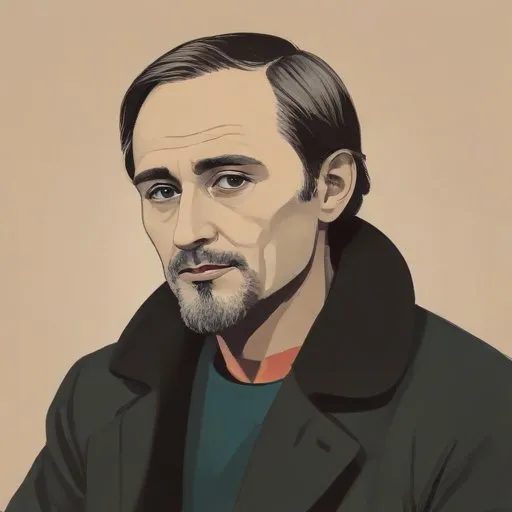
A Soviet writer and poet, known for his unique blend of realism and mysticism, exploring the human condition and the Russian Revolution in his works. His writing often blurred the lines between poetry and prose, creating a distinctive style.
Andrei Platonov, a Soviet Russian novelist, philosopher, playwright, and poet, is best known for his bold and unapologetic critiques of Stalinist policies, particularly his skeptical view of collectivization. Through his works, he dared to challenge the status quo, earning him both recognition and repression during his lifetime.
Platonov was born on August 28, 1899, in Yamskaya Sloboda, a settlement on the outskirts of Voronezh, Central Russia. His father, a metal fitter and amateur inventor, and his mother, the daughter of a watchmaker, instilled in him a strong sense of curiosity and creativity. After completing his primary education, Platonov worked various jobs, from office clerk to smelter, before enrolling in Voronezh Polytechnic Institute to study electrical technology.
In 1918, during the Russian Civil War, Platonov assisted his father on trains, delivering troops and supplies. This experience would later influence his writing, which often explored themes of social change and human struggle. Meanwhile, he began submitting poems to Moscow-based papers, establishing himself as a prolific contributor to local periodicals, including Zheleznyi put and Krasnaia derevnia.
Platonov's writing soon took on a more critical tone, questioning the role of the state in people's lives. His novels, Chevengur (1928) and The Foundation Pit (1930), mocked the utopian ideals of Stalin's collectivization policies, exposing the harsh realities of rural life and the dehumanizing effects of industrialization. These works, though unpublished during his lifetime, cemented his reputation as a rebellious voice in Soviet literature.
Platonov's philosophy was deeply rooted in existentialism, emphasizing the individual's struggle for meaning in a seemingly meaningless world. He rejected the notion of a centralized, authoritarian state, instead advocating for a more decentralized, humanitarian approach to governance. This stance, though ahead of its time, earned him both admiration and criticism from his contemporaries.
Andrei Platonov's work continues to inspire readers and writers worldwide, offering a unique perspective on the complexities of human experience during times of social upheaval. His unflinching critiques of authoritarianism and his passion for individual freedom have made him a beacon of literary dissent, influencing generations of writers, philosophers, and social activists.
Platonov's legacy is often compared to that of fellow Soviet authors, such as Mikhail Bulgakov and Andrei Bely, who also challenged the political and cultural norms of their time. While their styles differed, they shared a common commitment to artistic expression and intellectual freedom. Today, Platonov's works remain a powerful testament to the enduring importance of literature as a tool for social critique and change.
Born in 1893
A Russian avant-garde artist who revolutionized poetry and theater with his bold, futuristic style and passionate performances. He's most famous for his vibrant, propaganda-inspired posters and poems that captured the spirit of the Russian Revolution.
Born in 1891
A Russian literary mastermind, famous for blending fantasy and realism in works like "The Master and Margarita", which explores the intersection of politics, philosophy, and the human condition.
Born in 1880
A Russian literary giant, known for pioneering the avant-garde movement in literature, blending poetry and prose to create innovative, symbolic works that explored the human experience.
Born in 1890
A Russian literary giant, renowned for his poetic and novelistic masterpieces, including the epic "Doctor Zhivago", which captured the essence of Soviet Russia. His works are a testament to the power of literature in shaping cultural identity.
Born in 1899
A Russian-born novelist and critic, renowned for crafting intricate, lyrical prose and exploring themes of identity, morality, and the human condition through works like "Lolita" and "Pale Fire".
Born in 1905
A Russian absurdist writer, known for his surreal and often humorous short stories, poetry, and plays that critique Soviet society. His unique style blends wit and darkness, leaving readers both entertained and unsettled.
