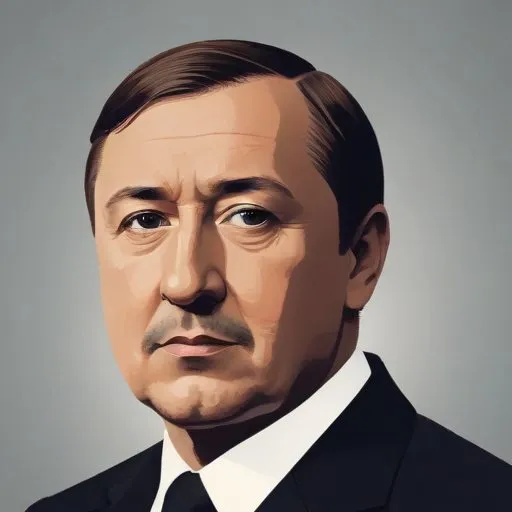
Andrey Borodin: The Financial Wizard of Moscow
A Career Marked by Controversy and Success
Andrey Borodin, a Russian financial expert and economist, is best known for his tenure as the President of Bank of Moscow, a position he held until his dismissal in 2011. As the head of one of Russia's largest banks, Borodin was a key figure in the country's financial landscape, but his career has been marred by controversy and allegations of fraud.
Early Life and Education
Born on May 24, 1967, in Moscow, Borodin served in the KGB Border Troops from 1985 to 1987. After completing his service, he enrolled at the Moscow Finance Institute, where he studied economics. In 1989, he became a visiting student at the University of Passau in Germany, an experience that broadened his understanding of international finance. Borodin graduated from the Moscow Finance Institute in 1991 with a degree in International Economics and Finance.
Rise to Prominence
Borodin's career in finance took off in the early 1990s, when he worked for Dresdner Bank in Germany. During his 18-month training course in Dortmund, he honed his skills in international finance. He later moved to Frankfurt and worked at the bank's head office in the Financial Institutions Department. In 1993, Borodin returned to Moscow and began working as an economics and finance adviser to Mayor
Yury Luzhkov, a position that catapulted him to prominence in Russian financial circles.
Tenure at Bank of Moscow
In 1994, Borodin joined the Bank of Moscow, where he quickly rose through the ranks. He became the bank's president in 2001, a position he held until his dismissal in 2011. During his tenure, Borodin transformed the bank into one of Russia's largest and most successful financial institutions. However, his leadership was also marked by controversy, including allegations of abuse of authority and fraud.
Controversy and Exile
In 2011, Borodin was dismissed from his position at Bank of Moscow and charged with abuse of authority. The charges were related to the Premier Estate criminal case, which alleged that Borodin and his first deputy, Dmitri Akulinin, had embezzled 13 billion rubles (approximately $400 million) from the bank. Borodin was placed on an Interpol Red Notice and fled to London, where he was granted political asylum in 2013.
Personal Life and Philanthropy
Despite his controversial career, Borodin has been known for his philanthropic efforts. He has supported various charitable organizations in Russia, including the Moscow-based charity, "New Names." In 2012, Borodin purchased Park Place, a luxury estate near Henley-on-Thames, where he currently resides.
Legacy and Impact
Andrey Borodin's career has been marked by both success and controversy. Despite the allegations of fraud and abuse of authority, he remains a significant figure in Russian finance. His legacy is a testament to the complexities of Russia's financial landscape, where power, politics, and money often intersect.
- Net Worth: Estimated to be in excess of $100 million
- Influence on Modern Society: Borodin's career has had a significant impact on Russia's financial sector, shaping the country's economic landscape
- Career Highlights: President of Bank of Moscow (2001-2011), adviser to Mayor Yury Luzhkov (1993-1994)
- Philosophical Contributions: Borodin's work has focused on the intersection of finance and politics in Russia
Despite the controversies surrounding his career, Andrey Borodin remains a fascinating figure in the world of finance. His story serves as a reminder of the complexities of power, politics, and money in modern Russia.