


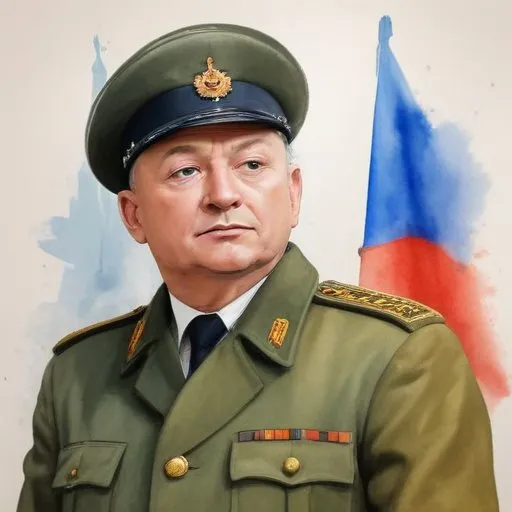
Russian soldier and politician who served as the Mayor of Moscow from 1992 to 2010, known for transforming the city's infrastructure and economy through large-scale construction projects. He's also infamous for his authoritarian style and corruption allegations.
Yury Luzhkov, a Russian politician, is famously known for his 18-year tenure as the mayor of Moscow, transforming the city into a modern metropolis and making it a hub for business and investment. During his time as mayor, Luzhkov oversaw large-scale construction projects, expanded the city's economy, and established Moscow as a financial district.
Yury Mikhailovich Luzhkov was born on September 21, 1936, in Moscow, Soviet Union. His father, Mikhail Andreyevich Luzhkov, moved to Moscow from a small village in Tver Oblast in the 1930s. Luzhkov's early life and career were marked by humble beginnings, with his father working as a foreman in a car repair shop.
Luzhkov's entry into politics began in 1990, when he was appointed as the chairman of the Mosgorispolkom, the executive committee of the Moscow City Council. He was instrumental in the formation of the city's first municipal government and played a key role in the early 1990s, working closely with Boris Yeltsin, the then-president of Russia.
Luzhkov's leadership skills and vision for Moscow earned him recognition, and in 1992, he was elected as the mayor of Moscow. During his tenure, he implemented numerous development projects, including the construction of the Moscow Business Center, the renovation of Red Square, and the rebuilding of the Cathedral of Christ the Saviour.
He was also instrumental in the formation of the United Russia party, which became the dominant political force in Russia. Luzhkov's influence extended beyond Moscow, and he was regarded as one of the most powerful politicians in Russia.
Luzhkov's leadership had a significant impact on Moscow's economy, with the city's GDP increasing significantly during his tenure. He attracted foreign investment, modernized the city's infrastructure, and turned Moscow into a major financial hub.
However, Luzhkov's tenure was not without controversy. He was accused of corruption, cronyism, and poor management of the city's traffic and environment. The 2010 Russian wildfires, which caused widespread smog in Moscow, were a major criticism of his administration.
On September 28, 2010, Luzhkov was fired from his post as mayor by President Dmitry Medvedev, citing "loss of trust" as the reason. This marked the end of an era, and Luzhkov's legacy was a subject of debate among Russians.
In his later life, Luzhkov continued to be involved in politics, albeit in a limited capacity. He passed away on December 10, 2019, at the age of 83, leaving behind a legacy that is both praised and criticized by Russians.
Luzhkov was known for his charismatic personality and his ability to inspire and motivate. One of his famous quotes is, "Moscow is not just a city, it's a symbol of Russia, and we must make it a symbol of the 21st century."
Luzhkov received numerous awards and honors during his lifetime, including the Order of Merit for the Fatherland, the highest civilian honor in Russia. He was also awarded the Order of St. Andrew the Apostle, the first-class Order of Alexander Nevsky, and the Order of Honour.
Luzhkov was married to Yelena Baturina, a Russian businesswoman, and had two daughters, Elena and Olga. His personal life was subject to media scrutiny, especially during his tenure as mayor.
Luzhkov's legacy extends beyond Moscow, and his impact on modern society is undeniable. He played a crucial role in shaping Russia's economy and politics, and his vision for Moscow continues to influence urban development projects around the world.
Luzhkov's tenure as mayor is often compared to that of other prominent mayors, such as Rudy Giuliani of New York City and Boris Johnson of London. While he may not have achieved the same level of international recognition, his impact on Moscow and Russia is undeniable.
95 Years Old
First President of Russia, leading the country's transition from communism to democracy, and known for his bold reforms and iconic leadership style.
73 Years Old
A Russian politician who has dominated the country's politics for over two decades, known for his authoritarian leadership style and controversial foreign policy decisions.
60 Years Old
Russian lawyer and politician who served as President of Russia from 2008 to 2012, known for his efforts to modernize Russia's economy and politics. He also served as Prime Minister from 2012 to 2020.
88 Years Old
A Russian scholar and politician who served as the Mayor of Saint Petersburg, known for his reforms and efforts to revitalize the city's economy and infrastructure. He was also a mentor to Vladimir Putin and Dmitry Medvedev.
76 Years Old
A Russian general and politician who played a key role in the country's transition from communism to democracy, and later became a prominent figure in Russian politics. He's known for his efforts to reform the military and promote democratic values.
81 Years Old
Leader of the Communist Party of the Russian Federation, advocating for socialist policies and criticizing Western influence, while maintaining a significant presence in Russian politics.
80 Years Old
A flamboyant and nationalist politician who led the Liberal Democratic Party of Russia and was known for his provocative statements and extremist views. He was a prominent figure in Russian politics from the 1990s to the 2020s.
95 Years Old
The last leader of the Soviet Union, who introduced reforms that led to the end of the Cold War and the collapse of communism, earning a Nobel Peace Prize. He's known for his policies of glasnost and perestroika, which transformed the Soviet Union and the world.
