


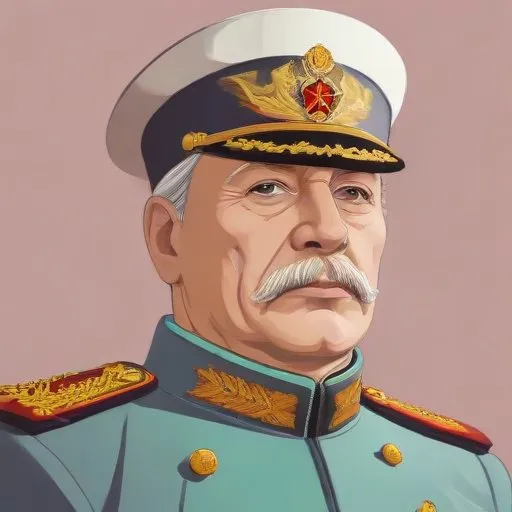
A Russian general and politician who played a key role in the country's transition from communism to democracy, and later became a prominent figure in Russian politics. He's known for his efforts to reform the military and promote democratic values.
Alexander Lebed, a renowned Soviet and Russian military officer, and politician, is best known for his impressive military career, participation in several high-profile conflicts, and his foray into politics, including a presidential bid in 1996.
Lebed's military career spanned over three decades, during which he participated in some of the most significant conflicts of the late Soviet era. He served in the Soviet-Afghan War and later became the commander of the 106th Guards Airborne Division from 1988 to 1991. His leadership skills and strategic prowess were evident in his role as the deputy head of the Russian Airborne Troops.
In 1992, Lebed played a crucial role in ending the military phase of the conflict in Moldova between Transnistrian separatists and the Moldovan government. As the commander of the Russian 14th Guards Army, he oversaw the occupation of the region, earning recognition for his efforts to bring stability to the volatile region.
In 1995, Lebed resigned from the military to pursue a career in politics. His charismatic personality and popularity among the army made him an attractive candidate. He ran for president in the 1996 Russian presidential election, garnering around 14% of the vote nationwide, placing him third behind incumbent Boris Yeltsin and Communist Party leader Gennady Zyuganov.
Following the election, Lebed served as the Secretary of the Security Council in the Yeltsin administration, where he led negotiations that ended the First Chechen War. His diplomatic efforts earned him recognition as a capable and effective leader.
In 1998, Lebed became the governor of Krasnoyarsk Krai, the second-largest Russian region. During his four-year tenure, he worked tirelessly to develop the region's economy and infrastructure. His leadership and vision for the region earned him popularity among the locals, who praised his efforts to bring about positive change.
Alexander Lebed's military career, political forays, and leadership roles have left an indelible mark on Russian history. His ability to navigate complex conflicts and his vision for regional development have made him a respected figure in Russian politics. Despite his untimely death in a helicopter crash in 2002, Lebed's legacy continues to inspire and influence Russian politics and society.
Lebed's unique blend of military prowess, diplomatic skills, and charismatic leadership has drawn comparisons to other notable figures, such as Augusto Pinochet and Napoleon Bonaparte. While these comparisons may be imperfect, they underscore Lebed's significance as a leader who transcended traditional boundaries.
"I am not a politician, I am a military man. But I can be a president."
This quote captures Lebed's humility, honesty, and confidence in his abilities, which endeared him to the Russian public and solidified his reputation as a capable leader.
95 Years Old
First President of Russia, leading the country's transition from communism to democracy, and known for his bold reforms and iconic leadership style.
95 Years Old
The last leader of the Soviet Union, who introduced reforms that led to the end of the Cold War and the collapse of communism, earning a Nobel Peace Prize. He's known for his policies of glasnost and perestroika, which transformed the Soviet Union and the world.
73 Years Old
A Russian politician who has dominated the country's politics for over two decades, known for his authoritarian leadership style and controversial foreign policy decisions.
60 Years Old
Russian lawyer and politician who served as President of Russia from 2008 to 2012, known for his efforts to modernize Russia's economy and politics. He also served as Prime Minister from 2012 to 2020.
76 Years Old
Russia's top diplomat, responsible for shaping the country's foreign policy and representing its interests on the global stage, known for his sharp wit and tough negotiating style.
88 Years Old
A Russian politician who served as Prime Minister from 1992 to 1998, known for his role in shaping post-Soviet Russia's economy and politics.
70 Years Old
Russian economist and politician who played a key role in shaping the country's post-Soviet economy, introducing radical reforms to transition from a planned to a market economy.
75 Years Old
Russia's first post-Soviet foreign minister, known for his pro-Western reforms and efforts to integrate Russia into the global community. He played a key role in shaping Russia's foreign policy in the 1990s.
