


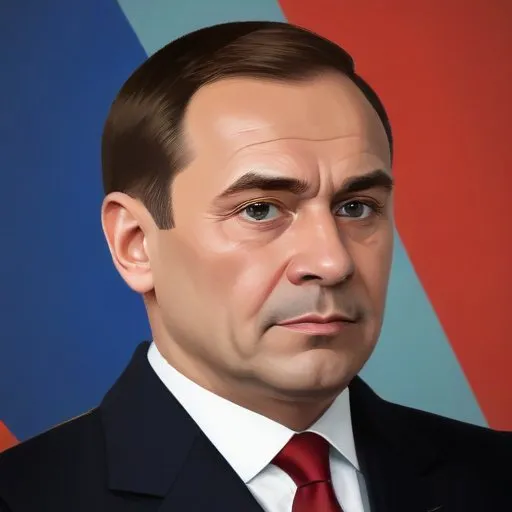
Russia's first post-Soviet foreign minister, known for his pro-Western reforms and efforts to integrate Russia into the global community. He played a key role in shaping Russia's foreign policy in the 1990s.
Andrei Kozyrev, the first Minister of Foreign Affairs of the Russian Federation, played a pivotal role in shaping Russia's foreign policy in the tumultuous period following the collapse of the Soviet Union. From 1990 to 1996, Kozyrev navigated the complexities of international relations, earning both praise and criticism for his efforts to reposition Russia on the global stage.
Kozyrev was born on March 27, 1951, in Brussels, Belgium, to a Soviet engineer temporarily working abroad. His early life was marked by a strong interest in international relations, which led him to enroll in the prestigious Moscow State Institute of International Relations (MGIMO) in 1969. Before starting his studies, Kozyrev spent a year as a fitter in the Kommunar machine-building factory in Moscow, an experience that would later influence his approach to diplomacy.
Kozyrev graduated from MGIMO in 1974 with a PhD in history and subsequently joined the Soviet Ministry of Foreign Affairs as a speechwriter and researcher in the Department of International Organizations. His expertise in arms control and international organizations earned him a reputation as a skilled diplomat, eventually leading to his appointment as foreign minister in 1990.
Kozyrev's tenure as foreign minister was marked by significant challenges, including the dissolution of the Soviet Union and the need to establish Russia as a sovereign nation. He developed Russia's foreign policy, emphasizing cooperation with Western nations and participation in international organizations. His efforts led to Russia's involvement in the Oslo I Accord and the signing of the Partnership for Peace agreement with NATO.
Kozyrev's approach to foreign policy was not without controversy. Many in Russia criticized him for being too conciliatory and weak in defending Russian interests, particularly in the face of NATO's expansion into Eastern Europe. His involvement in the Oslo I Accord, which aimed to resolve the Israeli-Palestinian conflict, drew criticism from Russian nationalist politicians and parties.
Andrei Kozyrev's legacy is complex and multifaceted. While criticized for his perceived weaknesses, he played a crucial role in shaping Russia's foreign policy during a period of significant uncertainty. His efforts to engage with Western nations and international organizations helped to establish Russia as a sovereign nation, paving the way for future diplomatic efforts.
Today, Kozyrev's legacy serves as a reminder of the challenges and opportunities that arise during times of transition and upheaval. As a key figure in Russia's post-Soviet era, his contributions to international relations continue to influence diplomatic efforts in the region.
95 Years Old
First President of Russia, leading the country's transition from communism to democracy, and known for his bold reforms and iconic leadership style.
73 Years Old
A Russian politician who has dominated the country's politics for over two decades, known for his authoritarian leadership style and controversial foreign policy decisions.
95 Years Old
The last leader of the Soviet Union, who introduced reforms that led to the end of the Cold War and the collapse of communism, earning a Nobel Peace Prize. He's known for his policies of glasnost and perestroika, which transformed the Soviet Union and the world.
98 Years Old
A Georgian politician who served as the country's second president, known for his role in ending the Cold War and introducing democratic reforms to Georgia.
