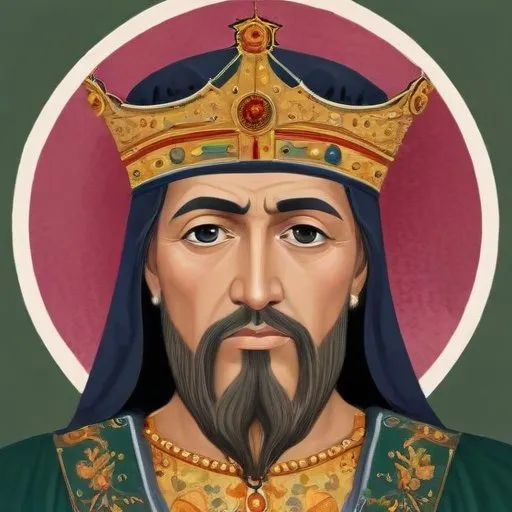
Andronikos III Palaiologos: The Byzantine Emperor Who Fought Against the Ottoman Tide
Andronikos III Palaiologos, the grandson of
Andronikos II Palaiologos, is remembered as the Byzantine emperor who made a last-ditch effort to stem the Ottoman Turks' advance into Bithynia during his reign from 1328 to 1341. His military campaigns, though ultimately unsuccessful, showcased his bravery and determination to protect the dwindling Byzantine Empire.
A Turbulent Rise to Power
Andronikos III was born on March 25, 1297, in Constantinople, to
Michael IX Palaiologos and Rita of Armenia. He was proclaimed co-emperor in his youth, before 1313, and by 1321, he rebelled against his grandfather, Andronikos II Palaiologos. The young Andronikos was formally crowned co-emperor in February 1325, but it wasn't until May 24, 1328, that he ousted his grandfather and became the sole emperor of the Byzantine Empire.
Military Campaigns and Diplomatic Efforts
Andronikos III's reign was marked by a series of military campaigns against the Ottoman Turks, who were gradually encroaching upon Byzantine territories. Despite his valiant efforts, he suffered a crushing defeat at Rusokastro against the Bulgarians. However, he did manage to recover several key territories, including Chios, Lesbos, Phocaea, Thessaly, and Epirus. His diplomatic endeavors were equally impressive, as he formed alliances with the Genoese and the Venetians to counter the Ottoman threat.
Personal Life and Legacy
Andronikos III's personal life was marred by tragedy and controversy. He accidentally caused the death of his brother Manuel, which led to his father's demise. His marriage to Irene of Brunswick, daughter of Henry I, Duke of Brunswick-Grubenhagen, produced a son who died in infancy. Despite these setbacks, Andronikos III left a lasting legacy, though his early death at the age of 44 in 1341 led to a power vacuum that ultimately paved the way for the Serbian Empire's rise and the Ottoman Empire's entry into the Balkans.
Lasting Impact on the Byzantine Empire
Andronikos III's reign, though marked by military setbacks, demonstrated his unwavering commitment to preserving the Byzantine Empire. His efforts to reclaim lost territories and forge alliances with other powers showcased his strategic thinking and leadership skills. Though his reign was cut short, he left an indelible mark on the Byzantine Empire, serving as a testament to the empire's resilience in the face of adversity.
Influence on Modern Society
Andronikos III's legacy extends beyond the boundaries of the Byzantine Empire. His military campaigns against the Ottoman Turks can be seen as a precursor to the modern-day struggles between East and West. His diplomatic efforts, though ultimately unsuccessful, demonstrated the importance of forming alliances and coalitions in the face of adversity. As the last great emperor of the Byzantine Empire, Andronikos III serves as a reminder of the importance of preserving cultural heritage and defending one's territory against external threats.
Trivia and Fun Facts
- Andronikos III was known for his bravery in battle, earning him the respect of his contemporaries.
- He was the last Byzantine emperor to use the title "Basileus" (Emperor) in his official documents.
- Andronikos III's reign was marked by a series of natural disasters, including earthquakes and famines, which weakened the empire's infrastructure.
Historical Context and Legacy
Andronikos III Palaiologos ruled during a tumultuous period in Byzantine history, marked by external threats and internal power struggles. Despite his military setbacks, he remains a significant figure in Byzantine history, symbolizing the empire's last stand against the Ottoman tide. His legacy serves as a testament to the bravery and determination of the Byzantine people in the face of overwhelming odds.