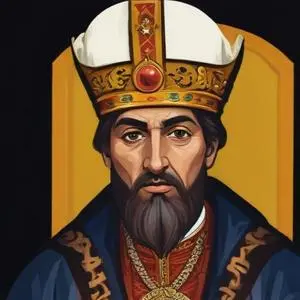
Constantine XI Palaiologos: The Last Roman Byzantine Emperor
The Fall of an Empire
Constantine XI Palaiologos is remembered as the last Roman Byzantine Emperor, reigning from 1449 until his death in battle in 1453. His demise marked the end of the Eastern Roman Empire, which had originated from Constantine the Great's foundation of Constantinople as the Roman Empire's new capital in 330.
Early Life and Career
Born on February 8, 1404, Constantine was the fourth son of Emperor
Manuel II Palaiologos and Helena Draga, the daughter of Serbian ruler Konstantin Dejanovi. Little is known about his early life, but he demonstrated his skills as a skilled general from the 1420s onward. Constantine's career was marked by his military prowess, and he was trusted and favored by his older brother, Emperor John VIII Palaiologos.
Administrative Skills
Although primarily a soldier, Constantine was also a skilled administrator. He was designated as regent twice during John VIII's journeys away from Constantinople in 1423-1424 and 1437-1440. This responsibility showcased his ability to govern and manage the empire effectively.
Military Campaigns
In 1427-1428, Constantine and his brother John fended off an attack on the Morea (the Peloponnese) by Carlo I Tocco, ruler of Epirus. He was proclaimed Despot of the Morea and ruled the province together with his brothers Theodore and Thomas. They extended Roman rule to cover almost the entire Peloponnese for the first time since the Fourth Crusade. Constantine also rebuilt the ancient Hexamilion wall, which defended the peninsula from outside attacks.
Failed Campaigns and Succession
Although ultimately unsuccessful, Constantine personally led a campaign into Central Greece and Thessaly in 1444-1446, attempting to extend Byzantine rule into Greece once more. In October 1448, John VIII died without children, and as his favored successor, Constantine was proclaimed Emperor.
The Fall of Constantinople
Constantine XI's reign was marked by his final stand against the Ottoman Empire. Despite his bravery, he was killed in battle on May 29, 1453, during the Fall of Constantinople. His death marked the definitive end of the Eastern Roman Empire.
Legacy
Constantine XI Palaiologos' legacy is that of a skilled military leader and administrator who fought valiantly to save his empire. Although he ultimately failed, his bravery and determination are remembered as a testament to the resilience of the Byzantine Empire.
Personal Milestones and Key Life Events
- February 8, 1404: Born as the fourth son of Emperor Manuel II Palaiologos and Helena Draga
- 1427-1428: Fended off an attack on the Morea with his brother John
- 1428: Proclaimed Despot of the Morea
- 1444-1446: Led a campaign into Central Greece and Thessaly
- October 1448: Became Emperor after the death of John VIII
- May 29, 1453: Killed in battle during the Fall of Constantinople
Historical Context and Legacy
Constantine XI's reign marked the end of an era, as the Eastern Roman Empire came to a close. His legacy serves as a reminder of the empire's rich history and the bravery of its leaders in the face of adversity.
FAQ
What is Constantine XI Palaiologos early life and rise to power?
Constantine XI Palaiologos was born in 1405 and became the Byzantine Emperor in 1449, following the death of his brother, John VIII Palaiologos, and went on to rule the Byzantine Empire during a period of decline and Ottoman encroachment.
How did Constantine XI Palaiologos respond to the Ottoman threat?
Constantine XI Palaiologos responded to the Ottoman threat by strengthening the Byzantine military, forming alliances with European powers, and attempting to negotiate with the Ottomans, ultimately leading to the Fall of Constantinople in 1453 and the end of the Byzantine Empire.
What are Constantine XI Palaiologos most notable achievements?
Constantine XI Palaiologos notable achievements include his defense of Constantinople against the Ottomans, his attempts to reform the Byzantine government and military, and his patronage of the arts and architecture.
How did Constantine XI Palaiologos interact with the Roman Catholic Church?
Constantine XI Palaiologos interacted with the Roman Catholic Church through a combination of diplomacy, negotiation, and theological debate, seeking to reconcile the Eastern Orthodox Church with the Catholic Church and secure Western aid against the Ottomans.
What is Constantine XI Palaiologos legacy in Byzantine history?
Constantine XI Palaiologos legacy in Byzantine history is that of a brave and determined leader who fought to preserve the Byzantine Empire against overwhelming odds, ultimately becoming the last Byzantine Emperor and a symbol of Greek resistance against the Ottomans.