


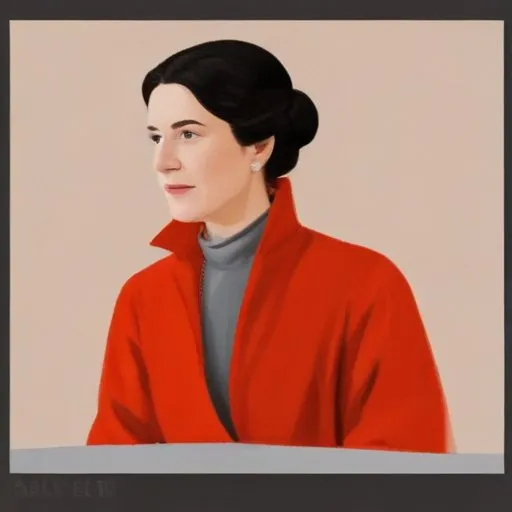
A pioneering art collector and philanthropist who supported the arts and social causes, particularly in education and housing for the poor. Her generosity and patronage helped establish several institutions and charities.
Angela Burdett-Coutts, 1st Baroness Burdett-Coutts, was a British philanthropist and one of the wealthiest women in England during the 19th century. She is best known for her tireless efforts in supporting social causes, education, and the arts, earning her the admiration of prominent figures such as Edward VII, Charles Dickens, and the Duke of Wellington.
Born on April 21, 1814, Angela Georgina Burdett inherited her grandfather's vast fortune of approximately £1.8 million, equivalent to £210 million in 2023, following the death of her step-grandmother, Harriot Beauclerk, Duchess of St Albans. This inheritance made her one of the richest women in England, and she used her wealth to support various charitable causes throughout her life.
Burdett-Coutts was an avid collector of paintings, including Old Masters. Her collection included notable works such as Robert Scott Lauder's "Christ Walking on the Sea." She was also a patron of the arts, supporting various artists and writers of her time.
Burdett-Coutts was a devoted philanthropist, using her wealth to support various social causes. She was particularly interested in education, and her philanthropic efforts led to the establishment of schools and educational institutions across England. She also supported the construction of churches, hospitals, and other public buildings.
Burdett-Coutts was known for her strong relationships with prominent figures of her time, including Charles Dickens and the Duke of Wellington. She was a frequent visitor to Dickens' home, and he often sought her counsel on matters related to social reform. Her relationship with the Duke of Wellington was more romantic, and she even proposed marriage to him, despite their significant age difference.
In 1878, Burdett-Coutts married her 29-year-old secretary, the American-born William Ashmead Bartlett. This marriage was met with shock and scandal, given the significant age difference between the couple. However, their marriage lasted until her death in 1906.
Burdett-Coutts' philanthropic efforts had a profound impact on English society during the 19th century. Her support for education, the arts, and social causes earned her the respect and admiration of her contemporaries. She remained a prominent figure in English society until her death on December 30, 1906.
Upon the death of her beloved companion, Hannah Brown, Burdett-Coutts wrote to a friend, "I am utterly crushed by the loss of my poor darling, the companion and sunshine of my life for 52 years."
Burdett-Coutts' remarkable life and philanthropic efforts continue to inspire generations. Her legacy serves as a testament to the power of wealth and privilege used for the greater good.
Born in 1812
A renowned author of timeless classics, crafting vivid stories that exposed social injustices and explored the human condition, leaving an indelible mark on literature.
Born in 1819
The monarch who ruled the British Empire for 63 years, overseeing the Industrial Revolution and expanding the empire's reach, earning the nickname "the Grandmother of Europe".
Born in 1820
Pioneering nurse and statistician who revolutionized healthcare by introducing sanitation practices and data-driven decision making, becoming the founder of modern nursing.
Born in 1791
Pioneering scientist who discovered electromagnetic induction, formulated the laws of electrolysis, and invented the first electrical generator, revolutionizing our understanding of electricity and its applications.
