


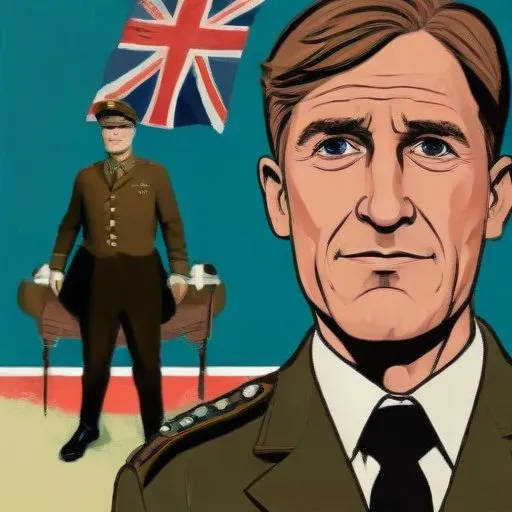
A Tasmanian politician who served as the 33rd Premier of Tasmania, known for his contributions to the state's development and governance.
Angus Bethune, a stalwart figure in Tasmanian politics, is remembered for his trailblazing premiership from 1969 to 1972, introducing a string of progressive reforms that transformed the island state. As the first non-Labor Premier in 35 years, Bethune's tenure marked a significant shift in Tasmania's political landscape, earning him a reputation as a visionary leader.
Born on September 10, 1908, in Sheffield, Tasmania, Bethune was educated at Launceston Grammar School and The Hutchins School in Hobart. Before entering politics, he worked as a jackaroo and later enlisted in the Royal Australian Air Force as an airman and Warrant Officer during World War II, serving from 1940 to 1946.
In 1946, Bethune was elected to the Tasmanian House of Assembly, representing the seat of Wilmot (now Lyons) for the Liberal Party. His political acumen and leadership skills propelled him to the position of Leader of the Opposition in 1960, following the resignation of Tim Jackson. This marked the beginning of his ascent to the premiership.
In 1969, Bethune formed government with the support of Kevin Lyons, leader of the Centre Party, becoming the Premier of Tasmania. During his term, he introduced a slew of groundbreaking reforms, including:
These initiatives demonstrated Bethune's commitment to modernizing Tasmania, prioritizing public safety, and promoting environmental conservation.
Angus Bethune's premiership marked a significant turning point in Tasmanian politics, paving the way for future generations of leaders. His reforms continue to shape the state's development, and his legacy serves as a testament to the power of visionary leadership.
Bethune married Alix Alexandra Perronet Pritchard in 1936, and they had a long and fulfilling life together. After retiring from politics, he continued to serve his community, passing away on August 22, 2004, at the age of 95.
Angus Bethune's life and legacy serve as a reminder that even in the most challenging times, courageous leadership and a commitment to reform can pave the way for a brighter future.
Born in 1879
The 10th Prime Minister of Australia, a Labor Party leader who implemented significant economic reforms during the Great Depression, and also a former teacher and union leader.
Born in 1894
The 12th Prime Minister of Australia, a lawyer-turned-politician who played a crucial role in shaping the country's post-war economy and foreign policy, and is often credited with establishing the modern Australian identity.
Born in 1894
The 13th Prime Minister of Australia, serving from 1941, known for his brief but significant term during World War II, and his role in shaping the country's economy.
Born in 1881
Early Hollywood pioneer who directed over 500 films and was a key figure in the development of the film industry. Known for his prolific output and innovative filmmaking techniques.
Born in 1885
Australian engineer and politician who served as the 16th Prime Minister of Australia, implementing significant economic reforms and playing a crucial role in shaping the country's post-war development.
Born in 1894
Physicist and inventor credited with creating the microwave oven, revolutionizing cooking and food preparation. This innovation has had a lasting impact on modern kitchens and daily life.
