


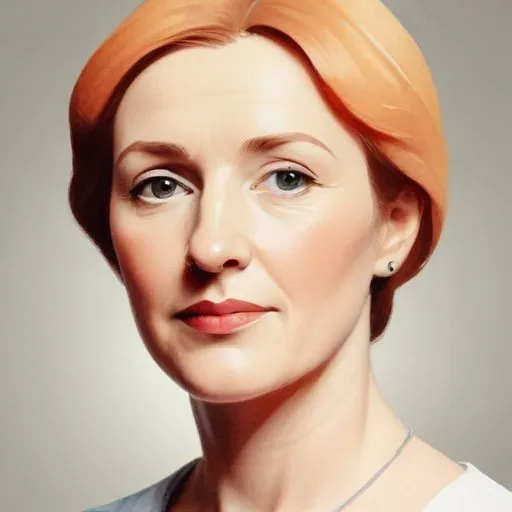
A pioneering Irish sculptor, known for her modernist and abstract works that explored the relationship between form and space. Her innovative style paved the way for future generations of Irish artists.
Anne Acheson, a British-Irish sculptor, is renowned for her groundbreaking invention of plaster casts for soldiers with broken limbs during World War I. Alongside Elinor Hall, she transformed the medical industry with her innovative approach, earning her the esteemed title of Commander of the Order of the British Empire (CBE) in 1919.
Acheson's journey in the art world began at Victoria College, Belfast, and the Belfast School of Art, where she honed her skills in sculpture. She later pursued her passion at the Royal College of Art in London, studying under the tutelage of édouard Lantri. Acheson's exceptional talent earned her a spot at the Royal Academy, where she showcased her work in 1913 with the sculpture "The Pixie."
Over the next four decades, Acheson's sculptures were featured in 22 exhibitions at the Royal Academy, totaling 30 of her remarkable works. Her artistic repertoire included statuettes, portrait heads, and garden figurines, crafted from a range of materials such as wood, metal, stone, and concrete.
During World War I, Acheson volunteered with the Surgical Requisites Association, an organization established by Queen Mary's Needlework Guild to supply medical dressings. Witnessing soldiers return from the front with broken limbs held together by only wooden splints and basic bandages, Acheson was inspired to take action. She proposed taking a plaster cast of the limb, wrapping papier-mâché over it, and placing it over the broken limb to support it while healing. This innovative approach reduced the healing time while providing proper support, revolutionizing the medical industry.
Acheson's outstanding contributions to the field of sculpture and her wartime services earned her several prestigious awards. In 1919, she was awarded the CBE, a testament to her dedication and groundbreaking work. Additionally, she received the Gleichen Memorial Award in 1938, further solidifying her position as a pioneer in her field.
Dividing her time between London and Glenavy, County Antrim, Northern Ireland, Acheson led a fulfilling life, leaving behind a legacy that continues to inspire artists, medical professionals, and individuals around the world. Her remarkable story serves as a testament to the power of innovation, creativity, and determination, inspiring future generations to push the boundaries of what is possible.
Born in 1840
A French sculptor and illustrator famous for creating iconic, emotionally charged figures that capture the human experience, including the iconic symbol of intellectualism, The Thinker.
Born in 1864
French illustrator and sculptor renowned for her pioneering work in Rodin's studio and her own expressive, emotional sculptures that explored the human form. Her tragic life and tumultuous relationship with Rodin have become legendary.
Born in 1898
A pioneer of modern sculpture, creating abstract, biomorphic forms that evoke a sense of primal emotion, and illustrating books with whimsical, dreamlike drawings.
Born in 1903
A pioneering modernist sculptor, creating abstract, biomorphic forms that explore the relationship between nature and the human experience. Her works often feature smooth, curved surfaces and holes, symbolizing a connection to the natural world.
Born in 1894
A pioneer of abstract art, he's renowned for his geometric, minimalist paintings and sculptures that blend simplicity with profound emotional depth.
Born in 1898
A pioneer of modern sculpture, creating abstract, biomorphic forms that evoke a sense of primal emotion, and illustrating books with whimsical, dreamlike drawings.
Born in 1878
A pioneering modernist architect and designer, celebrated for her innovative, luxurious, and functional furniture pieces, such as the iconic E-1027 adjustable table.
