


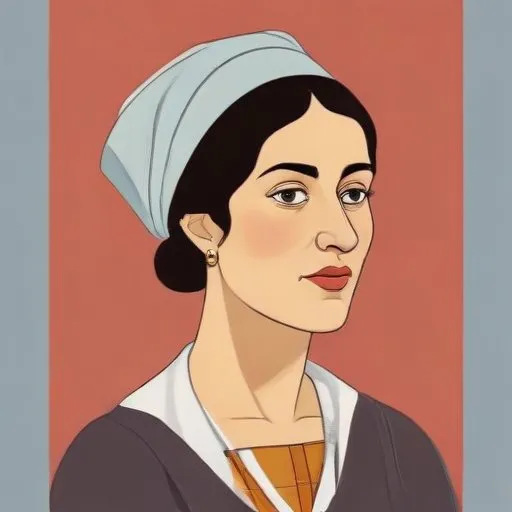
A pioneering archaeologist and writer who uncovered and documented ancient Greek and Roman artifacts, shedding light on classical civilizations.
Anne Claude de Caylus was a French antiquarian, protoarchaeologist, and man of letters who left an indelible mark on the world of art, history, and culture. Born in 1692, Caylus was known for his groundbreaking work in the field of antiquities, which laid the foundation for modern connoisseurship and archaeological practices.
Caylus' impressive career spanned multiple disciplines, including military service, travel, and academia. He was a distinguished member of the Académie royale de peinture et de sculpture and the Académie des Inscriptions, where he contributed significantly to the study and collection of antiquities.
Caylus' approach to antiquities was characterized by a deep respect for the object itself, rather than simply its historical context. This perspective marked a significant shift towards modern connoisseurship, where the object's innate value and beauty are paramount. His emphasis on the importance of understanding and preserving ancient artifacts has inspired generations of art historians, archaeologists, and collectors.
Caylus' work had a profound impact on the development of Neoclassicism, an artistic movement that emerged in the 18th century. His illustrations and writings inspired designers, artists, and architects to incorporate classical elements into their work, shaping the aesthetic of the time. Furthermore, his contributions to the field of archaeology helped lay the groundwork for modern archaeological practices, influencing the way we understand and approach the study of ancient cultures today.
Born on October 31, 1692, Caylus was the eldest son of Lieutenant-General Anne de Tubières, comte de Caylus, and Marthe-Marguerite de Villette de Mursay, comtesse de Caylus. His mother was the daughter of Vice-Admiral Philippe, Marquis de Villette-Mursay, and was raised by Madame de Maintenon, a cousin of Caylus. This connection to the French royal court likely influenced his early interest in art, history, and culture.
Caylus' younger brother, Charles de Tubières de Caylus, became a naval officer and governor of Martinique. Despite their differing career paths, both brothers shared a passion for exploration and discovery, reflecting the spirit of inquiry and adventure that defined their family.
Anne Claude de Caylus' remarkable life and achievements continue to inspire and educate us today. His commitment to the pursuit of knowledge, his passion for antiquities, and his contributions to the development of modern connoisseurship have left a lasting impact on our understanding of art, history, and culture. As we reflect on his life and work, we are reminded of the importance of preserving our cultural heritage and the power of human curiosity to shape our world.
Born in 1712
A pioneering thinker who shaped modern democracy and education with his ideas on social contracts, general will, and the importance of early childhood education. His writings influenced the French Revolution and modern political thought.
Born in 1694
A witty and insightful 18th-century writer and philosopher who used satire to critique societal norms and advocate for reason, tolerance, and human rights.
Born in 1689
A French lawyer and philosopher who developed the concept of separation of powers, which divides a government into legislative, executive, and judicial branches to prevent abuse of power. His ideas greatly influenced modern democracy.
Born in 1714
A French philosopher who developed a comprehensive system of philosophy that emphasized the role of sensation and experience in shaping our understanding of the world, and is known for his influential works on epistemology and psychology.
Born in 1736
Astronomer and mathematician who calculated the orbit of Halley's Comet and later became a key figure in the French Revolution, serving as the first mayor of Paris. He played a crucial role in the early stages of the Revolution, helping to establish the National Assembly.
