


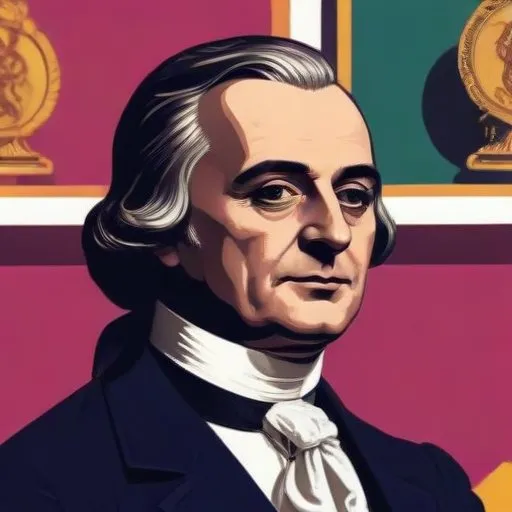
French economist and politician who implemented reforms to stimulate economic growth and reduce poverty, and is considered one of the founders of modern economics.
Anne Robert Jacques Turgot, Baron de Laune, is renowned for his pioneering work in economics, which laid the foundations for modern capitalism and liberalism. As a French economist, statesman, and philosopher, Turgot's groundbreaking ideas and reforms transformed France's economy and administration, earning him a revered place in the annals of history.
Turgot's magnum opus, Réflections sur la formation et la distribution des richesses (Reflections on the Formation and Distribution of Wealth), published in 1766, revolutionized the field of economics. In this seminal work, he introduced the concept of economic growth, emphasizing the importance of individual enterprise, free trade, and limited government intervention. Turgot's theories challenged traditional mercantilist ideas, paving the way for modern capitalism and liberal economics.
In 1774, Turgot was appointed Controller-General of Finances by King Louis XVI, tasked with reforming France's ailing economy. He implemented a series of bold reforms, including the abolition of compulsory labor, the creation of a national bank, and the promotion of free trade. Although his tenure was short-lived, Turgot's initiatives had a lasting impact on France's economy and administration.
Turgot's philosophical outlook was deeply rooted in Enlightenment ideals, emphasizing reason, individual liberty, and human progress. He believed in the power of human ingenuity and the importance of education in fostering economic growth and social development.
Turgot's ideas have had a profound and lasting impact on modern society. His advocacy for limited government intervention, free trade, and individual enterprise has shaped the course of liberal economics. His influence can be seen in the works of economists such as Adam Smith and Thomas Malthus, and his legacy continues to inspire economic thought leaders to this day.
"The production of wealth is not the only object of human life, but it is the principle of all the others, since it is the source of all the comforts and enjoyments of life."
Turgot's life and work were marked by the tumultuous period of the French Enlightenment and the onset of the French Revolution. Despite facing opposition and criticism during his lifetime, Turgot's ideas have endured, shaping the course of economic thought and policy for centuries to come. His legacy continues to inspire scholars, policymakers, and entrepreneurs worldwide.
Turgot's work was closely linked to that of other prominent economists and thinkers of his time, including Adam Smith, Immanuel Kant, and Jean-Jacques Rousseau. While each of these figures made significant contributions to their respective fields, Turgot's unique blend of economic insight, philosophical depth, and statesmanship sets him apart as a visionary of his era.
Turgot's remarkable life and work serve as a testament to the power of human ingenuity and the importance of visionary thinking. As we reflect on his legacy, we are reminded of the enduring impact of his ideas on modern society, and the continued relevance of his philosophical and economic contributions in today's world.
Born in 1694
A witty and insightful 18th-century writer and philosopher who used satire to critique societal norms and advocate for reason, tolerance, and human rights.
Born in 1712
A pioneering thinker who shaped modern democracy and education with his ideas on social contracts, general will, and the importance of early childhood education. His writings influenced the French Revolution and modern political thought.
61 Years Old
A lawyer and politician who served in the U.S. House of Representatives from 1987 to 1997, known for his moderate Republican views and advocacy for environmental issues.
Born in 1724
Developed influential philosophical frameworks, such as the Critique of Pure Reason, that shaped modern Western thought on ethics, morality, and human understanding.
Born in 1711
A Scottish Enlightenment thinker who developed influential ideas on morality, ethics, and human nature, and is considered one of the most important figures in the history of Western philosophy.
Born in 1906
A French actor, director, and screenwriter who brought a touch of realism to 1930s-50s cinema, crafting nuanced, character-driven stories that explored the human condition.
