


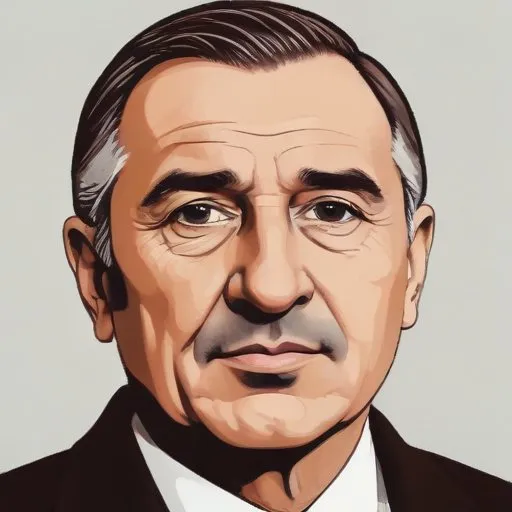
A Croatian politician, writer, and publisher who fought against fascism and Stalinism, advocating for democracy and human rights, leaving a legacy in Eastern European politics.
Ante Ciliga was a Croatian politician, writer, and publisher who left an indelible mark on the tumultuous landscape of 20th-century Europe. As one of the earliest leaders of the Communist Party of Yugoslavia (KPJ), he later became an ardent Croatian nationalist, anticommunist, and ideologue of the fascist Ustase movement, making him a complex and enigmatic figure in modern history.
Born on February 20, 1898, in the small Istrian village of Šegotići, Ciliga grew up in a family of Croat peasants. His grandfather instilled in him a deep love for Croatian culture and a passion for national emancipation, which would shape his future endeavors.
During his university days in Prague, Ciliga was drawn to the ideals of Marxism and the October Revolution in Russia. He founded the Yugoslav Marxist Club and edited newspapers such as Komunist and Rud prvo, spreading the message of social justice and equality.
In 1919, Ciliga participated in the Hungarian Soviet Republic revolution and later became the main organizer of the Protina rebellion, one of the first antifascist resistance efforts in Europe. However, the rebellion's failure led to his home village being burned to the ground in retaliation.
By 1921, Ciliga's studies in Vienna coincided with the Communist Party of Yugoslavia being declared illegal in its home country. Despite the risks, he continued to advocate for social change, earning him the attention of Stalin's regime.
In the 1930s, Ciliga was imprisoned in Stalin's Gulags as part of the Great Purge. This brutal experience had a profound impact on his political ideology, leading him to renounce communism and embrace Croatian nationalism.
After his release from the Gulags, Ciliga became an ardent anticommunist and ideologue of the fascist Ustase movement. This shift in ideology led to controversy and criticism, with many viewing him as a pawn in the larger game of fascist and nationalist ideologies.
Ante Ciliga's tumultuous life and conflicting ideologies raise important questions about the nature of power, ideology, and personal identity. Despite his complexities, he remains a significant figure in modern Croatian history, offering a glimpse into the tumultuous landscape of 20th-century Europe.
Ciliga's philosophical contributions are marked by his initial enthusiasm for Marxism and later rejection of communism. His experiences in the Gulags led him to question the morality of totalitarian regimes, ultimately embracing Croatian nationalism and fascism.
Through his life, Ante Ciliga navigated the treacherous landscape of 20th-century politics, leaving behind a legacy that continues to inspire heated debates and introspection.
Born in 1892
Led the Yugoslav Partisans to victory in World War II and later became a unifying figure, serving as the President of Yugoslavia from 1953 to 1980. He's known for his unique blend of communist and nationalist policies.
Born in 1881
A Yugoslav politician who served as the President of the Yugoslav National Assembly and played a key role in the country's unification and post-WWII reconstruction.
