


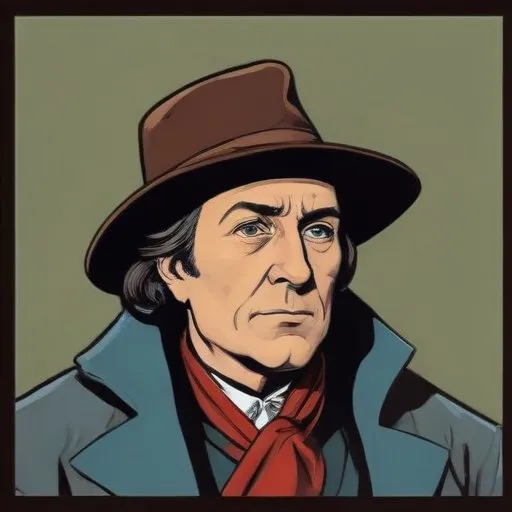
Leader of a failed assassination plot against Queen Elizabeth I in 1586, which led to the execution of Mary, Queen of Scots.
Anthony Babington is famously known for his role in the treacherous Babington Plot, a failed assassination attempt against Queen Elizabeth I of England in 1586. This daring conspiracy ultimately led to his execution and had far-reaching consequences for Mary, Queen of Scots.
Born on October 24, 1561, Anthony was the third child of Sir Henry Babington and Mary Darcy, granddaughter of Thomas Darcy, 1st Baron Darcy de Darcy, at Dethick Manor in Dethick, Derbyshire, England. After his father's death in 1571, Anthony's mother married Henry Foljambe, and he was placed under the guardianship of his mother, her second husband, and Philip Draycot of Paynsley Hall, Cresswell, Staffordshire, his future father-in-law.
While publicly Protestant, the Babington family remained Catholic. Anthony was employed as a page boy in the Earl of Shrewsbury's household, where he likely developed his support for Mary, Queen of Scots' cause to ascend the throne of England. In 1579, he married Margery Draycot.
In about 1580, while traveling on the continent, Anthony met the arch-conspirator Thomas Morgan, who persuaded him to courier letters to Mary while she was being held by the Earl of Shrewsbury. He also assisted in the movement of priests in the Catholic Midlands. However, by 1586, with Mary removed to the harsher regime of Tutbury and the consequent closing down of communications with her, Anthony's role as a courier came to an end.
In early 1586, Anthony received two letters from France, destined for Mary, but he declined to deal further in those affairs. It was then that he began to weave a web of deceit, concocting a plot to assassinate Queen Elizabeth I and replace her with Mary. The plot was eventually discovered, and Anthony was arrested, tried, and found guilty of treason.
Anthony Babington was hanged, drawn, and quartered on September 20, 1586. His execution was a gruesome reminder of the consequences of treason against the crown. The Babington Plot and Mary's involvement in it led to her own execution in 1587. Today, Anthony Babington is remembered as a cautionary tale of the dangers of treason and the unyielding power of the English monarchy.
Anthony Babington's treacherous legacy serves as a reminder of the intrigue and deception that often accompanied the turbulent reign of Queen Elizabeth I. His story continues to captivate historians and enthusiasts alike, offering a glimpse into the darker side of 16th-century English politics.
Born in 1565
A charismatic military leader and politician who played a crucial role in Irish politics and led a rebellion against Queen Elizabeth I, ultimately meeting a tragic end.
Born in 1564
Renowned playwright and poet behind iconic works like Romeo and Juliet, Hamlet, and Macbeth, whose writings continue to influence literature and theater to this day.
Born in 1532
A powerful and charming favorite of Queen Elizabeth I, known for his influence on English politics and suspected involvement in the mysterious death of his wife.
Born in 1542
The last Scottish monarch of the House of Stuart, she was a Catholic queen who faced Protestant rebellion and was eventually beheaded, sparking a centuries-long rivalry with England. She's known for her tumultuous reign and tragic fate.
Born in 1533
The Virgin Queen, a powerful and beloved monarch, ruled England during a golden age of culture, literature, and exploration, establishing the Church of England and defeating the Spanish Armada.
Born in 1521
A brilliant academic and politician who served as Lord High Treasurer, playing a crucial role in shaping England's economy and politics during the Elizabethan era. He's most known for his wise counsel and strategic thinking that helped stabilize the English monarchy.
Born in 1563
A skilled politician who served as Secretary of State for England, playing a crucial role in shaping the country's foreign policy and government during the late 16th and early 17th centuries. He's also known for his cleverness and cunning in navigating the complexities of royal court politics.
Born in 1477
A powerful nobleman in 16th-century England, he played a significant role in the Tudor court and was a key figure in the Rising of the North, a rebellion against Queen Elizabeth I.
