


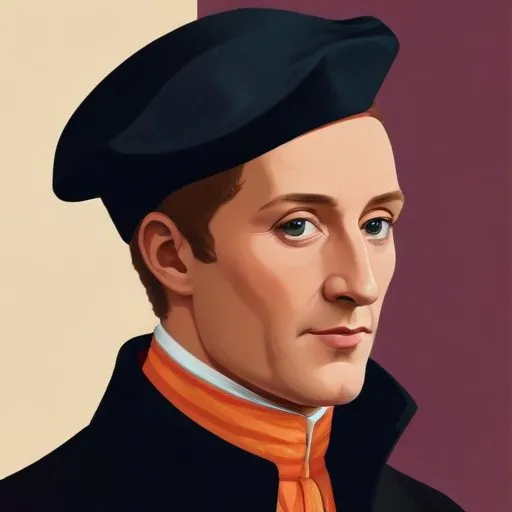
A powerful nobleman in 16th-century England, he played a significant role in the Tudor court and was a key figure in the Rising of the North, a rebellion against Queen Elizabeth I.
Henry Percy, 5th Earl of Northumberland, is renowned for his unyielding dedication to the English monarchy, serving as a trusted advisor and nobleman in the courts of both King Henry VII and King Henry VIII. Throughout his life, he played a pivotal role in shaping the course of English history, earning the respect and admiration of his contemporaries.
Born on January 13, 1477, Henry Percy was the son of Henry Percy, 4th Earl of Northumberland, and Maud Herbert, daughter of William Herbert, 1st Earl of Pembroke. His younger brother, Alan Percy, and sister, Eleanor Percy, would go on to play significant roles in their own right.
Henry Percy's rise to prominence began early, as he was appointed Knight Bachelor (KB) on November 21, 1489, during the reign of King Henry VII. This honor marked the beginning of a long and illustrious career, which saw him succeed his father as 5th Earl of Northumberland on April 28, 1489.
Upon receiving livery of his lands in 1498, Henry Percy took on the management of his various castles and estates. His annual income was approximately £2,300, a significant sum at the time. However, his extravagant lifestyle and generous retinue of servants and followers meant that he spent around £1,500 annually, leading to financial difficulties.
In 1500, Henry Percy attended the meeting between King Henry VII and the Archduke Philip, further solidifying his position as a trusted diplomat and advisor.
Henry Percy, 5th Earl of Northumberland, left an indelible mark on English history. His unwavering loyalty, diplomatic prowess, and military bravery earned him a place among the most respected noblemen of his time. His life serves as a testament to the enduring power of dedication and service to one's country.
Born in 1491
A larger-than-life monarch who ruled England with an iron fist, infamous for his six marriages and the English Reformation.
Born in 1478
A renowned Renaissance humanist and statesman who served as Lord Chancellor of England, famous for his literary work "Utopia" and his martyrdom for refusing to acknowledge the English monarch's supremacy over the Church.
Born in 1284
The king whose disastrous reign led to his eventual deposition and mysterious death, remembered for his alleged homosexual relationships and power struggles with nobles.
Born in 1516
The first queen to rule England in her own right, Bloody Mary tried to restore Catholicism, earning her notorious reputation for burning hundreds of Protestants at the stake.
Born in 1533
The Virgin Queen, a powerful and beloved monarch, ruled England during a golden age of culture, literature, and exploration, establishing the Church of England and defeating the Spanish Armada.
Born in 1574
An English explorer and cartographer who mapped the New World and created innovative navigational tools, contributing significantly to the development of modern cartography.
