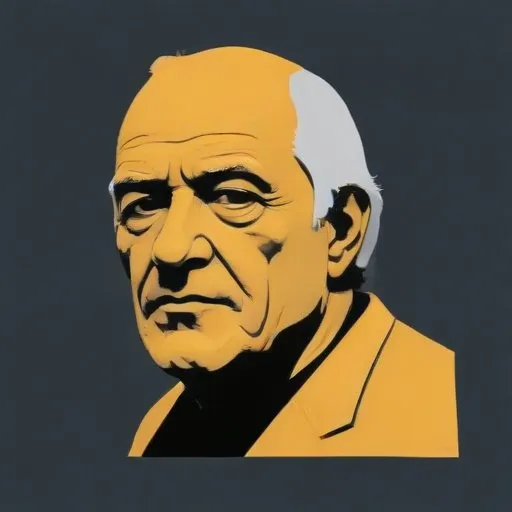
Anthony Caro: The Pioneer of Abstract Sculpture
A New Dimension in Sculpture
Anthony Caro, widely regarded as the greatest British sculptor of his generation, revolutionized the art of sculpture by liberating it from its traditional pedestal. By constructing his sculptures from found industrial objects, Caro created an unprecedented sense of dialogue between the artwork and the viewer, inviting them to approach and interact with the piece in a way that was previously unimaginable.
Early Life and Education
Born on March 8, 1924, in New Malden, Surrey, England, Caro was the youngest of three children in a Jewish family. His early life was marked by a sense of adventure and curiosity, which was fostered by his family's move to a farm in Churt, Surrey, when he was just three years old. Caro's educational journey began at Charterhouse School, where he was introduced to Charles Wheeler, a renowned sculptor. This chance meeting would lay the foundation for Caro's future in the world of art.
- During his holidays, Caro studied at the Farnham School of Art (now the University for the Creative Arts) and worked in Wheeler's studio.
- He later earned a degree in engineering at Christ's College, Cambridge.
- In 1946, after serving in the Royal Navy, Caro studied sculpture at the Regent Street Polytechnic before pursuing further studies at the Royal Academy Schools from 1947 to 1952.
The Turning Point: Modernism and Henry Moore
Caro's encounter with modernism came when he worked as an assistant to
Henry Moore in the 1950s. This experience not only influenced his artistic style but also instilled in him the confidence to experiment with new forms and materials. The encounter with American sculptor David Smith in the early 1960s further solidified Caro's resolve to abandon figurative work and focus on constructing sculptures by welding or bolting together pieces of steel.
A New Era in Sculpture
Caro's innovative approach to sculpture led to the creation of some of his most iconic works, including
Twenty Four Hours (1960), now housed in the Tate Britain. This piece, characteristic of Caro's style, features steel structures painted in bold, flat colors. By removing the sculpture from its plinth, Caro broke down the barrier between the artwork and the viewer, inviting them to engage with the piece on a more intimate level.
Awards and Recognition
Caro's contributions to the world of sculpture were recognized with numerous awards and honors, including:
- The CBE (Commander of the Order of the British Empire) in 1969
- The Knighthood in 1987
- The Order of Merit in 2000
Legacy
Anthony Caro's groundbreaking work has left an indelible mark on the world of sculpture. By challenging traditional notions of form and function, he paved the way for future generations of artists to experiment and innovate. Today, Caro's sculptures continue to inspire and fascinate audiences around the world, a testament to his enduring legacy as a pioneer of abstract sculpture.
FAQ
What is Anthony Caros most famous sculpture?
Caro is known for his large-scale abstract sculptures, including Early One Morning and Midday, which are considered some of the most important works of modern British sculpture.
What is Anthony Caros early life and education?
Born in England, Caro studied sculpture at the Royal Academy Schools and later worked as an assistant to Henry Moore.
What is Anthony Caros style and technique?
Caros sculptures are characterized by their abstract forms, bold colors, and innovative use of materials, such as steel and bronze.
What awards did Anthony Caro receive?
Caro received numerous awards, including the CBE, the Order of the British Empire, and the Praemium Imperiale for sculpture.
What is Anthony Caros legacy in sculpture?
Caros legacy in sculpture is as a pioneering figure, known for his innovative style and technique, and inspiring generations of artists and sculptors.