


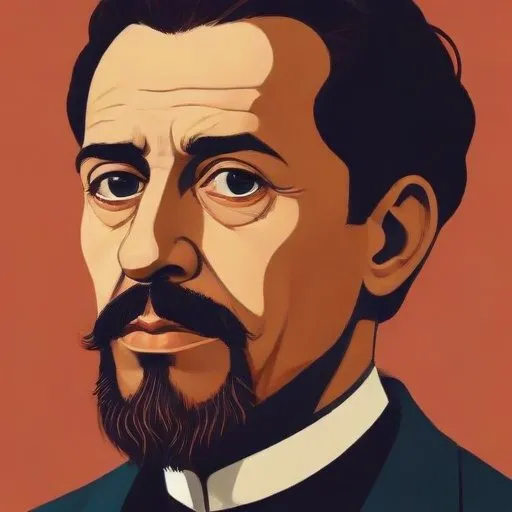
Portuguese philosopher and academic who developed a comprehensive philosophical system that integrates metaphysics, epistemology, and ethics, and is known for his original and influential contributions to contemporary philosophy.
Antonio Castanheira Neves, born on November 8, 1929, in Toubã, Portugal, is a renowned legal philosopher and professor emeritus at the University of Coimbra. He is best known for his groundbreaking work in challenging traditional legal theories, particularly positivism, natural law, and legal syllogism, and championing the interpretivist approach to law.
Castanheira Neves' philosophy of law emphasizes the importance of solving legal problems within the legal system, with a necessary connection to morality. He argues that law is not something given or previous, but rather a solution to legal problems that arise from concrete, historically situated, normative, and practical situations. According to Castanheira Neves, legal decisions aim to settle what someone legally ought to do in a particular case, and that is its defining feature.
Castanheira Neves' work is characterized by his opposition to positivism, natural law, and legal syllogism. He criticizes positivism for its failure to account for the moral dimensions of law, natural law for its attempt to impose an Objective moral standard, and legal syllogism for its rigid and abstract approach to legal reasoning. Instead, Castanheira Neves advocates for an interpretivist approach, which recognizes the role of legal practitioners in shaping the law through their decisions and interpretations.
Castanheira Neves' philosophy of law is often referred to as jurisprudentialism. This concept emphasizes that law is not an element, but a synthesis of various factors, including norms, rules, principles, and particular cases. According to Castanheira Neves, law is not a premise for validity, but rather fulfilled validity, achieved through the practical application of legal principles to concrete cases.
Castanheira Neves' work has had a significant impact on modern legal thought, influencing scholars and legal practitioners worldwide. His ideas have been debated and critiqued by prominent legal theorists, including Ronald Dworkin, and have shaped the development of legal philosophy in the 20th century.
Throughout his career, Castanheira Neves has been dedicated to teaching and scholarship, inspiring generations of lawyers and legal scholars. He continues to be recognized for his contributions to legal philosophy, and his work remains a vital part of the ongoing debate on the nature of law and justice.
Castanheira Neves was born in 1929 in Toubã, Portugal. He earned his law degree from the University of Coimbra and went on to pursue his academic career, becoming a professor emeritus at the same university. Throughout his life, he has been devoted to his work, leaving a lasting legacy in the field of legal philosophy.
Antonio Castanheira Neves' innovative approach to legal philosophy has challenged traditional legal theories and shaped modern legal thought. His emphasis on the practical and moral dimensions of law has inspired a new generation of scholars and legal practitioners, cementing his place as one of the most influential legal philosophers of the 20th century.
Born in 1922
A Portuguese novelist and Nobel laureate in Literature, known for his imaginative and often provocative works that blend elements of fantasy and realism to explore themes of politics, history, and human nature.
Born in 1924
A Portuguese historian, lawyer, and politician who served as the 17th President of Portugal, known for leading the country's transition from authoritarianism to democracy. He played a key role in Portugal's decolonization and European integration.
Born in 1889
A dictator who ruled Portugal from 1933 to 1968, implementing a corporatist authoritarian regime and maintaining a neutral stance during World War II. He's known for his economic reforms and nationalist policies.
Born in 1871
A prominent figure in Portuguese politics, serving as Prime Minister and implementing significant reforms, particularly in education and justice. He's also known for his role in the country's transition to a republic.
