


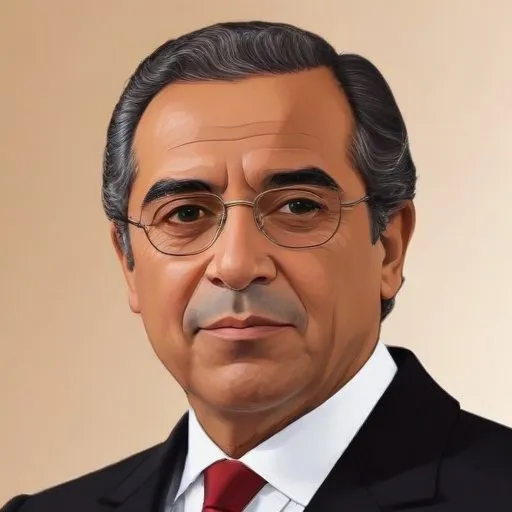
A prominent figure in Portuguese politics, serving as Prime Minister and implementing significant reforms, particularly in education and justice. He's also known for his role in the country's transition to a republic.
Afonso Costa, a renowned Portuguese lawyer, professor, and politician, is best known for his pivotal role in shaping the country's First Republic. As a leading figure in the Portuguese Republican Party, Costa played a crucial part in drafting and implementing progressive laws that transformed the nation's social, political, and economic landscape.
Born on March 6, 1871, in Seia, Portugal, Afonso Costa pursued higher education in law at the University of Coimbra. He graduated with a law degree in 1895 and later became a professor of law at the same institution.
Costa's political career took off in the early 20th century when he became a republican deputy in the Chamber of Deputies during the final years of the Portuguese monarchy. Following the proclamation of the republic in 1910, he served as Minister for Justice in Tefilo Braga's provisional government.
During his tenure as Minister for Justice, Costa signed several landmark laws that expelled the Jesuits from Portugal, abolished all religious orders, and established the separation of church and state. These reforms cemented his reputation as a symbol of anticlericalism in the First Republic.
Afonso Costa served as Prime Minister of Portugal three times: from 1913 to 1914, 1915 to 1916, and 1917. During his prime ministerial tenures, he combined his role with that of Finance Minister, overseeing significant economic reforms and pushing for Portugal's entry into World War I.
In 1917, Costa formed a national unity government, dubbed the Sacred Union, to support Portugal's participation in World War I. Although the government was short-lived, it marked a significant moment in Costa's political career.
Following Sidnio Pais's military coup d'état in December 1917, Costa went into exile in Paris, where he remained until his death on May 11, 1937. Despite brief returns to Portugal after Pais's assassination in 1918, Costa never again resided in his homeland.
Afonso Costa's contributions to Portugal's First Republic continue to shape the country's social, political, and economic landscape. His commitment to progressive reforms, anticlericalism, and national unity has left an indelible mark on Portuguese history.
Afonso Costa's remarkable life and career serve as a testament to the power of progressive politics and the importance of standing firm in one's beliefs. His legacy continues to inspire future generations of politicians, scholars, and citizens alike.
77 Years Old
The first Portuguese to lead the United Nations, he's a champion of global cooperation, human rights, and sustainable development. He's a prominent voice on the world stage, advocating for climate action and social justice.
Born in 1889
A dictator who ruled Portugal from 1933 to 1968, implementing a corporatist authoritarian regime and maintaining a neutral stance during World War II. He's known for his economic reforms and nationalist policies.
Born in 1924
A Portuguese historian, lawyer, and politician who served as the 17th President of Portugal, known for leading the country's transition from authoritarianism to democracy. He played a key role in Portugal's decolonization and European integration.
87 Years Old
The 19th President of the Portuguese Republic was a prominent economist and politician who served from 2006 to 2016, known for his economic reforms and leadership during the European sovereign-debt crisis. He is also a published author on economics and politics.
62 Years Old
The 118th Prime Minister of Portugal, an economist-turned-politician who led the country from 2011 to 2015, implementing austerity measures to address the European sovereign debt crisis. He's known for his efforts to stabilize Portugal's economy during a tumultuous period.
65 Years Old
The 119th Prime Minister of Portugal, leading the country since 2015, known for his progressive policies and efforts to revitalize the economy. He's also a key figure in the European Union's politics.
87 Years Old
The 18th President of Portugal, a lawyer and politician, served from 1996 to 2006 and was a key figure in the country's transition to democracy. He's known for his commitment to social justice and human rights.
