


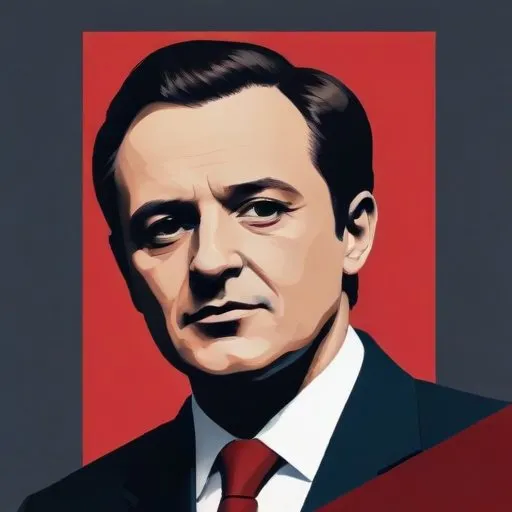
A key figure in the French Revolution, he played a crucial role in shaping the country's early years, advocating for a constitutional monarchy and later becoming a vocal critic of radical Jacobin policies.
Antoine Barnave, a name that resonates with the echoes of the French Revolution, is best known for his pivotal role in shaping the course of modern French history. As a politician, orator, and one of the founding members of the Feuillants, Barnave's contributions to the establishment of a constitutional monarchy continue to inspire and intrigue historians and scholars alike.
Born on October 22, 1761, in Grenoble, Dauphin, Barnave was raised in a Protestant family. His father, an advocate at the Parlement of Grenoble, and his mother, a highly educated aristocrat, instilled in him the values of education and critical thinking. Due to the family's Protestant faith, Barnave was unable to attend local Catholic schools, and his mother took it upon herself to educate him. This unconventional upbringing honed his intellect and laid the foundation for his future success.
At the age of twenty-two, Barnave made a name for himself by delivering a captivating speech before the local Parlement, the Parlement du Dauphin, on the separation of political powers. This impassioned plea for reform sparked a fire within him, and he soon became an ardent advocate for revolutionary ideals. The Day of the Tiles (Journe des Tuiles) in Grenoble, a pivotal event in the early stages of the French Revolution, cemented his commitment to the cause.
Barnave's dedication to the revolution earned him a seat as a deputy to the Estates General of Dauphin, alongside his father. He quickly distinguished himself as a skilled orator and visionary, penning influential pamphlets such as "Esprit des dits, Enregistrs militairement, le 20 mai 1788." His eloquence and unwavering commitment to the revolution propelled him to the forefront of the National Assembly, where he forged lasting relationships with prominent figures like Adrien Duport.
As the revolution gained momentum, Barnave, along with Honor Mirabeau, became one of the most influential orators of the early period. Together, they championed the cause of constitutional monarchy, engaging in clandestine correspondence with Marie Antoinette in an effort to establish a more inclusive system of government. The Feuillants, a club founded by Barnave and his allies, became a hub for moderate revolutionaries seeking to reconcile the monarchy with the principles of the revolution.
Despite his untimely demise on November 29, 1793, Antoine Barnave's contributions to French history remain indelible. His advocacy for a constitutional monarchy continues to inspire modern democracies, while his commitment to the ideals of the French Revolution has cemented his place among the pantheon of revolutionary heroes.
Barnave's remarkable journey, marked by passion, conviction, and a relentless pursuit of justice, serves as a beacon of inspiration for generations to come.
Born in 1758
Radical leader of the French Revolution, instrumental in the Reign of Terror, and advocate for the execution of King Louis XVI.
Born in 1759
A leading figure of the French Revolution, instrumental in the overthrow of the monarchy and establishment of the First French Republic, known for his radical Jacobin ideology.
Born in 1755
A key figure in the French Revolution, leading the coup that overthrew Maximilien Robespierre and later serving as a key advisor to Napoleon Bonaparte. He played a crucial role in shaping French politics during a tumultuous period.
Born in 1760
French journalist and politician who sparked the French Revolution with his impassioned speeches and writings, advocating for democracy and social reform.
Born in 1736
Astronomer and mathematician who calculated the orbit of Halley's Comet and later became a key figure in the French Revolution, serving as the first mayor of Paris. He played a crucial role in the early stages of the Revolution, helping to establish the National Assembly.
