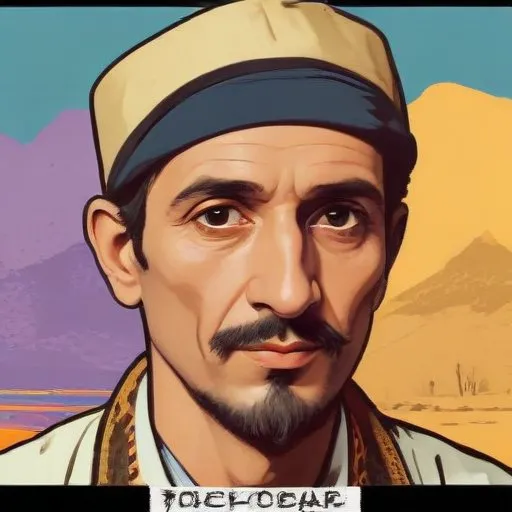
Antoine Galland: The Father of Middle Eastern Literature in Europe
The Translator of One Thousand and One Nights
Antoine Galland is perhaps best known for being the first European translator of the mesmerizing tales of One Thousand and One Nights, which he referred to as Les mille et une nuits. His remarkable translation, published in twelve volumes between 1704 and 1717, had a profound impact on European literature and attitudes towards the Islamic world.
A Life of Adventure and Scholarship
Born on April 4, 1646, in Rollot, Picardy (now in the department of Somme), Galland's fascination with the Middle East began at a young age. After completing his education at Noyon, he studied Greek and Latin in Paris, where he also acquired some Arabic. In 1670, he was attached to the French embassy at Istanbul, leveraging his excellent knowledge of Greek.
Expeditions and Discoveries
Galland's expeditions took him to Syria and the Levant in 1673, where he copied numerous inscriptions, sketched, and even removed historical monuments. These journeys not only broadened his knowledge of the region but also fueled his passion for discovery. In 1677, he embarked on a third voyage, commissioned by the French East India Company to collect artifacts for the cabinet of Colbert.
A Master of Languages and Cultures
During his prolonged residences abroad, Galland acquired a remarkable proficiency in Arabic, Turkish, and Persian languages and literatures. This expertise enabled him to render invaluable assistance to Melchisdech Thvenot, the keeper of the royal library, and to Barthlemy d'Herbelot de Molainville. When d'Herbelot passed away in 1695, Galland continued his Bibliothèque orientale (Oriental Library), a monumental compendium of information about Islamic culture.
Influence on European Literature
Galland's translation of One Thousand and One Nights introduced European readers to the wonders of Middle Eastern literature, sparking a wave of fascination with the region.
Jorge Luis Borges even suggested that Romanticism began when Galland's translation was first read.
Legacy and Impact
Antoine Galland's contributions to the field of oriental studies are immeasurable. His work not only bridged the cultural divide between Europe and the Middle East but also paved the way for future scholars. Today, Galland is revered as a pioneer in the field of Middle Eastern studies, and his legacy continues to inspire scholars and readers alike.
Awards and Recognition
In recognition of his outstanding contributions, Galland was conferred the title of antiquary to the king
Louis XIV.
Personal Milestones and Key Life Events
- 1646: Born on April 4 in Rollot, Picardy
- 1670: Attached to the French embassy at Istanbul
- 1673: Expeditition to Syria and the Levant
- 1677: Third voyage, commissioned by the French East India Company
- 1695: Continued Bibliothèque orientale (Oriental Library) after d'Herbelot's death
- 1715: Passed away on February 17
Trivia and Fun Facts
- Galland's collection of ancient coins attracted attention in France.
- He was instructed by the government to continue his research, further solidifying his reputation as an expert in the field.
Galland's remarkable life and work continue to captivate scholars and enthusiasts alike, cementing his place as a trailblazer in the realm of Middle Eastern literature and culture.
FAQ
What were Antoine Gallands contributions to the field of archaeology?
Galland was a pioneer in the field of archaeology, making significant discoveries in the Middle East and laying the groundwork for future excavations.
What is Antoine Galland famous for in oriental studies?
Galland is best known for his translation of One Thousand and One Nights, also known as The Arabian Nights, which introduced European readers to the rich cultural heritage of the Middle East.
How did Antoine Galland influence the study of Eastern cultures?
Gallands work helped to spark a wider interest in Eastern cultures and languages, paving the way for future scholars and inspiring a new generation of orientalists.
What were Antoine Gallands travels like in the Middle East?
Galland traveled extensively throughout the Middle East, visiting sites such as Istanbul, Egypt, and Syria, and documenting his experiences in detailed journals and letters.
What is Antoine Gallands legacy in cultural exchange?
Gallands work facilitated cultural exchange between East and West, fostering greater understanding and appreciation between these two rich cultural traditions.