


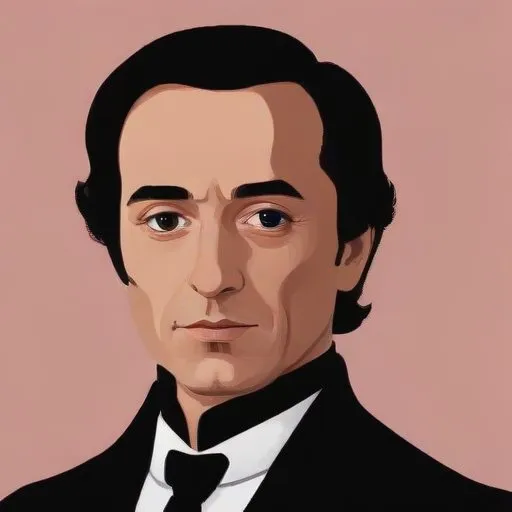
A French playwright and librettist, known for his contributions to the development of the opera comique genre, and his collaborations with famous composers like Jean-Philippe Rameau.
Antoine Houdar de la Motte, a renowned French author, is best known for his significant contributions to the literary world, particularly in the realm of opera and tragedy. His works showcased his mastery of language, wit, and innovative style, earning him a prominent place in the French literary circle.
Born on January 18, 1672, in Paris, de la Motte began his literary journey with his comedy, Les Originaux, in 1693. Although the play was met with failure, it did not deter him from pursuing his passion. He soon shifted his focus to writing texts for operas and ballets, which garnered him recognition and acclaim.
De la Motte's breakthrough came with his tragedy, Inès de Castro, in 1723, which was a massive success at the Théâtre Français. This triumph solidified his position as a champion of modernism, a philosophical and artistic movement that emphasized reason, progress, and innovation.
De la Motte's Fables nouvelles (1719) is regarded as a modernist manifesto, showcasing his commitment to the movement. He defended modernism in his Discours sur Homère, prefixed to his translation of the Iliad, and in his Réflexions sur la critique (1716). His eloquent arguments and witty responses earned him admiration and respect from his contemporaries.
De la Motte's notable works include:
In 1710, de la Motte was elected to the Académie Française, a prestigious French literary institution. Despite going blind soon after, he continued to write and contribute to the literary world.
De la Motte's writings had a profound impact on the literary landscape of his time. His modernist ideals and innovative style influenced many writers and thinkers, including his contemporaries, such as Fontenelle. His works continue to be studied and appreciated for their intellectual depth and literary merit.
De la Motte maintained a correspondence with the duchesse du Maine and was known for his engaging and polite nature. His personal relationships and anecdotes offer a glimpse into the life of this remarkable author, who left an indelible mark on French literature.
In conclusion, Antoine Houdar de la Motte's remarkable life and works serve as a testament to his dedication to modernism and his contribution to the rich cultural heritage of France. His legacy continues to inspire and influence writers, thinkers, and scholars to this day.
Born in 1694
A witty and insightful 18th-century writer and philosopher who used satire to critique societal norms and advocate for reason, tolerance, and human rights.
Born in 1622
A 17th-century master of comedy, he penned witty plays that satirized the French aristocracy, leaving a lasting impact on Western theater. His works remain widely performed and adapted today.
Born in 1712
A pioneering thinker who shaped modern democracy and education with his ideas on social contracts, general will, and the importance of early childhood education. His writings influenced the French Revolution and modern political thought.
Born in 1621
A 17th-century master of fables, crafting witty, moral tales that entertain and educate, still widely read and adapted today.
Born in 1606
A 17th-century French mastermind behind iconic plays like "Le Cid" and "Horace", known for pioneering the classical French tragedy genre.
Born in 1636
A 17th-century French poet and critic who advocated for reason and morality in literature, and is known for his influential writings on poetry and aesthetics.
