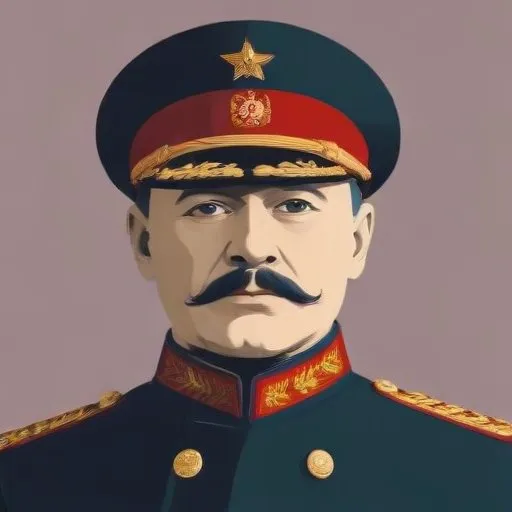
Anton Denikin: The Controversial Russian Military Leader
A Legacy of Power and Controversy
Anton Denikin is known for his role as the acting supreme ruler of the Russian State and commander-in-chief of the armed forces of South Russia during the Russian Civil War of 1917-1923. Denikin's leadership was marked by the implementation of the White Terror, a period of violence and repression that earned him a reputation for brutality.
Early Life and Career
Born on December 4, 1872, in the village of Szpetal Dolny, Warsaw Governorate of the Russian Empire (now Poland), Denikin was the only child of Ivan Efimovich Denikin and Polish seamstress Elbieta Wrzesiska. His father, a retired major, had been born a serf and rose through the ranks of the Russian army. Denikin's upbringing was marked by financial struggles, and he began tutoring younger schoolmates to support his family.
Denikin's military career began in 1890, when he enrolled at the Kiev Junker School. He graduated in 1892 and joined an artillery brigade, serving for three years. In 1895, he was accepted into the General Staff Academy, where he eventually finished fourteenth in his class.
Rise to Power and the Russian Civil War
Denikin's military career flourished during World War I, where he served as a general in the Imperial Russian Army. Following the Russian Revolution of 1917, Denikin became a key figure in the anti-Bolshevik movement. In 1918, he was appointed commander-in-chief of the armed forces of South Russia, leading the White Army against the Bolsheviks.
Denikin's forces were notorious for their brutal tactics, including pogroms against Jewish communities. His leadership was marked by violence, repression, and a disregard for human life.
Philosophical Contributions and Beliefs
Denikin was a staunch monarchist and believed in the restoration of the Russian monarchy. He was also a devout Russian Orthodox Christian, and his faith played a significant role in his military career.
Legacy and Controversy
Denikin's legacy is marked by controversy and violence. His implementation of the White Terror and perpetuation of pogroms against Jewish communities have made him a figure of revulsion for many. Despite this, he remains a significant figure in Russian history, and his military campaigns are still studied by historians today.
Personal Milestones and Key Life Events
- 1869: Denikin's father, Ivan, retired from the army with the rank of major.
- 1885: Denikin's father passed away, leaving the family in financial difficulties.
- 1890: Denikin enrolled at the Kiev Junker School.
- 1892: Denikin graduated from the Kiev Junker School and joined an artillery brigade.
- 1895: Denikin was accepted into the General Staff Academy.
- 1917: Denikin became a key figure in the anti-Bolshevik movement.
- 1918: Denikin was appointed commander-in-chief of the armed forces of South Russia.
- 1947: Denikin died on August 7, at the age of 74.
Influence on Modern Society
Denikin's legacy continues to shape modern society, serving as a reminder of the dangers of extremism and violence. His story serves as a warning to the dangers of unchecked power and the importance of protecting human rights.
Quotes and Memorable Sayings
"The fate of Russia will be decided on the banks of the Volga."
Historical Context and Legacy
Denikin's life and career were marked by tumultuous times in Russian history. His role in the Russian Civil War and his leadership of the White Army have cemented his place in history as a controversial and complex figure.
Comparative Analysis with Contemporaries
Denikin's contemporaries, including
Vladimir Lenin and
Leon Trotsky, played significant roles in shaping the course of Russian history. While Denikin's actions were marked by violence and repression, his commitment to restoring the Russian monarchy and defeating the Bolsheviks remains a significant aspect of his legacy.
Personal Relationships and Anecdotes
Denikin's personal relationships were marked by a strong sense of loyalty and duty. His commitment to his family and his faith were central to his identity and motivations.
Impact on Pop Culture
Denikin's life and career have inspired numerous works of literature and art, including films, books, and plays. His complex and controversial legacy continues to fascinate audiences today.
Awards and Honors
Denikin was awarded several honors and decorations during his military career, including the Order of St. George and the Order of St. Vladimir.
Educational Contributions and Influence
Denikin's military campaigns and leadership have been studied by historians and military strategists around the world. His legacy serves as a reminder of the importance of protecting human rights and promoting peaceful conflict resolution.
Scandals and Redemption Stories
Denikin's legacy is marked by controversy and violence, but his commitment to his faith and his family remain a redeeming aspect of his character.
Visual Timelines and Milestones
Trivia and Fun Facts
- Denikin was fluent in Russian and Polish.
- He was known for his strong sense of duty and loyalty.
- Denikin's leadership was marked by a strong sense of discipline and authority.
Predictions and Speculations
Denikin's legacy continues to shape modern society, serving as a reminder of the dangers of extremism and violence. His story serves as a warning to the dangers of unchecked power and the importance of protecting human rights.
Charitable Work and Social Contributions
Denikin's charitable work was limited, but his commitment to his faith and his family remain a significant aspect of his legacy.
Inspirational Stories and Motivations
Denikin's life and career serve as a reminder of the importance of staying true to one's beliefs and values, even in the face of adversity. His commitment to his faith and his family remain an inspiration to many today.