


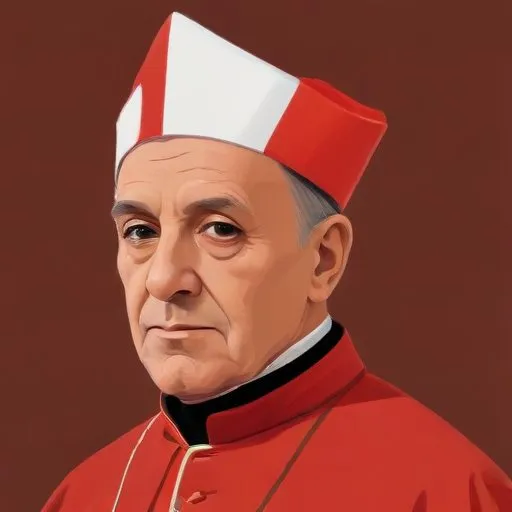
A prominent Vatican diplomat and linguist, known for his exceptional language skills and serving as the Latin Language Secretary to several popes.
Antonio Bacci is perhaps best known for his stalwart defense of Latin in the Roman Catholic Church, earning him the reputation as one of the Vatican's leading Latin experts. His unwavering commitment to the preservation of tradition sparked controversy, most notably during the Second Vatican Council, where he opposed the introduction of vernacular languages into the Mass.
Born on September 4, 1885, in Giugnola, near Florence, Italy, Bacci was ordained to the priesthood on August 9, 1909. He began his priestly life as a professor and spiritual director of the seminary in Florence, serving from 1910 to 1922.
In 1922, Bacci entered the Vatican Secretariat of State as an expert in Latin, eventually rising to the rank of honorary chamberlain of his holiness in 1923. He served as Secretary of Briefs to Princes for 31 years, from 1931 to 1960, preparing the Latin text of important Vatican documents during the reigns of three popes: Pius XI, Pius XII, and John XXIII.
Prior to the 1958 papal conclave, Bacci called for a saintly pope who could bridge the gap between heaven and earth, social classes, and nations, even those that rejected and persecuted Christian religion. His vision was realized with the election of Pope John XXIII, who created him Cardinal-Deacon of Sant'Eugenio in 1960.
As a stalwart defender of tradition, Bacci, alongside Alfredo Ottaviani, sent a study to Pope Paul VI, critiquing the proposed changes to the Mass. This event, known as the Ottaviani Intervention, sparked controversy and highlighted Bacci's unwavering commitment to the preservation of Latin.
Bacci was named titular archbishop of Colonia in Cappadocia in 1962 and received his episcopal consecration from John XXIII, with Cardinals Giuseppe Pizzardo and Benedetto Aloisi Masella serving as co-consecrators. He attended the Second Vatican Council from 1962 to 1965 and participated in the 1963 papal conclave that elected Pope Paul VI.
Antonio Bacci's legacy is marked by his unyielding dedication to the preservation of Latin and tradition within the Roman Catholic Church. Though his views may have sparked controversy, his commitment to the church remains unwavering, earning him a place among the most influential and respected figures in Vatican history.
Born in 1876
The leader of the Catholic Church from 1939 to 1958, known for his controversial role during World War II, particularly in regards to the Holocaust. He is also remembered for his encyclicals on social justice and liturgical reforms.
Born in 1881
Reformed the Catholic Church, introducing progressive reforms and ecumenical dialogue, and convened the Second Vatican Council.
Born in 1417
A 15th-century pope who played a significant role in the fall of the Western Schism, ending the division in the Catholic Church. He's also known for his lavish spending and nepotism.
Born in 1920
Leader of the Catholic Church from 1978 to 2005, known for helping to end communism in Poland and being a charismatic advocate for human rights and social justice.
Born in 1920
Leader of the Catholic Church from 1978 to 2005, known for helping to end communism in Poland and being a charismatic advocate for human rights and social justice.
Born in 1905
A Croatian Catholic cardinal who served as the Archbishop of Zagreb and played a significant role in the country's independence movement, known for his advocacy for human rights and democracy.
