


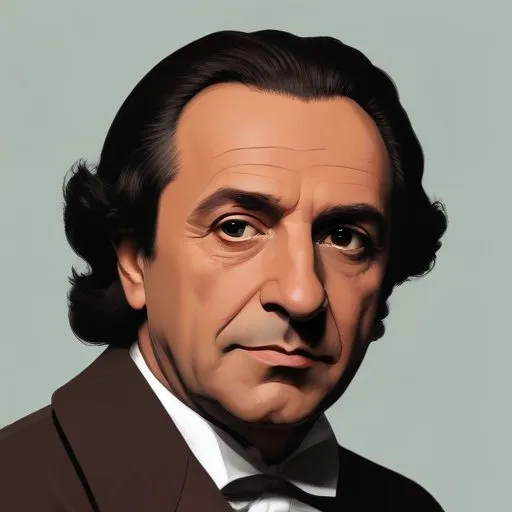
Developed the theory of aerodynamic instability, which is crucial for designing stable aircraft and rockets. His work has had a lasting impact on the field of aerospace engineering.
Antonio Ferri, a renowned Italian scientist, left an indelible mark on the field of aerodynamics, particularly in hypersonic and supersonic flight. His groundbreaking research and experiments paved the way for significant advancements in the field, cementing his legacy as a leading figure in aerodynamics.
Born on April 5, 1912, in Norcia, Italy, Ferri's fascination with flight and aerodynamics began at a young age. He pursued his passion through higher education, eventually conducting research in Guidonia Montecelio, a hub for advanced research on high-speed aerodynamics.
In 1938, at the age of 26, Ferri received Italy's highest prize for science, the Premio dell'Accademia d'Italia. This prestigious award recognized his outstanding contributions to the field of aerodynamics, solidifying his reputation as a rising star in the scientific community.
Ferri's work at Guidonia Montecelio led to spectacular experiments in 1939-1940, showcasing his innovative approach to supersonic wind tunnels. During World War II, he demonstrated remarkable bravery, destroying vital equipment and documents to prevent them from falling into enemy hands.
He went on to play a pivotal role in the Italian resistance movement, coordinating attacks with partisan groups and providing crucial information to the Allies. His efforts ultimately led to him making contact with OSS agent Moe Berg, with whom he collaborated to translate key documents and share his knowledge of German scientific achievements.
In 1944, Ferri joined the National Advisory Committee for Aeronautics (NACA) in Langley, Virginia, where he continued to make significant contributions to the field of aerodynamics. His expertise in biconvex wing profiles and supersonic flight paved the way for future generations of researchers.
Ferri's legacy extends beyond his scientific contributions. His courageous acts during World War II and his commitment to advancing human knowledge have inspired countless individuals. His story serves as a testament to the power of dedication, bravery, and intellectual curiosity.
Antonio Ferri's remarkable life and achievements serve as a beacon of inspiration, reminding us of the importance of dedication, courage, and intellectual curiosity in shaping our understanding of the world.
Born in 1901
A pioneer in nuclear physics, known for leading the team that developed the first nuclear reactor and playing a crucial role in the development of the atomic bomb.
Born in 1898
A pioneer in nuclear physics, known for conceiving the idea of a nuclear chain reaction and patenting the concept of a nuclear reactor. He also played a key role in persuading Einstein to warn Roosevelt about the possibility of Germany developing an atomic bomb.
Born in 1902
A Hungarian physicist and mathematician who made groundbreaking contributions to quantum mechanics and nuclear physics, and was awarded the Nobel Prize in Physics in 1963.
Born in 1903
Pioneering mathematician and physicist who developed the concept of the modern computer architecture and made significant contributions to quantum mechanics and game theory. His work laid the foundation for modern computing and artificial intelligence.
Born in 1918
A brilliant physicist and engineer who pioneered quantum mechanics and famously explained complex concepts in simple terms, making science accessible to all.
Born in 1906
A renowned physicist and Nobel laureate who made groundbreaking contributions to our understanding of the universe, particularly in the fields of nuclear physics and astrophysics.
Born in 1908
Developed the hydrogen bomb and was a key figure in the development of the US nuclear program, known for his advocacy of nuclear energy and his role in the Cold War.
