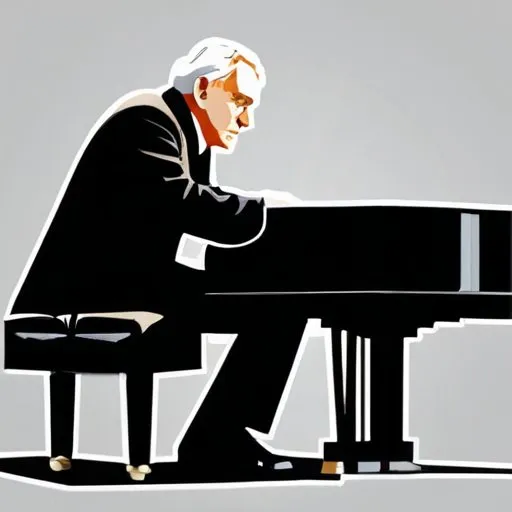
Antony Hopkins: The Maestro of Musical Storytelling
The Renowned Composer, Pianist, and Conductor
Antony Hopkins, a stalwart figure in the world of classical music, left an indelible mark on the industry as a composer, pianist, conductor, writer, and radio broadcaster. He is widely recognized for his authoritative books on musical analysis and his long-running radio program, "Talking About Music," which aired on the BBC for nearly four decades.
A Life of Music and Mentorship
Born Ernest William Antony Reynolds on March 21, 1921, in London, Hopkins' life took a pivotal turn when his father passed away in 1925. He was subsequently adopted by Major Thomas Hopkins and his wife, who instilled in him a love for music. This adoption also led to a change in his surname to Hopkins. The young Antony's interest in music was further kindled during a summer school for pianists in Austria, where he was inspired by a performance of Schubert's Op. 90 Impromptus.
The Royal College of Music and Early Success
Hopkins entered the Royal College of Music (RCM) in 1939, where he studied harmony under Harold Darke and composition with Gordon Jacob. He went on to win several scholarships, including the prestigious Chappell Gold Medal for piano and the Cobbett Competition for chamber music composition. During his time at the RCM, he became involved with the choir at Morley College, conducted by
Michael Tippett, who also gave Hopkins informal lessons in composition.
A Career of Composition and Broadcasting
Hopkins' compositional career took off in the 1940s, with his first opera, "Lady Rohesia," premiering in 1947. He went on to earn a living primarily through composing for the next 15 years. His expertise in musical analysis led to the publication of several authoritative books on the subject. Meanwhile, his radio program, "Talking About Music," debuted in 1954 and ran for nearly 40 years, making him a household name in British radio broadcasting.
Influence and Legacy
Hopkins' contribution to classical music extends beyond his own compositions. He played a significant role in promoting the works of other composers through his radio program, introducing audiences to a wide range of classical music. His books on musical analysis remain widely read and respected, serving as a valuable resource for music scholars and enthusiasts alike. As a broadcaster, he brought classical music to a broader audience, making it more accessible and enjoyable for the general public.
Awards and Honors
Throughout his illustrious career, Hopkins received numerous awards and honors for his contributions to music. His radio program, "Talking About Music," won critical acclaim, and he was recognized for his services to music with a number of prestigious awards.
Personal Milestones and Key Life Events
- 1925: Antony's father passes away, leading to his adoption by Major Thomas Hopkins and his wife.
- 1937: Attends a summer school for pianists in Austria, where he is inspired to become a musician.
- 1939: Enters the Royal College of Music.
- 1944: Begins composing incidental music for a production of "Doctor Faustus" at the Liverpool Playhouse.
- 1947: Premieres his first opera, "Lady Rohesia."
- 1954: Launches his radio program, "Talking About Music," on the BBC.
Trivia and Fun Facts
- Hopkins was known to be a talented pianist, but he humorously referred to himself as the "world's worst organist."
- He was a prolific composer, writing music for a diverse range of genres, including opera, chamber music, and incidental music.
- His radio program, "Talking About Music," was broadcast on the BBC for nearly 40 years, making it one of the longest-running music programs in British radio history.
In Memoriam
Antony Hopkins passed away on May 6, 2014, leaving behind a rich legacy in the world of classical music. His contributions as a composer, pianist, conductor, writer, and broadcaster continue to inspire and educate audiences to this day.
FAQ
What is Antony Hopkins significance in British music?
Antony Hopkins is a celebrated English pianist, composer, and conductor who has made significant contributions to British music. He is known for his interpretations of classical and romantic repertoire, as well as his work as a composer and conductor.
What are some of Antony Hopkins most famous works?
Hopkins has composed many works, including piano sonatas, string quartets, and choral pieces. He is also known for his arrangements of folk songs and his work as a musicologist.
How did Antony Hopkins approach piano playing?
Hopkins was a pianist known for his lyrical playing style and his ability to convey the subtleties of the music. He was particularly celebrated for his performances of Mozart, Beethoven, and Brahms.
What are Antony Hopkins contributions to British musical education?
Hopkins was a dedicated teacher who taught at several prominent music schools, including the Royal College of Music. He was also a strong advocate for music education and worked to promote the work of young musicians.
What is Antony Hopkins legacy in classical music?
Antony Hopkins legacy in classical music is one of musical excellence, dedication to education, and a deep love for the piano repertoire. He continues to be celebrated as one of the most important figures in British music.