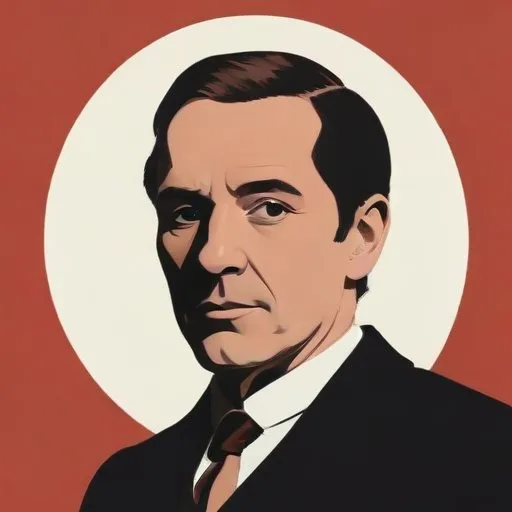
Archibald Bower: The Scottish Historian with a Complicated Faith
A Turbulent Life of Conversion and Controversy
Archibald Bower, a 17th-century Scottish historian, is known for his tumultuous religious journey, which took him from being a Jesuit in Rome to a member of the Church of England, and back again. His most notable work, the seven-volume "History of the Popes" (1748-1766), sparked a heated controversy that would overshadow his later years.
Early Life and Education
Born on January 17, 1686, in or near Dundee, Scotland, Bower was sent to the Scots College in Douai, France, in 1702 to pursue his education. He then traveled to Rome, where he was admitted to the Society of Jesus on December 9, 1706. After completing his novitiate, he went on to teach classics in Fano, Italy, and later studied divinity in the Roman College.
A Life of Conversion and Controversy
Bower's career took a dramatic turn when he was sent to England in 1726. According to Jesuit records, he was transferred to England, but Bower himself claimed to have escaped from Perugia. This discrepancy would later be the subject of much controversy. Upon his arrival in England, he became acquainted with Edward Aspinwall, a former Jesuit, who introduced him to the Church of England. Bower eventually joined the Church of England, a decision that would be met with skepticism by many, including his former Jesuit brethren.
The "History of the Popes" and the Controversy That Followed
Bower's magnum opus, the "History of the Popes," was a comprehensive seven-volume work that spanned over 15 years. However, its publication sparked a fierce debate about Bower's religious allegiances. Many questioned his credentials as a historian, given his tumultuous religious past. The controversy surrounding the work would haunt Bower for the rest of his life, with some accusing him of returning to Catholicism.
Personal Milestones and Later Life
Despite the controversy, Bower continued to write and publish, producing works on various subjects, including philosophy and history. He died on September 3, 1766, leaving behind a complex legacy that continues to fascinate scholars and historians to this day.
Legacy and Impact
Archibald Bower's life serves as a testament to the complexities of religious identity and the power of individual conviction. Though his work was marred by controversy, it remains an important contribution to the field of historical scholarship. His tumultuous life, marked by multiple conversions, serves as a reminder of the enduring power of faith and the human search for meaning.
Trivia and Fun Facts
- Bower was known for his linguistic skills, being proficient in Latin, Greek, Hebrew, and several modern languages.
- He was a prolific writer, producing works on a range of subjects, including philosophy, theology, and history.
- Despite his controversies, Bower was respected by many of his contemporaries, including the Archbishop of Canterbury.
Philosophical Contributions and Beliefs
Bower's philosophical contributions are often overshadowed by the controversy surrounding his life. However, his work on the "History of the Popes" demonstrates a deep understanding of historical methodology and a commitment to accuracy. His religious beliefs, though tumultuous, reflect a deep-seated desire to understand the nature of faith and its role in human society.
FAQ
What was Archibald Bowers contribution to historical writing?
Archibald Bower was a Scottish historian and author who made significant contributions to historical writing, particularly in the field of Catholic history.
What was Archibald Bowers most notable work?
Archibald Bowers most notable work is The History of the Popes, a comprehensive and influential history of the papacy from the earliest times to the 18th century.
Did Archibald Bower have any notable patrons?
Yes, Archibald Bower had several notable patrons, including the Duke of Norfolk, who supported his historical research and writing.
What was Archibald Bowers approach to historical writing?
Archibald Bower approached historical writing through meticulous research and a commitment to accuracy. He was known for his fairness and balanced approach to sensitive topics.
How did Archibald Bowers work influence later historians?
Archibald Bowers work influenced later historians, including Edward Gibbon, who built upon Bowers research and incorporated his findings into his own histories.