


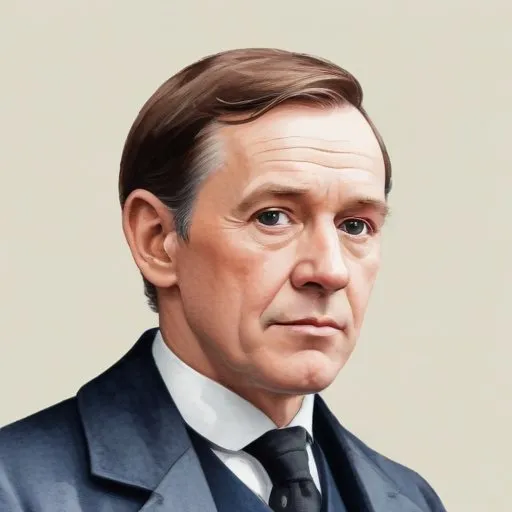
A Scottish historian who wrote influential works on the history of Scotland, America, and India, shaping the way people understood these regions and their past.
William Robertson, a Scottish historian, minister, and Principal of the University of Edinburgh, is renowned for his significant contributions to the writing of Scottish history and the history of Spain and Spanish America. His magnum opus, "The History of Scotland," is considered one of the most influential works of Scottish historiography, earning him a place among the esteemed historians of his era.
Born on September 19, 1721, at the manse of Borthwick, Midlothian, Robertson was the son of Rev. William Robertson, a local minister, and his wife Eleanor Pitcairn. He received his early education at Borthwick Parish School and Dalkeith Grammar School. The family's move to Edinburgh in 1733, when his father became minister of Lady Yester's Church, marked the beginning of Robertson's connection with the city that would shape his academic and professional pursuits.
Robertson's academic trajectory was marked by his study of divinity at the University of Edinburgh (1733-1741) and his subsequent licensure to preach in 1741. He received a Doctor of Divinity in 1759, a testament to his scholarly prowess. His ministerial career took off in 1743 when he became minister at Gladsmuir, East Lothian, followed by his appointment as minister at Lady Yester's Kirk and Greyfriars Kirk in Edinburgh in 1759.
As a staunch Presbyterian and Whig, Robertson volunteered to defend the city against the Jacobites led by Prince Charles Edward Stuart in 1745. His involvement in the literary and intellectual circles of Edinburgh was evident in his membership in The Select Society, a gathering of prominent thinkers and writers, in 1754.
Robertson's connections with the royal household were cemented in 1761 when he was appointed royal chaplain to George III. This honor was followed by his elevation to the position of Principal of the University of Edinburgh in 1762, a role that marked the beginning of his thirty-year tenure at the helm of the institution. During this period, the university flourished, earning recognition as one of the most distinguished institutions of higher learning in Scotland.
In 1764, Robertson was appointed Historiographer Royal, reviving a role within the Royal household in Scotland that had been dormant for centuries. This appointment acknowledged his expertise as a historian and his ability to chronicle the history of Scotland and Spain. His histories, including "The History of Scotland" and "The History of America," demonstrated his mastery of historical narrative and his commitment to accurate scholarship.
William Robertson's legacy extends beyond his written works to the realms of education, historiography, and cultural diplomacy. His contributions to the University of Edinburgh helped establish it as a beacon of learning, while his histories continue to inform our understanding of Scotland and Spanish America. His election to Spain's Royal Academy of History serves as a testament to his reputation as a scholar and historian of international renown.
Through his remarkable life, William Robertson left an indelible mark on the fields of history, education, and culture, earning his place as one of Scotland's most esteemed sons.
Born in 1711
A Scottish Enlightenment thinker who developed influential ideas on morality, ethics, and human nature, and is considered one of the most important figures in the history of Western philosophy.
61 Years Old
A lawyer and politician who served in the U.S. House of Representatives from 1987 to 1997, known for his moderate Republican views and advocacy for environmental issues.
Born in 1737
Wrote "The History of the Decline and Fall of the Roman Empire", a monumental work that shaped the field of historiography and remains a classic in the study of ancient civilizations.
Born in 1694
A witty and insightful 18th-century writer and philosopher who used satire to critique societal norms and advocate for reason, tolerance, and human rights.
Born in 1712
A pioneering thinker who shaped modern democracy and education with his ideas on social contracts, general will, and the importance of early childhood education. His writings influenced the French Revolution and modern political thought.
Born in 1724
Developed influential philosophical frameworks, such as the Critique of Pure Reason, that shaped modern Western thought on ethics, morality, and human understanding.
