


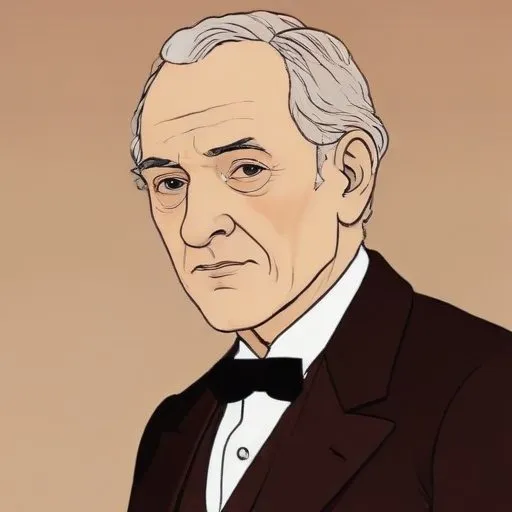
A pioneering physiologist who discovered the production of heat in muscles, leading to a deeper understanding of muscle physiology, and was a prominent advocate for women's rights and education.
Archibald Vivian Hill, fondly known as A. V. Hill, was a British physiologist who made groundbreaking contributions to the fields of biophysics and operations research. He was awarded the 1922 Nobel Prize in Physiology or Medicine for his elucidation of the production of heat and mechanical work in muscles.
Born on September 26, 1886, in Bristol, Hill was educated at Blundells School and later graduated from Trinity College, Cambridge, where he excelled in mathematics, finishing as third wrangler in the mathematics tripos.
While still an undergraduate at Trinity College, Hill derived the Langmuir equation in 1909, a landmark in the history of receptor theory. This equation, closely related to Michaelis-Menten kinetics, described the binding of nicotine and curare to the receptive substance at the neuromuscular junction.
During World War I, Hill's skills were utilized in a different capacity. He became the musketry officer of the Cambridgeshire Regiment and later worked with the Ministry of Munitions, where he developed a simple two-mirror method to determine airplane heights. This work led to the creation of the Anti-Aircraft Experimental Section, a team that measured and computed the height of smoke shells, providing accurate range tables for antiaircraft guns.
In addition to the Nobel Prize, Hill was awarded the Royal Medal in 1926 and the Copley Medal in 1948. He was also appointed as a Knight Bachelor in 1946 for his services to science.
Archibald Hill's work has had a profound impact on our understanding of muscle physiology and the development of operations research. His contributions have paved the way for future generations of scientists, and his legacy continues to inspire research in biophysics and beyond.
Through his remarkable life and achievements, Archibald Hill has left an indelible mark on the scientific community, inspiring future generations to explore the wonders of biophysics and operations research.
Born in 1875
A pioneering researcher who discovered the chemical neurotransmitter acetylcholine and its role in the nervous system, revolutionizing our understanding of nerve impulses and muscle contractions.
Born in 1873
A pioneering scientist who discovered the chemical transmission of nerve impulses, revolutionizing our understanding of the nervous system. His groundbreaking work earned him a Nobel Prize in Physiology or Medicine in 1936.
Born in 1849
A Russian physiologist and physician who discovered the concept of classical conditioning, where he demonstrated that animals can learn to associate stimuli with a particular response, revolutionizing our understanding of behavior. His work laid the foundation for behavioral psychology and continues to influence fields like education and advertising.
Born in 1857
A pioneering scientist who made groundbreaking discoveries in the fields of physiology, bacteriology, and pathology, and was awarded the Nobel Prize for his work on the nervous system.
Born in 1718
An Irish-born American surveyor and lawyer who played a key role in the exploration and settlement of the American frontier, particularly in the Ohio River Valley. He was a skilled cartographer and created detailed maps of the region.
