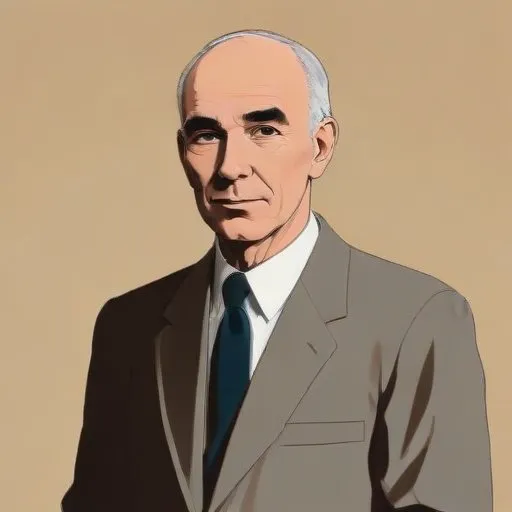
Archibald MacLeish

Archibald MacLeish

Archibald MacLeish was born on May 7th, 1892

Full Name: Archibald MacLeish
Nationality: American
Occupation: Poet
Birthplace: Glencoe, Illinois
Known for: Ars Poetica
Died: April 20, 1982
Pulitzer Prize: Poetry (1933)
Position: Librarian of Congress

A Pulitzer Prize-winning poet, playwright, and lawyer who explored the human condition through his works, often blending modernist and traditional styles. He served as the Librarian of Congress, promoting literacy and education.

Written by: Victor Malone Victor Malone

The Prolific Poet and Writer: Archibald MacLeish

A Life Devoted to Literature and Public Service

Archibald MacLeish, a renowned American poet, writer, and educator, is best known for his contributions to the modernist school of poetry and his distinguished career as the Librarian of Congress. With a lifetime of achievements, MacLeish's work continues to inspire and influence generations of writers, scholars, and intellectuals.

Early Life and Education

Born on May 7, 1892, in Glencoe, Illinois, MacLeish grew up on an estate bordering Lake Michigan. His father, Andrew MacLeish, was a Scottish-born dry goods merchant and founder of the Chicago department store Carson Pirie Scott, while his mother, Martha Hillard, was a college professor and former president of Rockford College. MacLeish's upbringing was marked by a strong emphasis on education, which would shape his future pursuits.

He attended the Hotchkiss School from 1907 to 1911 and later majored in English at Yale University, where he was elected to Phi Beta Kappa and selected for the Skull and Bones society. MacLeish's studies were interrupted by World War I, during which he served as an ambulance driver and later as an artillery officer, fighting at the Second Battle of the Marne.

Writing Career and Notable Works

MacLeish's writing career spanned multiple genres, including poetry, fiction, and nonfiction. His poetry collections, such as Conquistador (1932) and Actfive and Other Poems (1948), showcase his mastery of modernist poetry. His most famous poem, "Ars Poetica," is a seminal work that explores the nature of poetry and the poet's role.

Some of MacLeish's notable works include:

Public Service and Awards

MacLeish's public service career is marked by his role as the ninth Librarian of Congress, a position he held from 1939 to 1944. During his tenure, he played a crucial role in promoting literacy and making the Library of Congress a hub for intellectual discourse. He was awarded three Pulitzer Prizes for his work, including one for poetry and two for drama.

Additional awards and honors include:

Legacy and Impact

Archibald MacLeish's contributions to American literature and public service are immeasurable. His poetry and plays continue to inspire new generations of writers and artists, while his commitment to public service has left a lasting impact on the cultural and intellectual landscape of the United States.

MacLeish's life and work serve as a testament to the power of literature to shape our understanding of the world and our role within it. As he once wrote, "There is only one thing that a man can do, and that is to take the risk of being what he is."

Timeline
1892
Birth
Archibald MacLeish was born on May 7, 1892, in Glencoe, Illinois.
1915
Graduated from Yale University
MacLeish graduated from Yale University, where he studied English literature and philosophy.
1920
Poetic Success
MacLeishs poetry gained recognition, earning him critical acclaim and literary awards.
1944
Assumed Librarian of Congress role
MacLeish assumed the role of Librarian of Congress, serving until 1949.
1982
Death
Archibald MacLeish passed away on April 20, 1982, at the age of 89.
Archibald MacLeish

Archibald MacLeish Quiz

What was Archibald MacLeish's profession besides being a poet and playwright?

Score: 0/5
FAQ
What was Archibald MacLeishs most famous poem?
Archibald MacLeishs most famous poem is probably Ars Poetica, which explores the nature of poetry and the role of the poet. The poem is known for its beautiful language and thought-provoking themes.
What awards did Archibald MacLeish win for his poetry?
Archibald MacLeish won several awards for his poetry, including three Pulitzer Prizes and the Bollingen Prize in Poetry.
What was Archibald MacLeishs role in the Library of Congress?
Archibald MacLeish served as the Librarian of Congress from 1939 to 1944, where he worked to promote American literature and culture.
What was Archibald MacLeishs style of poetry like?
Archibald MacLeishs poetry is known for its lyricism, complexity, and exploration of themes such as politics, morality, and the human condition. His style was influenced by modernist and symbolist movements.
Is Archibald MacLeish still studied in literature classes today?
Yes, Archibald MacLeishs poetry and plays are still widely studied in literature classes today, and his work continues to be celebrated for its beauty, complexity, and insight into the human experience.

Related People:

Robert Frost

Born in 1874

Pulitzer Prize-winning poet and playwright celebrated for rural New England-inspired works that explore human nature, morality, and the American experience.

Ezra Pound

Born in 1885

A pioneering modernist poet and critic who transformed 20th-century literature with innovative styles and provocative ideas, shaping the course of modern poetry.

T. S. Eliot

Born in 1888

A renowned poet, playwright, and critic who reshaped modern poetry with works like "The Waste Land" and "Old Possum's Book of Practical Cats", influencing literature and art with their unique style.

Ernest Hemingway

Born in 1899

A legendary writer who crafted sparse, powerful prose, capturing the human experience in novels like "The Old Man and the Sea" and "A Farewell to Arms".

F. Scott Fitzgerald

Born in 1896

Author of novels and short stories that capture the essence of the Jazz Age, exploring themes of wealth, class, and the American Dream. Known for timeless classics like "The Great Gatsby" and "Tender Is the Night".

John Dos Passos

Born in 1896

A pioneering writer of the Lost Generation, known for experimental novels that capture the spirit of early 20th-century America, blending fiction and journalism.

William Carlos Williams

Born in 1883

A physician-turned-writer, known for his modernist poetry and short stories that explored the everyday lives of ordinary people, often using imagery and experimental styles. His work blurred the lines between poetry and prose, creating a unique literary voice.

Edmund Wilson

Born in 1895

A prominent literary critic and editor who shaped American literary culture with his insightful essays and reviews, influencing generations of writers and intellectuals.