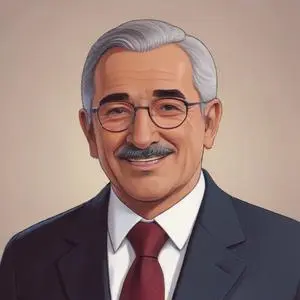
Aristide Briand: The Architect of International Reconciliation
The Nobel Peace Prize Laureate and Champion of European Unity
Aristide Briand, a French statesman, is renowned for his unwavering dedication to international issues and reconciliation politics during the tumultuous interwar period of 1918-1939. He is celebrated for his instrumental role in shaping the Locarno Treaties, which paved the way for a rapprochement between France and Germany, earning him the Nobel Peace Prize in 1926, alongside German Foreign Minister
Gustav Stresemann.
Early Life and Formative Years
Born on March 28, 1862, in Nantes, Loire-Inférieure (now Loire-Atlantique), Briand came from a petit bourgeois family. His early education at the Nantes Lyce was marked by a chance encounter with the renowned French writer,
Jules Verne, in 1877. This encounter would spark a lifelong friendship between the two. Briand pursued law at the Faculty of Law in Paris, before delving into politics and becoming an ardent advocate for progressive movements.
The Rise of a Statesman
Briand's foray into politics began with his involvement in the syndicalist journal, Le Peuple, and later, as the director of the Lanterne. He subsequently co-founded L'Humanité, alongside Jean Jaurès. His commitment to the labor union movement led to his prominent role in the French Socialist Party. In 1902, after several attempts, Briand was elected deputy, solidifying his position as a leader of the left.
International Statesmanship and the Pursuit of Peace
Briand's most significant contributions came during the interwar period. His vision for a united Europe led to the signing of the Kellogg-Briand Pact in 1928, an international agreement aimed at outlawing war. This treaty, although ultimately unsuccessful in preventing the outbreak of World War II, remains a testament to Briand's unwavering commitment to peace. His relentless efforts to establish a European Union in 1929 further underscored his dedication to fostering cooperation and reconciliation among nations.
Philosophical Contributions and Beliefs
Briand's philosophical underpinnings were rooted in his belief in the power of collective action and international cooperation. He firmly believed that nations could overcome their differences and work towards a common goal of peace and prosperity. This conviction was reflected in his tireless efforts to promote European unity and reconciliation.
Controversies and Public Perception
Despite his numerous achievements, Briand's legacy was not without controversy. Critics argued that his pursuit of peace and reconciliation came at the cost of appeasing aggressive powers, such as Nazi Germany. His efforts to establish a European Union were also met with skepticism and ultimately failed to materialize.
Legacy and Historical Context
Aristide Briand's life and legacy serve as a poignant reminder of the importance of international cooperation and diplomacy. His vision for a united Europe, although unrealized in his lifetime, continues to inspire generations of leaders and policymakers. As a champion of peace and reconciliation, Briand's contributions to the world stage remain unparalleled.
Personal Milestones and Key Life Events
- 1862: Born in Nantes, Loire-Inférieure (now Loire-Atlantique)
- 1877: Develops a close friendship with Jules Verne
- 1894: Secures the adoption of the labor union idea at the congress of workers in Nantes
- 1902: Elected deputy after several unsuccessful attempts
- 1926: Awarded the Nobel Peace Prize alongside Gustav Stresemann
- 1928: Signs the Kellogg-Briand Pact
- 1932: Passes away on March 7, at the age of 69
Quotes and Memorable Sayings
- "The greatest glory in living lies not in never falling, but in rising every time we fall."
- "Peace is not merely the absence of war, but the creation of an environment where all can thrive."
Impact on Modern Society
Aristide Briand's legacy extends far beyond his lifetime. His unwavering commitment to peace and reconciliation continues to inspire leaders and policymakers around the world. As the world grapples with the challenges of the 21st century, Briand's vision for a united and peaceful Europe remains a beacon of hope.
FAQ
What were Aristide Briands key accomplishments as Prime Minister of France?
Aristide Briands key accomplishments as Prime Minister of France included his role in negotiating the Treaty of Locarno, which improved relations between France and Germany, and his efforts to strengthen the French economy through fiscal reforms.
What was Aristide Briands approach to international relations?
Aristide Briands approach to international relations was characterized by a strong commitment to diplomacy and negotiation. He believed in working closely with other nations to resolve conflicts peacefully and promote international cooperation.
How did Aristide Briands Nobel Peace Prize reflect his diplomatic efforts?
Aristide Briands Nobel Peace Prize in 1926 recognized his tireless efforts to promote peace and international cooperation, particularly through his role in the Locarno Pact. This honor underscored the importance of his diplomatic efforts and reinforced his reputation as a champion of peace.
What role did Aristide Briand play in shaping French foreign policy?
Aristide Briand played a significant role in shaping French foreign policy, advocating for a more collaborative approach to international relations. He worked to strengthen ties with other European nations and to promote a more stable and peaceful Europe.
How is Aristide Briand remembered in French history?
Aristide Briand is remembered in French history as a dedicated public servant and a champion of peace and international cooperation. His diplomatic efforts and commitment to French interests have made him a revered figure in French politics.