


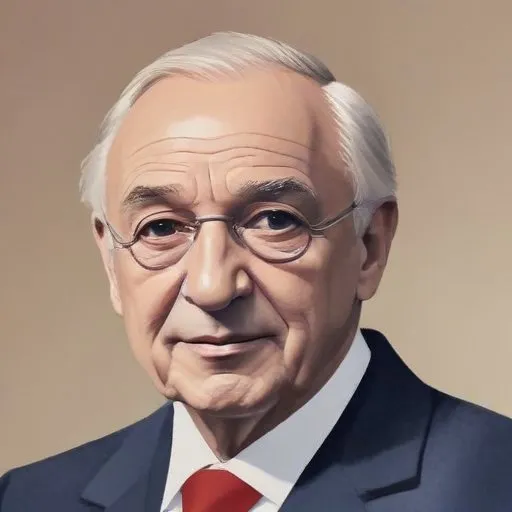
A French mathematician and politician who served as Prime Minister of France, making significant contributions to mathematics, particularly in the field of differential equations. He's also known for his role in shaping France's early 20th-century politics.
Paul Painlev, a French mathematician and statesman, is best known for serving as the Prime Minister of the Third Republic not once, but twice – first from September 1917 to November 1917, and again from April 1925 to November 1925. During his tenure, he navigated tumultuous times, tackling weighty issues such as the Russian Revolution, the American entry into World War I, and the quelling of the French Army Mutinies.
Born on December 5, 1863, in Paris, Painlev was raised in a family of skilled artisans. His father, a draughtsman, instilled in him an early love for mathematics, which led him to pursue a degree in mathematics from the Ecole Normale Supérieure in 1883. Painlev's academic excellence earned him a spot to study under the renowned mathematicians Felix Klein and Hermann Amandus Schwarz in Göttingen, Germany.
Upon returning to France, Painlev became a professor at the University of Lille and later at the Sorbonne, Ecole Polytechnique, and the College de France. His impressive academic credentials earned him a membership in the Académie des Sciences in 1900.
Painlev's entry into politics came in 1906, marking a significant shift from academia to statesmanship. His first term as Prime Minister in 1917 was marked by a series of challenges, including dealing with the Russian Revolution, the American entry into World War I, and the failure of the Nivelle Offensive. Despite the brevity of his first term, Painlev demonstrated his mettle in handling complex political issues.
In the 1920s, Painlev played a crucial role in building the Maginot Line as the Minister of War, showcasing his dedication to national security. His second term as Prime Minister in 1925 was marked by his handling of the outbreak of rebellion in Syria's Jabal Druze, quelling public anxiety over the crisis of France's empire.
Painlev's work on differential equations has had a lasting impact on the field of mathematics. His research led to significant contributions to the theory of flight, demonstrating the practical applications of mathematical concepts. Painlev's legacy extends beyond politics, with his mathematical work paving the way for future generations of mathematicians and engineers.
In 1901, Painlev married Marguerite Petit de Villeneuve, with whom he had a son, Jean Painlev, in 1902. Tragedy struck when Marguerite passed away during childbirth. Painlev's personal life was marked by this tragedy, but his dedication to his work and country remained unwavering.
Paul Painlev's remarkable journey from mathematics to politics has left an indelible mark on French history. His commitment to public service, academic excellence, and innovative mathematical contributions have cemented his position as a trailblazer in both fields. As a testament to his enduring legacy, Painlev's work continues to inspire future generations of mathematicians, politicians, and engineers.
Born in 1871
A French mathematician and politician who made significant contributions to probability theory, measure theory, and topology, and served as a minister in the French government.
Born in 1854
A pioneer in mathematics and physics, he laid the foundations for modern chaos theory, topology, and relativity, making groundbreaking contributions to our understanding of space and time.
Born in 1870
A Nobel Prize-winning physicist and chemist who pioneered the study of the atom, providing conclusive evidence for its existence and structure. Their work laid the foundation for modern particle physics.
Born in 1872
A pioneer in X-ray and gamma ray research, he developed the Langevin dynamics equation, a fundamental concept in statistical physics. His work laid the foundation for modern materials science and nanotechnology.
Born in 1867
A pioneering scientist who pioneered radioactivity research, discovering elements polonium and radium, and paving the way for breakthroughs in medicine and energy.
Born in 1859
A pioneer in radioactivity research, discovering elements like polonium and radium, and pioneering radioactive isolation techniques. Their groundbreaking work paved the way for advancements in medicine, energy, and materials science.
Born in 1838
A 19th-century mathematician who made significant contributions to group theory, particularly in the development of the Jordan-Holder theorem, and was one of the first to introduce abstract algebraic concepts.
Born in 1752
Developed the theory of elliptic integrals, and his work on number theory laid the foundation for modern cryptography.
