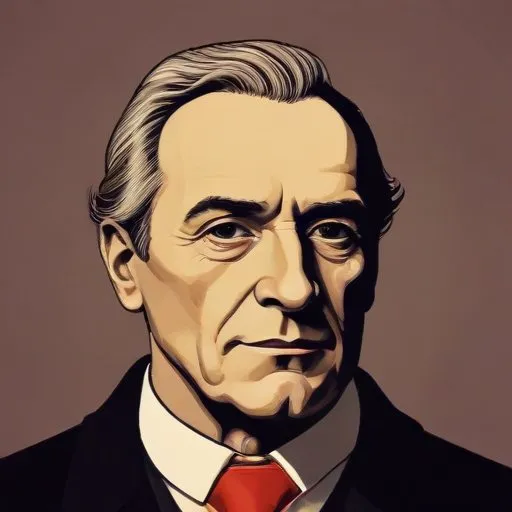
Arnold Hermann Ludwig Heeren

Arnold Hermann Ludwig Heeren

Arnold Hermann Ludwig Heeren was born on October 25th, 1760

Full Name: Arnold Hermann Ludwig Heeren
Place of Birth: Arbergen, Germany
Profession: Historian
Born: 1760
Died: 1842
Nationality: German
Field of Study: Ancient History
Notable Works: Handbuch der Geschichte des europäischen Staatensystems

German historian who wrote influential works on ancient Greece and Rome, shaping modern understanding of classical civilizations.

Arnold Hermann Ludwig Heeren: A Pioneering German Historian

Arnold Hermann Ludwig Heeren, a renowned German historian, is celebrated for his groundbreaking contributions to the field of history, particularly in the realm of ancient and modern civilizations.

Early Life and Education

Born on October 25, 1760, in Arbergen, near Bremen, Germany, Heeren was the son of a clergyman and spent the first 15 years of his life in his hometown, where he received private education.

Academic Career and Contributions

Heeren's academic journey took a significant turn when he was introduced to philology by Christian Gottlob Heyne and to the study of history by Ludwig Timotheus Spittler. This led him to redirect his focus towards historical research, which became his lifelong passion.

Historical Research and Travel

In 1785, Heeren embarked on a seven-month journey to Italy, Paris, and the Netherlands, which not only improved his health but also broadened his historical perspective.

Legacy and Impact

As a member of the Göttingen school of history, Heeren's contributions to the field have been instrumental in shaping modern historiography.

Personal Life and Milestones

Throughout his life, Heeren remained committed to his academic pursuits, earning the respect and admiration of his peers.

Philosophical Contributions and Beliefs

Heeren's historical research was deeply rooted in his philosophical beliefs, which emphasized the importance of understanding historical events within their cultural and social contexts.

His commitment to historical objectivity and his emphasis on the interconnectedness of historical events have made him a pioneer in the field of historiography.

Influence on Modern Society

Heeren's work has had a profound impact on modern society, informing our understanding of historical events and their relevance to contemporary issues.

Through his groundbreaking contributions to the field of history, Arnold Hermann Ludwig Heeren has left an enduring legacy that continues to inspire and inform modern scholarship.

Timeline
1760
Birth in Arbergen, Germany
Arnold Hermann Ludwig Heeren was born in Arbergen, Germany, to a family of scholars and historians.
1784
Becomes Professor of History
Heeren became a professor of history at the University of Göttingen, teaching and writing on various historical topics.
1799
Publishes Manual of the History of Politics
Heeren published his influential Manual of the History of Politics, a comprehensive history of politics and government.
1801
Co-Founds the Göttingen Academy of Sciences
Heeren co-founded the Göttingen Academy of Sciences, a prestigious scientific institution in Germany.
1842
Death in Göttingen, Germany
Arnold Hermann Ludwig Heeren died in Göttingen, Germany, leaving behind a legacy as a German historian and scholar.
Arnold Hermann Ludwig Heeren

Arnold Hermann Ludwig Heeren Quiz

What was Arnold Hermann Ludwig Heeren's primary area of study?

Score: 0/5
FAQ
What were Arnold Hermann Ludwig Heerens contributions to the field of history?
Arnold Hermann Ludwig Heeren was a German historian who made significant contributions to the field of history, particularly in the areas of ancient and medieval history. His works on the history of the Roman Empire and the Middle Ages are still studied today.
What was Arnold Hermann Ludwig Heerens approach to historical research?
Arnold Hermann Ludwig Heeren was known for his rigorous and systematic approach to historical research, which emphasized the importance of primary sources and a critical evaluation of evidence.
How did Arnold Hermann Ludwig Heerens work influence later historians?
Arnold Hermann Ludwig Heerens work had a significant impact on later historians, including Leopold von Ranke and Barthold Georg Niebuhr, who built upon his research and methods.
What was Arnold Hermann Ludwig Heerens role in the development of historical education in Germany?
Arnold Hermann Ludwig Heeren played a key role in the development of historical education in Germany, where he taught at the University of Göttingen and helped to establish history as a respected academic discipline.
What legacy did Arnold Hermann Ludwig Heeren leave behind in the field of history?
Arnold Hermann Ludwig Heerens legacy in the field of history is marked by his commitment to rigorous scholarship, his contributions to our understanding of ancient and medieval history, and his influence on later generations of historians.

Related People:

Johann Gottlieb Fichte

Born in 1762

A German philosopher and academic who developed the concept of German idealism, emphasizing the role of the individual and the nation in shaping reality. He's known for his influence on German philosophy and the development of existentialism.

Immanuel Kant

Born in 1724

Developed influential philosophical frameworks, such as the Critique of Pure Reason, that shaped modern Western thought on ethics, morality, and human understanding.

Johann Wolfgang von Goethe

Born in 1749

A German literary giant who penned iconic works like "Faust" and "The Sorrows of Young Werther", shaping the Romantic movement and influencing countless writers.

Georg Wilhelm Friedrich Hegel

Born in 1770

A German philosopher and academic who developed a comprehensive and systematic philosophy that emphasized the unity of all things and the dialectical process of thesis, antithesis, and synthesis. His ideas have had a profound impact on modern thought, influencing fields such as philosophy, politics, and art.

Christian Wolff

Born in 1679

Developed a philosophical system that combined elements of Leibniz and Descartes, and was a prominent figure in the German Enlightenment. He wrote extensively on metaphysics, ethics, and logic.