


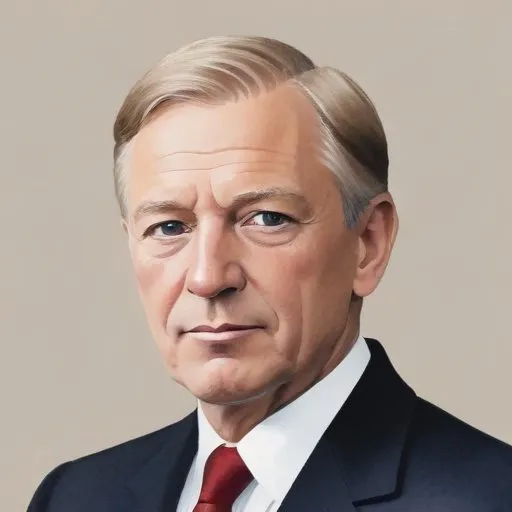
A career diplomat who served as Ambassador to Yemen and Tunisia, known for his expertise in Middle Eastern affairs and crisis management.
Arthur Adair Hartman, a renowned American career diplomat, left an indelible mark on the world of international relations. He is most notably recognized for serving as Ambassador to France under President Jimmy Carter and Ambassador to the Soviet Union under President Ronald Reagan, cementing his position as a leading figure in diplomatic circles.
Born on March 12, 1926, Hartman's early years laid the foundation for a life dedicated to public service. He served in the United States Army Air Corps from 1944 to 1946, before graduating from Harvard University in 1947. His academic pursuits continued at Harvard Law School, where he attended from 1947 to 1948.
Hartman's diplomatic journey began with a stint in the Marshall Plan administration in Europe, followed by his entry into the Foreign Service. Over the years, he held various postings with the State Department, including positions in Paris, Saigon, London, and Brussels, where he served as deputy chief of the U.S. Mission to the European Union.
Hartman's distinguished career was punctuated by numerous accolades, including the prestigious French Légion d'honneur. He was also a member of the Council on Foreign Relations, the American Academy of Diplomacy, and the French American Foundation, and served on the Advisory Council of the Brookings Institution.
In 2004, Hartman was one of the 26 founders of Diplomats and Military Commanders for Change, a testament to his enduring commitment to promoting positive change in the world of diplomacy and international relations.
Arthur A. Hartman passed away on March 16, 2015, in Washington, D.C., just four days after celebrating his 89th birthday. His remarkable life serves as a testament to the power of dedication, hard work, and a steadfast commitment to serving the greater good.
Through his remarkable career and unwavering dedication to the world of diplomacy, Arthur A. Hartman has left an indelible mark on the world of international relations, inspiring generations of diplomats, policymakers, and individuals to strive for a more peaceful and harmonious world.
Born in 1923
A renowned diplomat and strategist who played a pivotal role in shaping global politics during the Cold War era, known for his Realpolitik approach and brokering peace agreements .
98 Years Old
A Polish-born American strategist and policymaker who served as National Security Advisor, shaping US foreign policy and advising presidents on global affairs. Known for his realist approach and expertise on geopolitics.
89 Years Old
The first female US Secretary of State, serving from 1997 to 2001, who played a key role in shaping American foreign policy during the Clinton administration. She's known for her strong diplomatic efforts and advocacy for democracy and human rights.
89 Years Old
The first African American to serve as Secretary of State, he played a crucial role in shaping US foreign policy during the Gulf War and War on Terror. He's also known for his diplomatic efforts and leadership in the military.
72 Years Old
The first African American woman to serve as Secretary of State, she played a crucial role in shaping US foreign policy during a tumultuous period, earning her a lasting legacy in international relations.
79 Years Old
A highly influential American politician and diplomat who served as Secretary of State and First Lady, known for her advocacy on women's rights and international diplomacy.
Born in 1917
A multitalented artist who made significant contributions to French New Wave cinema, directing iconic films like "Maya" and "Claude Sautet or The Invisible Master".
Born in 1920
An American economist and politician who served as the 60th United States Secretary of State, playing a key role in shaping foreign policy during the Cold War era. He's known for his diplomatic efforts to end the Cold War and his advocacy for economic freedom.
