


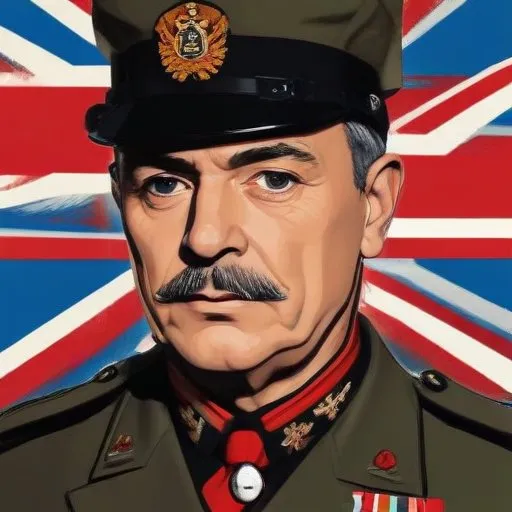
A British Army officer who received the Victoria Cross for his bravery during the Indian Rebellion of 1857, known for his heroic actions during the Siege of Lucknow.
Lieutenant Colonel Arthur Drummond Borton is renowned for his exceptional bravery and selfless acts of valor, which earned him the Victoria Cross, the highest award for gallantry in the face of the enemy that can be awarded to British and Commonwealth forces. His heroic deeds during World War I continue to inspire generations, and his legacy remains etched in the annals of British military history.
Born on July 1, 1883, at Cheveney, Kent, Arthur Borton was the son of British officer Arthur Close Borton and Adelaide Beatrice Drummond. He was educated at the prestigious Eton College and later attended the Royal Military College at Sandhurst.
Borton was commissioned into the King's Royal Rifle Corps in 1902 and served with distinction in the Second Boer War. After leaving the Army in 1908, he took up fruit farming in the United States. However, with the outbreak of World War I, he rejoined the King's Royal Rifles in 1914.
Borton's military career took a dramatic turn when he became an observer with the Royal Flying Corps in France. Unfortunately, he suffered a severe injury, breaking his neck in three places, during an aircraft crash. Despite this setback, he continued to serve with unwavering dedication, joining the Royal Naval Volunteer Reserve, where he was awarded the Distinguished Service Order for his service with the RNAS Armoured Cars in Gallipoli.
On November 7, 1917, Borton's bravery was palpable as he led his battalion in an attack on a strongly held position in Palestine. Under withering fire, he moved fearlessly along the line, inspiring his men to capture the position. Later, he led a volunteer party against a battery of field guns, capturing the guns and detachments at point-blank range. His fearless leadership earned him the Victoria Cross, a testament to his unwavering courage and selflessness.
Lieutenant Colonel Arthur Drummond Borton's legacy extends beyond his military career. He remains an inspiration to generations, and his heroic actions continue to be remembered and celebrated. In addition to the Victoria Cross, he was awarded the Distinguished Service Order and was mentioned in dispatches three times.
Lieutenant Colonel Arthur Drummond Borton's story serves as a poignant reminder of the bravery and sacrifice exhibited by countless soldiers during World War I. His heroism continues to inspire, and his legacy remains an integral part of British military history.
Born in 1871
Prolific writer of historical novels and adventure stories, also a talented landscape painter.
Born in 1865
The second monarch of the House of Windsor, reigning from 1910 to 1936, known for leading the British Empire through World War I and modernizing the monarchy.
Born in 1884
A British field marshal who played a crucial role in World War II, particularly in North Africa and the Middle East, and is remembered for his leadership and strategic decisions during the war.
