


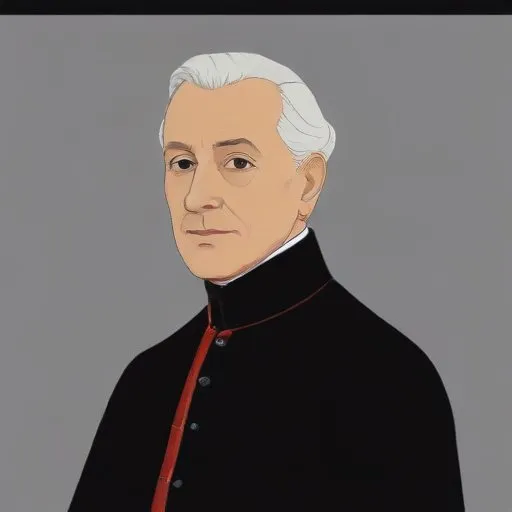
An English royalist and politician, he played a key role in the Restoration of the monarchy in 1660 and served as Lord Lieutenant of Ireland.
Arthur Capell, 1st Baron Capell of Hadham, was a prominent English politician who sat in the House of Commons from 1640 to 1641 and later became a fierce supporter of the Royalist cause during the English Civil War. He is best known for his tumultuous journey from opposition leader to royal advisor, which ultimately led to his execution by parliament in 1649.
Born on February 20, 1608, Arthur Capell was the only son of Sir Henry Capell and his wife Theodosia Montagu, daughter of Sir Edward Montagu of Boughton House, Northamptonshire. He received his education at Queens' College, Cambridge, where he developed a strong sense of duty and loyalty that would shape his future endeavors.
In April 1640, Capell was elected Member of Parliament for Hertfordshire in the Short Parliament, and later reelected MP for Hertfordshire for the Long Parliament in November 1640. During this period, he was an outspoken critic of King Charles I's arbitrary government, and on December 5, 1640, he delivered the Petition from the county of Hertfordshire, outlining grievances against the King.
In June 1641, Capell's loyalty was rewarded when he was raised to the peerage by the title of Baron Capell of Hadham, in the County of Hertford, on August 6, 1641. This marked a significant shift in his allegiance, as he increasingly sided with the Royalist cause. By early 1642, he was openly supporting the King's efforts, and was appointed lieutenant-general of Shropshire, Cheshire, and North Wales.
During the English Civil War, Capell rendered crucial military services and was made one of the Councillors of Prince Charles Stuart, later King Charles II of England. He also served as a commissioner at the Treaty of Uxbridge in 1645, demonstrating his commitment to the Royalist cause.
In 1646, Capell accompanied Queen Henrietta Maria of France, the wife of King Charles I, in her flight to France. Although he disapproved of Prince Charles's decision to join his mother in France, he remained loyal to the royal family. Ultimately, his allegiance cost him his life, as he was executed on the orders of parliament on March 9, 1649.
Arthur Capell's tumultuous life serves as a testament to the complexities of loyalty, duty, and conviction during times of crisis. His journey from opposition leader to royal advisor, and ultimately, to martyr, has left an indelible mark on English history. Despite his tragic end, Capell's legacy continues to inspire and educate, serving as a poignant reminder of the human cost of war and revolution.
Born in 1599
Leader of the Parliamentarian forces during the English Civil War, who later ruled England, Scotland, and Ireland as a republican dictator, known for his military victories and radical reforms.
Born in 1676
The first Prime Minister of the United Kingdom, serving from 1721 to 1742, known for establishing the office of Prime Minister and setting important precedents for the role. He is also recognized for his skill in managing Parliament and his role in shaping British politics.
Born in 1623
A 17th-century republican thinker who advocated for individual liberties and constitutional government, influencing the development of modern democratic thought.
