


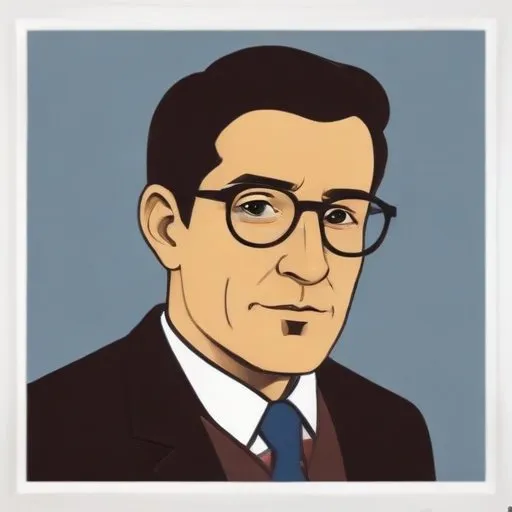
Developed innovative industrial processes and pioneered the field of management consulting, revolutionizing the way businesses operate.
Arthur Dehon Little is renowned for founding the world's first consulting company, Arthur D. Little, and revolutionizing the field of chemical engineering with his pioneering concept of unit operations. His groundbreaking work laid the foundation for modern industrial research, transforming the way industries approach problem-solving and innovation.
Born on December 15, 1863, in Boston, Massachusetts, Little's fascination with chemistry began at a young age. He pursued his passion at the Massachusetts Institute of Technology (MIT), graduating with a degree in chemistry in 1884.
Little's professional journey began at the Richmond Paper Company in East Providence, Rhode Island, where he worked as a chemist and later became the superintendent of a paper mill. His innovative approach and expertise led to the correction of flawed chemical engineering designs, resulting in his first patent.
In 1886, Little co-founded Little & Griffin, a company that would go on to become a pioneer in the field of chemical engineering. The company's work on The Chemistry of Papermaking, a seminal manuscript, cemented its reputation as a leading authority in the area.
Tragedy struck in 1893 when Griffin was killed in a laboratory accident, leaving Little to carry on the business alone. Undeterred, he continued to innovate, founding the Cellulose Products Company, which demonstrated the potential of cellulose acetate in producing nonflammable wire insulation and artificial silk.
Little's legacy extends far beyond his professional accomplishments. He is credited with introducing the concept of unit operations to chemical engineering, a fundamental principle that has shaped the industry to this day. His advocacy for industrial research has inspired generations of engineers and scientists.
As the founder of Arthur D. Little, a consulting company that has worked with numerous Fortune 500 companies, Little's influence on modern industry is palpable. His company's work has spanned diverse fields, including energy, healthcare, and technology, leaving an indelible mark on the global business landscape.
In 1901, Little married Henrietta Rogers Anthony, and the couple had a fulfilling personal life. He was also the uncle of Royal Little, founder and chair of Textron, and considered the Father of Conglomerates.
Throughout his life, Little was driven by a passion for innovation and a dedication to pushing the boundaries of human knowledge. He was a prolific researcher, holding numerous patents in his name, and an accomplished writer, having authored several influential books on chemical engineering.
"The art of research is largely the art of asking the right questions."
Little's words continue to inspire generations of scientists, engineers, and entrepreneurs, serving as a testament to his enduring legacy.
Arthur Dehon Little's remarkable life and achievements serve as a shining example of innovation, perseverance, and dedication to the pursuit of knowledge. His pioneering work has left an indelible mark on the world of chemical engineering, and his legacy continues to inspire future generations of scientists, engineers, and entrepreneurs.
Born in 1854
Founded the company that revolutionized photography by making it accessible and affordable to the masses through innovative film and camera technologies. Known for pioneering the development of roll film and the first point-and-shoot camera.
Born in 1852
A pioneering surgeon who co-created Corn Flakes, revolutionizing breakfast with a convenient and healthy option. Known for his innovative approach to nutrition and wellness.
Born in 1863
Founded the pioneering automobile manufacturing company that revolutionized the industry with the assembly line production method, making cars more affordable and accessible to the masses.
Born in 1847
A pioneer in innovation, credited with developing groundbreaking inventions that revolutionized the way people live and communicate, including the light bulb and phonograph.
Born in 1847
A Scottish-American engineer and academic credited with inventing the telephone, revolutionizing real-time communication. This innovation transformed the way people connect and conduct business.
Born in 1856
A pioneering engineer who harnessed the power of alternating current (AC) to transform the world's electrical systems, and is credited with developing groundbreaking technologies like radio communication and X-ray imaging.
Born in 1874
Developer of the first practical wireless telegraph, pioneering radio communication and earning a Nobel Prize in Physics. Known for revolutionizing long-distance communication.
Born in 1853
Developed groundbreaking inventions and innovations in electrical engineering, including the first practical welding machine and the first electric streetcar system.
