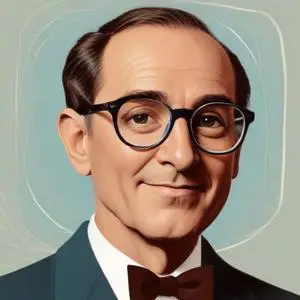
Arthur Leonard Schawlow: The Pioneer of Laser Science
A Legacy of Precision and Innovation
Arthur Leonard Schawlow is renowned for developing the theoretical basis for laser science, alongside Charles Townes. His groundbreaking insight – the use of two mirrors as the resonant cavity to take maser action from microwaves to visible wavelengths – revolutionized the field of laser spectroscopy.
Early Life and Education
Born on May 5, 1921, in Mount Vernon, New York, Schawlow's life was marked by a unique blend of cultural influences. His mother, Helen Mason, was from Canada, while his father, Arthur Schawlow, was a Jewish immigrant from Riga, Latvia. Raised in his mother's Protestant faith, Schawlow's family moved to Toronto, Ontario, Canada, when he was just three years old.
Schawlow's academic prowess was evident from an early age. He completed high school at Vaughan Road Academy and later at Vaughan Collegiate Institute, earning a scholarship in science at the University of Toronto's Victoria College. He pursued his undergraduate degree and later continued in graduate school at the University of Toronto, with a brief interruption due to World War II.
Academic and Professional Pursuits
Schawlow's postdoctoral position with Charles H. Townes at Columbia University's physics department in 1949 marked the beginning of his illustrious career. He later joined Bell Labs in 1951, where he made significant contributions to the development of laser science. In 1961, he became a professor at Stanford University, where he remained until his retirement to emeritus status in 1996.
Throughout his career, Schawlow's research focused on optics, particularly lasers and their applications in spectroscopy. He also explored areas such as superconductivity and nuclear resonance, demonstrating his versatility as a physicist.
Nobel Prize and Legacy
Schawlow's most notable achievement came in 1981, when he shared the Nobel Prize in Physics with
Nicolaas Bloembergen and
Kai Siegbahn for their contributions to the development of laser spectroscopy. This prestigious recognition solidified his position as a pioneer in the field of laser science.
Schawlow's legacy extends beyond his scientific achievements. He co-authored the widely used text "Microwave Spectroscopy" (1955) with Charles Townes, providing a foundational resource for subsequent generations of physicists.
Personal Milestones and Key Life Events
- Schawlow married Aurelia Townes, the sister of his colleague Charles Townes, in 1951.
- He became a naturalized U.S. citizen in 1954.
- Schawlow was a fellow of the American Physical Society and the Optical Society of America.
Influence on Modern Society
Schawlow's work on laser science has had a profound impact on modern society. His contributions have enabled the development of precise spectroscopic techniques, leading to advancements in fields such as medicine, chemistry, and materials science.
In conclusion, Arthur Leonard Schawlow's remarkable life and achievements have left an indelible mark on the world of laser science. His legacy continues to inspire future generations of physicists, solidifying his place as one of the most influential scientists of the 20th century.
FAQ
What was Arthur Leonard Schawlows most significant scientific contribution?
Arthur Leonard Schawlow shared the 1981 Nobel Prize in Physics for his work on laser spectroscopy, which pioneered the development of high-precision laser technology and its applications in fields such as chemistry and biology.
How did Arthur Leonard Schawlow become interested in physics?
Schawlows interest in physics was sparked by his childhood fascination with electronics and radio technology. He went on to study physics at the University of Toronto, where he earned his Ph.D. in 1949.
What were some of Arthur Leonard Schawlows notable research collaborations?
Schawlow collaborated with several prominent physicists, including Charles Townes, Willis Lamb, and Albert Schweitzer. He was also a dedicated teacher and mentored numerous students throughout his career.
Did Arthur Leonard Schawlow have any notable hobbies or interests outside of science?
Yes, Schawlow was an avid musician and played the piano and organ. He was also interested in amateur radio operation and held a ham radio license.
What is Arthur Leonard Schawlows legacy in physics?
Arthur Leonard Schawlow is remembered as a pioneering physicist who made significant contributions to the development of laser technology and spectroscopy. His work has had far-reaching impacts on fields such as chemistry, biology, and medicine, and he remains an important figure in the history of physics.